Future-Proofing Your Social Media Strategy: Preparing for the Next Five Years

Future-Proofing Your Social Media Strategy: Preparing for the Next Five Years

Meta Title: Future-Proofing Your Social Media Strategy: Preparing for the Next Five Years

Meta Description: Learn how to future-proof your social media strategy for the next five years. Discover emerging trends, AI innovations, privacy changes, content strategies, and practical tips to keep your brand competitive.

Focus Keyword: Future-Proof Social Media Strategy

Secondary Keywords: Social Media Marketing Future, Social Media Trends, Future of Social Media Marketing, Social Media Strategy 2026, AI in Social Media Marketing


Future-Proofing Your Social Media Strategy: Preparing for the Next Five Years

Social media has never remained the same for long. Over the past decade, platforms have evolved from simple networking websites into powerful ecosystems where businesses build brands, generate leads, provide customer support, and sell products directly to consumers. Features that were once considered innovative—such as Stories, Reels, live streaming, and AI-powered recommendations—have quickly become standard expectations.

Looking ahead, the pace of change is expected to accelerate. Artificial intelligence, evolving consumer behavior, stricter privacy regulations, creator-led marketing, and new forms of digital interaction will continue reshaping how businesses connect with their audiences. Strategies that work today may need significant adjustments in the coming years.

Future-proofing your social media strategy does not mean predicting every trend correctly. Instead, it means building a flexible marketing framework that can adapt to change while remaining focused on delivering value to your audience. In this guide, you’ll learn the key principles and practical steps needed to prepare your social media marketing strategy for the next five years.


What Does “Future-Proofing” Mean?

Future-proofing is the process of preparing your business for upcoming changes instead of simply reacting to them.

A future-proof social media strategy is:

  • Flexible
  • Customer-focused
  • Data-driven
  • Adaptable
  • Technology-friendly
  • Platform-independent
  • Built for long-term growth

Rather than depending on a single platform or temporary trend, successful businesses create systems that continue performing even as algorithms and technologies evolve.


Why Businesses Need to Prepare Now

Social media platforms constantly introduce new algorithms, advertising tools, and content formats. At the same time, users expect faster responses, personalized experiences, and authentic communication.

Businesses that fail to adapt may experience:

  • Reduced organic reach
  • Lower engagement
  • Higher advertising costs
  • Declining customer trust
  • Missed opportunities
  • Increased competition

Preparing today gives your business a stronger foundation for tomorrow.


1. Build a Brand, Not Just a Social Profile

One of the biggest mistakes businesses make is relying entirely on a single platform.

Algorithms can change, features can disappear, and audience behavior can shift quickly.

Instead, focus on building a recognizable brand with:

  • A consistent visual identity
  • A clear brand voice
  • Valuable content
  • Strong customer relationships
  • Trust and credibility

Customers remember brands—not algorithms.


2. Invest in First-Party Data

Privacy regulations are reducing reliance on third-party tracking.

Businesses should strengthen their own customer data through:

  • Email subscribers
  • Customer accounts
  • CRM systems
  • Loyalty programs
  • Website registrations
  • Surveys and feedback

First-party data helps create personalized experiences while respecting user privacy.


3. Embrace Artificial Intelligence Responsibly

AI is becoming an essential part of modern social media marketing.

It can help with:

  • Content ideas
  • Caption generation
  • Audience insights
  • Scheduling
  • Trend analysis
  • Performance reporting
  • Customer support automation

However, AI should support—not replace—human creativity.

Authentic storytelling and genuine customer relationships remain essential.


4. Prioritize Video Content

Video continues to dominate nearly every major platform.

Successful businesses should create a mix of:

  • Short-form videos
  • Educational tutorials
  • Product demonstrations
  • Customer testimonials
  • Behind-the-scenes content
  • Live streams

Video builds trust and often receives greater visibility than static posts.


5. Focus on Community Instead of Vanity Metrics

Follower counts alone no longer determine success.

A smaller, highly engaged audience often delivers better business results than a large inactive following.

Build community by:

  • Responding to comments
  • Asking questions
  • Hosting live sessions
  • Creating discussion-based content
  • Encouraging user-generated content

Meaningful engagement creates long-term loyalty.


6. Create Evergreen Content

Trending posts may generate temporary attention, but evergreen content continues providing value for months or years.

Examples include:

  • Tutorials
  • Frequently asked questions
  • Industry guides
  • Educational videos
  • Case studies
  • Best practices

Evergreen content supports both social media discovery and search visibility.


7. Diversify Across Multiple Platforms

Relying on a single platform increases business risk.

Instead, establish a presence where your audience is active.

Popular options include:

  • Instagram
  • Facebook
  • LinkedIn
  • YouTube
  • Pinterest
  • X
  • Emerging platforms relevant to your industry

Each platform serves different purposes and audiences.


8. Optimize for Social Search

Social media platforms increasingly function like search engines.

Users now search directly for:

  • Products
  • Services
  • Reviews
  • Tutorials
  • Local businesses

Optimize your content by:

  • Using relevant keywords
  • Writing descriptive captions
  • Creating searchable titles
  • Publishing educational content

Social Search Optimization will become increasingly valuable over the coming years.


9. Measure Business Outcomes, Not Just Engagement

Likes and comments are useful, but they don’t always indicate business success.

Track metrics such as:

  • Website traffic
  • Lead generation
  • Conversion rate
  • Customer acquisition cost
  • Return on investment (ROI)
  • Customer retention
  • Revenue generated

Data-driven decisions improve long-term performance.


10. Stay Flexible and Keep Learning

No strategy remains perfect forever.

Successful marketers:

  • Test new ideas
  • Analyze performance
  • Learn from competitors
  • Follow industry updates
  • Experiment with emerging features

Continuous improvement is one of the greatest competitive advantages.


Emerging Technologies to Watch

Several innovations are expected to influence social media marketing over the next five years.

These include:

  • AI-powered personalization
  • Voice search integration
  • Augmented reality (AR)
  • Virtual reality (VR)
  • Social commerce expansion
  • Predictive analytics
  • Automated customer support
  • Interactive shopping experiences

Businesses that understand these technologies early will be better prepared for future opportunities.


Common Mistakes That Limit Long-Term Growth

Avoid these common mistakes:

  • Chasing every trend
  • Buying fake followers
  • Ignoring customer feedback
  • Depending on one platform
  • Posting without clear objectives
  • Creating inconsistent branding
  • Neglecting analytics
  • Failing to update strategies

Long-term success comes from consistency and adaptability.


Best Practices for Future-Proof Success

To prepare your business:

  • Build an audience you own through email and CRM.
  • Invest in educational content.
  • Create high-quality videos.
  • Strengthen your brand identity.
  • Monitor analytics regularly.
  • Stay informed about platform updates.
  • Experiment without abandoning proven strategies.
  • Focus on solving customer problems.

Businesses that prioritize value over visibility are more likely to succeed in the years ahead.


Conclusion

The future of social media marketing will be shaped by technology, privacy, and changing consumer expectations. Artificial intelligence, social search, video-first experiences, community-driven engagement, and first-party data strategies are transforming how businesses communicate with customers.

Future-proofing your social media strategy is not about predicting every trend—it is about building a flexible foundation that can evolve alongside the digital landscape. By investing in authentic relationships, diversifying your presence across platforms, embracing innovation responsibly, and making decisions based on data, your business can remain competitive regardless of how social media changes.

The next five years will reward brands that are adaptable, customer-focused, and committed to continuous learning. Start implementing these strategies today, and you’ll be well positioned to grow your audience, strengthen your brand, and achieve lasting success in an ever-changing digital world.


Frequently Asked Questions

What does future-proofing a social media strategy mean?

It means creating a flexible marketing approach that can adapt to platform updates, changing consumer behavior, and new technologies while continuing to support long-term business goals.

Why is first-party data important?

First-party data comes directly from your customers, such as email subscribers and website visitors. It enables personalized marketing while supporting privacy-focused practices.

Should businesses use AI for social media marketing?

Yes. AI can improve efficiency by assisting with content planning, analytics, and automation, but human creativity and oversight remain essential for authentic communication.

Is it risky to focus on only one social media platform?

Yes. Diversifying across multiple platforms reduces risk and helps you reach different audience segments if algorithms or user behavior change.

What is the most important trend for the future?

While many trends matter, businesses that combine AI, first-party data, video content, social search optimization, and community building will be best positioned for long-term success.
Social Search Optimization: Why Instagram, TikTok, and YouTube Are the New Search Engines

Social Search Optimization: Why Instagram, TikTok, and YouTube Are the New Search Engines

Meta Title: Social Search Optimization: Why Instagram, TikTok, and YouTube Are the New Search Engines

Meta Description: Discover how Social Search Optimization (SSO) is changing digital marketing in 2026. Learn why Instagram, TikTok, and YouTube are becoming search engines and how businesses can optimize their content for greater visibility.

Focus Keyword: Social Search Optimization

Secondary Keywords: Social SEO, Instagram SEO, TikTok SEO, YouTube SEO, Social Media Search, Social Media Marketing 2026


Social Search Optimization: Why Instagram, TikTok, and YouTube Are the New Search Engines

For years, Google has been the primary destination for finding information online. Whether users wanted to discover a restaurant, learn a new skill, compare products, or read reviews, they typically began with a Google search. However, the way people search for information is changing rapidly.

In 2026, millions of users—especially younger audiences—are turning to social media platforms like Instagram, TikTok, and YouTube instead of traditional search engines. Rather than reading long articles, they prefer watching short videos, browsing visual content, and listening to creators they trust.

This shift has introduced a new concept known as Social Search Optimization (SSO). Businesses that optimize their social media content for search can reach potential customers directly within these platforms, increasing visibility, engagement, and conversions without relying solely on Google rankings.

In this guide, you’ll learn what Social Search Optimization is, why it matters, how social platforms function as search engines, and practical strategies to help your brand succeed in this new era of digital marketing.


What Is Social Search Optimization?

Social Search Optimization (SSO) is the practice of optimizing social media content so it appears in the search results within platforms like Instagram, TikTok, YouTube, Pinterest, and LinkedIn.

Just as Search Engine Optimization (SEO) helps websites rank on Google, Social Search Optimization helps posts, videos, reels, and profiles become more discoverable inside social media platforms.

Optimization involves:

  • Using relevant keywords
  • Writing searchable captions
  • Creating informative content
  • Optimizing profiles
  • Adding descriptive titles
  • Using hashtags strategically
  • Encouraging engagement
  • Publishing consistently

The goal is to make your content easier for users to find when they search for specific topics or questions.


Why Are Social Platforms Becoming Search Engines?

Today’s internet users value speed, authenticity, and visual learning.

Instead of reading multiple blog posts, people often prefer watching a one-minute video that explains exactly what they need.

Common searches now include:

  • Best cafes in my city
  • Healthy breakfast recipes
  • Website design ideas
  • Digital marketing tips
  • Product reviews
  • Travel destinations
  • Fitness exercises
  • Fashion inspiration

Many users search for these topics directly on Instagram, TikTok, or YouTube because they can immediately see demonstrations, opinions, and real-life experiences.

This behavior has transformed social platforms into powerful search engines.


Why Social Search Matters for Businesses

Businesses that ignore social search risk missing a growing audience.

Benefits include:

  • Increased organic visibility
  • Better brand awareness
  • Higher engagement
  • More qualified traffic
  • Greater trust
  • Improved customer education
  • Long-term content discovery

Unlike temporary posts, optimized content can continue attracting views and engagement long after publication.


How Instagram Search Works

Instagram has evolved beyond hashtags.

Its search algorithm now considers:

  • Keywords in captions
  • Profile name
  • Username
  • Bio description
  • Alt text
  • Engagement
  • User interests
  • Location

For example, if someone searches for “digital marketing agency”, Instagram may display profiles, reels, posts, and videos related to that keyword.

Instagram Optimization Tips

  • Include keywords naturally in captions.
  • Write a keyword-rich bio.
  • Choose a searchable username when possible.
  • Use relevant hashtags instead of excessive ones.
  • Add descriptive alt text to images.
  • Publish high-quality Reels consistently.

How TikTok Search Works

TikTok has become one of the fastest-growing search platforms.

Its algorithm analyzes:

  • Spoken words
  • On-screen text
  • Video captions
  • Hashtags
  • User engagement
  • Watch time

Educational videos often rank well because they answer specific questions.

TikTok Optimization Tips

  • Mention your target keyword verbally.
  • Add keywords to captions.
  • Include text overlays.
  • Answer common questions.
  • Create engaging videos that retain viewers.

Longer watch times generally improve discoverability.


How YouTube Functions as a Search Engine

YouTube is the world’s largest video platform and one of the most widely used search engines.

People search YouTube for:

  • Tutorials
  • Product reviews
  • Comparisons
  • Educational content
  • Business advice
  • Software demonstrations

Because YouTube content can remain relevant for years, it offers excellent long-term visibility.

YouTube SEO Best Practices

  • Use descriptive video titles.
  • Include keywords naturally.
  • Write detailed video descriptions.
  • Add timestamps.
  • Design attractive thumbnails.
  • Organize playlists.
  • Encourage comments and subscriptions.

Evergreen content often continues generating traffic long after publication.


Social Search vs Traditional SEO

Although both aim to improve visibility, they work differently.

Social Search Optimization Traditional SEO
Focuses on social media platforms Focuses on search engines like Google
Prioritizes videos and visual content Prioritizes web pages and blog articles
Driven by engagement signals Driven by backlinks, relevance, and technical SEO
Faster content discovery Longer ranking timeline
Strong community interaction Primarily website-based experience

The most effective digital marketing strategies combine both approaches.


How to Optimize Content for Social Search

To improve discoverability:

Use Searchable Keywords

Research the phrases your audience uses and include them naturally in:

  • Captions
  • Titles
  • Video descriptions
  • Profile bios

Create Educational Content

People search social media to solve problems.

Examples include:

  • How-to videos
  • Tutorials
  • Tips
  • Product demonstrations
  • FAQs
  • Industry insights

Helpful content is more likely to appear in search results.

Prioritize Video

Short-form and long-form videos often receive greater visibility than static content.

Invest in:

  • Reels
  • Shorts
  • Tutorials
  • Behind-the-scenes videos
  • Customer success stories

Encourage Engagement

Algorithms reward content that generates:

  • Comments
  • Shares
  • Saves
  • Likes
  • Watch time

Ask questions and invite meaningful discussions.


Common Social Search Mistakes

Avoid these common errors:

  • Ignoring keywords
  • Using irrelevant hashtags
  • Posting without a strategy
  • Creating overly promotional content
  • Neglecting profile optimization
  • Inconsistent posting
  • Ignoring audience questions
  • Producing low-quality videos

Consistency and relevance remain essential for long-term success.


The Role of AI in Social Search

Artificial intelligence increasingly influences content recommendations.

AI analyzes:

  • User interests
  • Viewing history
  • Engagement patterns
  • Search behavior
  • Content relevance

Rather than simply matching keywords, algorithms attempt to predict which content users will find most valuable.

This makes quality content more important than ever.


Future of Social Search Optimization

The future of digital marketing will likely involve greater integration between search engines and social platforms.

Expected developments include:

  • Smarter AI recommendations
  • Voice-based social search
  • Visual search technology
  • Personalized search experiences
  • Enhanced video indexing
  • Interactive shopping results
  • Greater emphasis on creator expertise

Businesses that optimize early will gain a competitive advantage as social search continues to grow.


Best Practices for Businesses

To succeed with Social Search Optimization:

  • Research audience search behavior.
  • Create educational, problem-solving content.
  • Use keywords naturally.
  • Optimize your profiles.
  • Publish consistently.
  • Invest in high-quality videos.
  • Encourage community engagement.
  • Monitor analytics and refine your strategy.

Think of every post as a searchable asset rather than a one-time update.


Conclusion

Social Search Optimization is reshaping how people discover information online. As platforms like Instagram, TikTok, and YouTube become preferred destinations for learning, shopping, and researching, businesses must adapt their marketing strategies to remain visible.

By optimizing content with relevant keywords, creating valuable educational videos, encouraging engagement, and understanding how each platform’s search algorithm works, brands can increase organic reach and connect with audiences where they already spend their time.

While traditional SEO remains essential, Social Search Optimization has become an equally important component of modern digital marketing. Businesses that embrace both strategies will be better positioned to attract customers, strengthen brand authority, and achieve sustainable growth in 2026 and beyond.


Frequently Asked Questions

What is Social Search Optimization?

Social Search Optimization (SSO) is the process of optimizing social media content so it ranks higher in search results within platforms like Instagram, TikTok, YouTube, and Pinterest.

Why are people using social media as a search engine?

Many users prefer visual, engaging, and easy-to-understand content. Videos, reels, and creator recommendations often provide quicker answers than traditional text-based searches.

Is Social Search Optimization different from SEO?

Yes. SEO focuses on improving website rankings in search engines like Google, while Social Search Optimization focuses on making content discoverable within social media platforms.

Which platform is best for Social Search?

The best platform depends on your audience and content type. YouTube is ideal for educational videos, Instagram works well for visual storytelling and Reels, while TikTok excels at short, engaging videos.

Can small businesses benefit from Social Search Optimization?

Absolutely. By creating valuable content, using relevant keywords, and optimizing profiles, small businesses can increase visibility, attract potential customers, and build long-term brand authority without relying solely on paid advertising.

Dark Social” Attribution & First-Party Data

Dark Social Attribution & First-Party Data: The Future of Social Media Marketing in a Privacy-First World

SEO Details

  • Focus Keyword: Dark Social Attribution
  • Secondary Keywords:
    • First-Party Data Marketing
    • Privacy-First Marketing
    • Social Media Analytics
    • Marketing Attribution

Dark Social Traffic

  • Meta Title: Dark Social Attribution & First-Party Data: The Future of Social Media Marketing
  • Meta Description: Learn what Dark Social is, why first-party data matters, and how businesses can measure hidden traffic and improve marketing performance in a privacy-first digital world.

Blog Outline (1,000–1,200 Words)

Introduction

  • The changing digital marketing landscape
  • Why traditional tracking is becoming less reliable
  • Rise of privacy-focused marketing
  • Introduction to Dark Social and First-Party Data

What Is Dark Social?

  • Definition of Dark Social
  • Why it’s called “dark”
  • Common examples:
    • WhatsApp shares
    • Telegram messages
    • Facebook Messenger
    • Instagram DMs
    • Slack
    • Discord
    • Email forwarding
    • SMS sharing

Why Dark Social Matters

  • Hidden customer journeys
  • Lost attribution
  • Underreported social traffic
  • Better understanding of customer behavior
  • Higher conversion potential

Understanding First-Party Data

Explain:

  • Website visitors
  • Customer accounts
  • CRM data
  • Email subscribers
  • Purchase history
  • Loyalty programs
  • Survey responses

Difference between:

  • First-party data
  • Second-party data
  • Third-party data

Why Privacy Changes Make First-Party Data Essential

Discuss:

  • Cookie limitations
  • Privacy regulations
  • Browser restrictions
  • Customer trust
  • Better personalization

How Businesses Can Track Dark Social

Methods such as:

  • UTM Parameters
  • Custom Short URLs
  • QR Codes
  • Landing Pages
  • Email Tracking
  • CRM Integration
  • GA4 Reports
  • Customer Surveys

Benefits of Combining Dark Social + First-Party Data

  • Better attribution
  • More accurate ROI
  • Improved personalization
  • Stronger customer relationships
  • Better campaign optimization
  • Increased conversions

Common Mistakes Businesses Make

  • Ignoring direct traffic
  • Relying only on cookies
  • Poor CRM management
  • No UTM tracking
  • No email segmentation
  • Ignoring customer feedback

Future Trends

Discuss:

  • AI-powered attribution
  • Server-side tracking
  • Privacy-first analytics
  • Customer Data Platforms (CDPs)
  • Predictive analytics
  • Consent-based marketing

Best Practices

  • Collect consent properly
  • Build your email list
  • Use CRM effectively
  • Track campaigns consistently
  • Analyze customer journeys
  • Focus on customer trust

Conclusion

Summarize why businesses should move beyond traditional analytics and invest in first-party data strategies to understand hidden customer journeys and achieve sustainable growth.

Top Social Media Marketing Trends You Should Follow in 2026

Top Social Media Marketing Trends You Should Follow in 2026

Meta Title: Top Social Media Marketing Trends You Should Follow in 2026

Meta Description: Discover the latest social media marketing trends in 2026, including AI-powered content creation, social commerce, short-form videos, creator partnerships, community building, and more.

Focus Keyword: Social Media Marketing Trends 2026

Top Social Media Marketing Trends You Should Follow in 2026

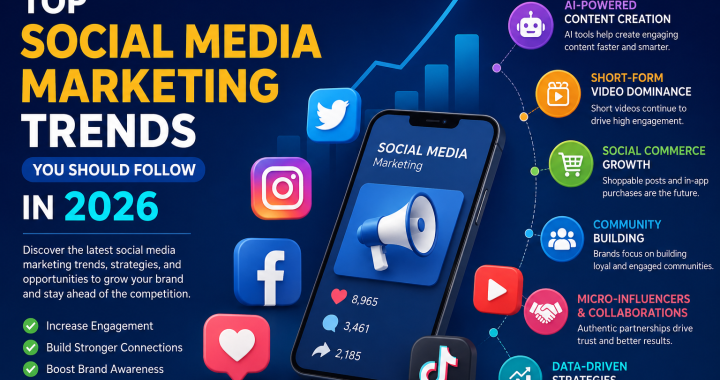
Social media marketing continues to evolve at an incredible pace. Every year, new technologies, platform updates, and changing consumer behaviors reshape how businesses connect with their audiences. In 2026, simply posting content is no longer enough. Brands must create engaging experiences, build authentic relationships, and use data-driven strategies to remain competitive.

Consumers today expect personalized content, faster responses, and genuine interactions. At the same time, artificial intelligence, automation, and new social commerce features are giving businesses more opportunities to reach the right audience at the right time. Companies that stay informed about these changes can improve engagement, increase brand awareness, and achieve stronger marketing results.

Whether you are a startup, a local business, an eCommerce brand, or a digital marketing agency, understanding the latest social media marketing trends will help you develop a strategy that delivers long-term success. This guide explores the most important trends you should follow in 2026 and explains how you can use them to grow your business.


Why Following Social Media Trends Is Important

Social media platforms frequently update their algorithms, advertising features, and content formats. Businesses that continue using outdated strategies often experience lower reach and reduced engagement.

Keeping up with trends helps you:

  • Reach more potential customers
  • Increase engagement
  • Improve brand visibility
  • Generate more leads
  • Stay competitive
  • Strengthen customer relationships
  • Maximize marketing ROI

The goal isn’t to adopt every new feature immediately but to identify the trends that best align with your business objectives and audience.


1. AI-Powered Content Creation

Artificial intelligence has become an essential tool for marketers.

AI can assist with:

  • Content ideas
  • Caption writing
  • Video scripts
  • Image generation
  • Hashtag suggestions
  • Content scheduling
  • Audience analysis
  • Performance reporting

AI improves efficiency by reducing repetitive tasks, allowing marketers to focus on creativity and strategy.

However, human oversight remains essential to ensure content is authentic, accurate, and aligned with your brand voice.


2. Short-Form Video Continues to Dominate

Short-form videos remain one of the most engaging content formats across social media.

Popular formats include:

  • Instagram Reels
  • YouTube Shorts
  • Facebook Reels
  • TikTok videos

Businesses use short videos to:

  • Demonstrate products
  • Share tutorials
  • Showcase customer stories
  • Answer frequently asked questions
  • Introduce team members
  • Share behind-the-scenes content

Videos that educate, entertain, or solve problems tend to perform especially well.


3. Social Commerce Keeps Growing

Social media is increasingly becoming a shopping destination.

Consumers can now:

  • Discover products
  • Read reviews
  • Watch demonstrations
  • Browse collections
  • Make purchases without leaving certain platforms

To take advantage of social commerce:

  • Use high-quality product images
  • Write clear product descriptions
  • Encourage customer reviews
  • Create engaging product videos
  • Offer a seamless buying experience

Businesses that simplify the purchasing process often achieve better conversion rates.


4. Community Building Over Follower Count

Businesses are shifting their focus from simply increasing followers to building engaged communities.

A loyal community provides:

  • Better engagement
  • More customer trust
  • Higher retention
  • User-generated content
  • Valuable feedback
  • Word-of-mouth promotion

Encourage conversations by responding to comments, asking questions, and creating interactive content.


5. Micro-Influencer Partnerships

Brands are increasingly collaborating with micro-influencers who have smaller but highly engaged audiences.

Benefits include:

  • Greater authenticity
  • Higher engagement rates
  • Better audience trust
  • Affordable collaborations
  • Niche expertise

For many businesses, several micro-influencer partnerships can deliver stronger results than a single large influencer campaign.


6. Personalized Content Experiences

Generic content is becoming less effective.

Businesses now create personalized experiences using audience insights such as:

  • Interests
  • Purchase behavior
  • Geographic location
  • Customer preferences
  • Previous interactions

Relevant content encourages stronger engagement and improves customer satisfaction.


7. Employee Advocacy

Employees can become valuable brand ambassadors by sharing company news, expertise, and behind-the-scenes experiences.

Employee advocacy helps:

  • Increase organic reach
  • Build trust
  • Humanize the brand
  • Expand professional networks
  • Strengthen employer branding

Authentic employee voices often resonate more strongly than traditional promotional messaging.


8. Data-Driven Decision Making

Modern social media marketing relies heavily on analytics.

Important metrics include:

  • Reach
  • Engagement rate
  • Click-through rate
  • Website traffic
  • Conversion rate
  • Audience growth
  • Video watch time
  • Return on ad spend (ROAS)

Analyzing performance helps marketers understand what content performs best and where improvements are needed.


9. Authentic Storytelling

Consumers increasingly prefer authentic brands over highly polished promotional content.

Share stories about:

  • Customer success
  • Company values
  • Team members
  • Business challenges
  • Product development
  • Community involvement

Authenticity builds stronger emotional connections and increases long-term customer loyalty.


10. Platform-Specific Content Strategies

Every social media platform has its own audience, content style, and algorithm.

For example:

  • LinkedIn rewards professional insights.
  • Instagram favors visual storytelling.
  • YouTube performs well with educational videos.
  • Pinterest emphasizes evergreen visual content.
  • Facebook supports community interaction.

Creating platform-specific content often produces better engagement than posting identical content everywhere.


How Businesses Can Prepare for These Trends

Start by:

  • Understanding your audience.
  • Investing in quality content.
  • Experimenting with short-form videos.
  • Using AI as a support tool.
  • Building genuine relationships.
  • Monitoring analytics regularly.
  • Testing new content formats.
  • Staying informed about platform updates.

Success comes from adapting thoughtfully rather than chasing every trend.


Common Social Media Marketing Mistakes

Avoid these common mistakes:

  • Posting without a strategy
  • Ignoring audience engagement
  • Relying entirely on AI-generated content
  • Buying fake followers
  • Publishing low-quality visuals
  • Ignoring analytics
  • Posting inconsistently
  • Focusing only on promotional content

Consistency, quality, and authenticity remain the foundation of effective social media marketing.


The Future of Social Media Marketing

Social media is expected to become even more interactive and personalized.

Future developments may include:

  • Advanced AI-powered personalization
  • Smarter automation
  • Expanded social commerce
  • Improved creator collaboration tools
  • Greater privacy protections
  • Enhanced augmented reality (AR) experiences
  • More interactive shopping experiences

Businesses that combine emerging technology with genuine customer relationships will be best positioned for long-term growth.


Conclusion

Social media marketing in 2026 is about much more than maintaining an online presence. Businesses must create valuable content, embrace new technologies responsibly, and focus on building authentic relationships with their audiences.

Trends such as AI-powered content creation, short-form video, social commerce, community building, micro-influencer collaborations, and personalized marketing are reshaping how brands communicate online. At the same time, authenticity, consistent engagement, and data-driven decision-making remain essential for long-term success.

Rather than trying to implement every new feature immediately, focus on the trends that align with your business goals and customer needs. By adapting strategically and continuing to provide value, you can strengthen your brand, increase engagement, and achieve sustainable growth through social media marketing.


Frequently Asked Questions

What is the biggest social media marketing trend in 2026?

Short-form video and AI-assisted content creation are among the most influential trends, helping businesses improve engagement while increasing content production efficiency.

Is social media marketing still effective for small businesses?

Yes. Social media remains one of the most cost-effective ways for small businesses to build brand awareness, connect with customers, and generate leads.

Why is community building important?

An engaged community creates stronger customer relationships, encourages repeat business, increases trust, and often generates valuable word-of-mouth referrals.

Should businesses use AI to create social media content?

AI is an excellent tool for brainstorming ideas, improving efficiency, and assisting with content creation, but human creativity and review are essential to maintain authenticity and brand consistency.

How can I stay updated with social media trends?

Follow official platform announcements, monitor industry publications, analyze your performance data, experiment with new features, and regularly review audience feedback to adapt your strategy effectively.

The Ultimate Guide to Social Media Marketing in 2026: Everything You Need to Know

The Ultimate Guide to Social Media Marketing in 2026: Everything You Need to Know

Meta Title: The Ultimate Guide to Social Media Marketing in 2026 | Complete Beginner’s Guide

Meta Description: Learn everything about social media marketing in 2026, including strategies, platforms, benefits, content creation, analytics, and best practices to grow your business online.

Focus Keyword: Social Media Marketing Guide

The Ultimate Guide to Social Media Marketing in 2026: Everything You Need to Know

Social media has transformed the way businesses communicate with customers. What once began as a platform for sharing personal updates has become one of the most influential marketing channels in the world. Today, businesses of all sizes use social media to increase brand awareness, generate leads, build communities, and drive sales.

In 2026, social media marketing is no longer just about posting images or videos. It involves creating meaningful content, understanding audience behavior, engaging with followers, running targeted advertising campaigns, and analyzing performance to improve results. Whether you are a startup, a local business, an eCommerce store, or a global brand, a well-planned social media strategy can help you achieve measurable business growth.

This comprehensive guide explains everything beginners need to know about social media marketing, including how it works, why it matters, the major platforms, content strategies, best practices, and future trends.


What Is Social Media Marketing?

Social Media Marketing (SMM) is the process of using social media platforms to promote a business, product, service, or brand. It involves creating and sharing valuable content, interacting with audiences, running paid advertisements, and tracking campaign performance to achieve marketing objectives.

Businesses use social media marketing to:

  • Build brand awareness
  • Generate website traffic
  • Increase customer engagement
  • Generate leads
  • Improve customer service
  • Promote products and services
  • Build loyal online communities
  • Increase sales

Unlike traditional advertising, social media marketing creates opportunities for two-way communication, allowing businesses to interact directly with customers.


Why Social Media Marketing Is Important in 2026

Consumers spend a significant amount of time on social media every day. They use these platforms to discover brands, research products, watch videos, read reviews, and connect with businesses.

Some of the biggest benefits include:

1. Increased Brand Visibility

Regular posting helps businesses stay visible and reach both existing and potential customers.

2. Cost-Effective Marketing

Creating organic content is relatively affordable, and paid advertising allows businesses to reach targeted audiences with flexible budgets.

3. Better Customer Relationships

Responding to comments, messages, and feedback helps businesses build trust and long-term loyalty.

4. Website Traffic

Social media posts can direct users to blog articles, product pages, landing pages, and service pages.

5. Valuable Customer Insights

Platform analytics provide information about audience demographics, interests, engagement, and campaign performance.


Popular Social Media Platforms

Each platform serves different audiences and marketing goals.

Facebook

Ideal for:

  • Local businesses
  • Community building
  • Paid advertising
  • Events
  • Customer support

Instagram

Best for:

  • Lifestyle brands
  • Fashion
  • Food
  • Travel
  • Visual storytelling
  • Short-form videos

LinkedIn

Perfect for:

  • B2B marketing
  • Professional networking
  • Industry thought leadership
  • Recruitment

YouTube

Useful for:

  • Tutorials
  • Product demonstrations
  • Educational content
  • Long-form videos

X (formerly Twitter)

Effective for:

  • News
  • Industry updates
  • Real-time conversations
  • Customer engagement

Pinterest

Popular for:

  • Home decor
  • DIY
  • Recipes
  • Fashion
  • Product inspiration

Choosing the right platforms depends on your audience, industry, and business objectives.


How Social Media Marketing Works

A successful social media marketing strategy follows a structured process:

  1. Define business goals.
  2. Identify your target audience.
  3. Choose appropriate platforms.
  4. Develop a content strategy.
  5. Publish content consistently.
  6. Engage with your audience.
  7. Monitor performance.
  8. Improve based on analytics.

Consistency and continuous optimization are key to long-term success.


Organic vs Paid Social Media Marketing

Organic Social Media

Organic marketing involves publishing content without paying for promotion.

Examples include:

  • Educational posts
  • Behind-the-scenes updates
  • Stories
  • Reels
  • Polls
  • Community discussions

Organic marketing builds trust and strengthens relationships over time.

Paid Social Media Advertising

Paid campaigns help businesses reach targeted audiences quickly.

Benefits include:

  • Precise audience targeting
  • Faster reach
  • Lead generation
  • Website traffic
  • Product promotion
  • Remarketing

Many successful businesses combine organic content with paid advertising for the best results.


Creating an Effective Social Media Strategy

A strong strategy begins with clear planning.

Set Clear Goals

Examples include:

  • Increase brand awareness
  • Drive website traffic
  • Generate leads
  • Increase online sales
  • Build community engagement
  • Improve customer support

Every post should support at least one business objective.

Know Your Audience

Understand:

  • Age
  • Interests
  • Location
  • Occupation
  • Buying behavior
  • Preferred platforms

Audience research helps create more relevant content.

Build a Content Calendar

Planning content in advance improves consistency.

Include a mix of:

  • Educational posts
  • Tips and tutorials
  • Product highlights
  • Customer testimonials
  • Industry news
  • Videos
  • Polls
  • Behind-the-scenes content

A balanced content calendar keeps your audience engaged.


Content Types That Perform Well

Different formats attract different audiences.

Popular content includes:

  • Short-form videos
  • Infographics
  • Carousel posts
  • Blog promotions
  • Live streams
  • Stories
  • User-generated content
  • Educational graphics
  • Case studies
  • FAQs

Experiment with multiple formats to discover what resonates most with your audience.


Best Practices for Social Media Marketing

To maximize results:

  • Post consistently.
  • Maintain a consistent brand voice.
  • Respond to comments and messages.
  • Use high-quality visuals.
  • Write engaging captions.
  • Include clear calls-to-action.
  • Use relevant hashtags.
  • Monitor analytics.
  • Stay updated with platform changes.
  • Focus on providing value.

Building trust is more effective than constantly promoting products.


Common Social Media Marketing Mistakes

Many businesses struggle because they:

  • Post inconsistently
  • Ignore audience engagement
  • Use poor-quality visuals
  • Publish overly promotional content
  • Target the wrong audience
  • Ignore analytics
  • Fail to optimize profiles
  • Copy competitors instead of creating original content

Avoiding these mistakes improves long-term performance.


Measuring Success

Track important metrics such as:

  • Reach
  • Impressions
  • Engagement rate
  • Follower growth
  • Website traffic
  • Click-through rate
  • Leads generated
  • Conversion rate

Analyzing these metrics helps refine your strategy and improve future campaigns.


Social Media Marketing Trends in 2026

Several trends are shaping the future of social media marketing.

Key developments include:

  • AI-assisted content creation
  • Short-form video dominance
  • Social commerce
  • Creator collaborations
  • Community-focused marketing
  • Personalized content
  • Interactive posts
  • Employee advocacy
  • Authentic storytelling
  • Data-driven decision-making

Businesses that adapt to these trends while maintaining authenticity are more likely to succeed.


Conclusion

Social media marketing has become an essential component of modern business growth. It offers businesses an opportunity to build meaningful relationships with customers, increase visibility, generate leads, and drive sales through engaging, value-driven content.

Success in 2026 requires more than simply posting regularly. Businesses must understand their audience, create high-quality content, engage consistently, monitor performance, and adapt to changing platform trends. Combining organic strategies with targeted advertising can further amplify results.

Whether you’re launching your first campaign or refining an existing strategy, focusing on authenticity, consistency, and customer value will help you build a stronger online presence and achieve sustainable growth.


Frequently Asked Questions

What is social media marketing?

Social media marketing is the use of platforms like Facebook, Instagram, LinkedIn, YouTube, Pinterest, and X to promote a business, engage audiences, and achieve marketing goals.

Which social media platform is best for businesses?

The best platform depends on your audience and industry. LinkedIn works well for B2B companies, Instagram is ideal for visual brands, Facebook supports community building, and YouTube excels for educational video content.

How often should businesses post on social media?

Posting frequency varies by platform and audience. Consistency is generally more important than posting large amounts of content.

Is paid advertising necessary?

No. Organic content can produce strong long-term results, but paid advertising can accelerate reach, lead generation, and conversions.

How can I measure social media marketing success?

Track metrics such as engagement rate, reach, website traffic, leads, conversions, and follower growth to evaluate campaign performance and identify areas for improvement.

Google Ads for Small Businesses: A Complete Beginner’s Blueprint

Google Ads for Small Businesses: A Complete Beginner’s Blueprint

Meta Title: Google Ads for Small Businesses: A Beginner’s Guide (2026)

Meta Description: Learn how to set up a profitable Google Ads campaign for your small business. Step-by-step blueprint for budget planning, local keyword targeting, and conversions.

Focus Keyword: Google Ads for Small Businesses

For a small business, digital advertising can feel like playing a high-stakes game where the rules change every week. If you aren’t careful, it’s easy to spend hundreds of dollars on clicks that never turn into paying customers.

However, Google Ads remains one of the most powerful ways to get your business in front of customers at the exact moment they are looking to buy. This blueprint strips away the enterprise-level jargon and gives you a step-by-step framework to launch a lean, profitable campaign.


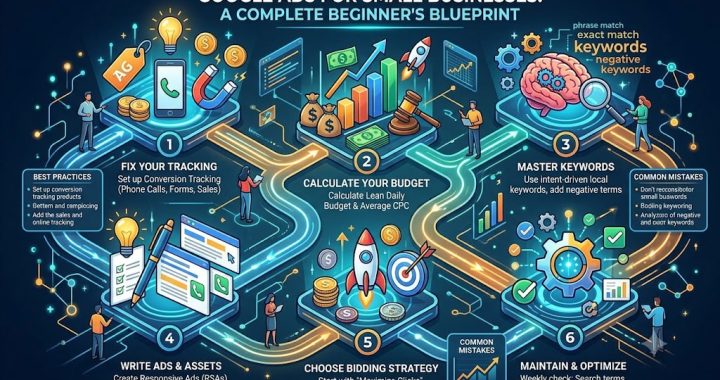
Step 1: Fix Your Tracking Before You Spend a Dime

The absolute biggest mistake small businesses make is launching a campaign without setting up conversion tracking. If Google doesn’t know which clicks led to a phone call, form submission, or sale, its AI cannot optimize your campaign.

  • Define What a “Win” Looks Like: For most small businesses, this is a phone call, a submitted contact form, a booked appointment, or a direct e-commerce sale.

  • Install Google Tag Manager: Drop Google’s tracking code onto your website. Make sure it fires when someone hits a “Thank You” or “Confirmation” page.

  • Turn on Enhanced Conversions: This privacy-safe feature securely matches your customer data (like email addresses) with Google accounts, preserving accurate tracking in a cookieless environment.

Step 2: Calculate Your Lean Starting Budget

You do not need thousands of dollars to start. In fact, starting too big usually leads to optimized waste. Use this simple math to find your starting daily budget:

  1. Find your average Cost Per Click (CPC): Use Google’s free Keyword Planner to look up your industry keywords. Let’s assume an average CPC of $3.00.

  2. Aim for 10 clicks a day: To get meaningful data, you want at least 10 people visiting your page daily.

  3. Calculate: $\$3.00 \times 10 \text{ clicks} = \$30 \text{ per day}$ (or roughly $900 a month).

💡 Pro-Tip: Treat your first 30 days as an investment in data. You are paying to find out exactly what phrases your local audience types in when they are ready to buy.


Step 3: Master “High-Intent” Local Keywords

Small budgets fail when they target broad keywords. If you are a local roofer, targeting the keyword “roof” or “roofing ideas” will destroy your budget on people just browsing pictures. You want commercial intent.

Match Types Simplified

When adding keywords to your campaign, use these two match types exclusively:

  • “Phrase Match” (Use Quotation Marks): Only shows your ad if the user types your keyword phrase in that exact order.

    • Example: "emergency plumber near me"

  • [Exact Match] (Use Brackets): Only shows your ad if the user types the exact phrase with no extra words.

    • Example: [commercial roofing contractor]

The Golden Rule: Build a Negative Keyword List

Before your campaign goes live, tell Google what you don’t want to pay for. Add negative keywords like “free”, “cheap”, “jobs”, “salary”, or “DIY”. This ensures you don’t pay for clicks from people looking for employment or free tutorials.


Step 4: Write Ads That Filter Out Bad Clicks

Your ad copy has two jobs: attract the perfect buyer and scare away the wrong ones. Google uses Responsive Search Ads (RSAs), where you provide multiple headlines and descriptions, and its AI tests the best combinations.

[Headline 1: Clear & Local]  --> Emergency Plumber in Chicago
[Headline 2: Social Proof]   --> 5-Star Rated, 24/7 Service
[Headline 3: Call to Action] --> Call Now For a Free Quote

Writing Framework for Small Businesses:

  • Be hyper-specific: If you only service a certain radius, say it in the headline (e.g., “Serving Downtown Austin”).

  • State your competitive edge: Mention upfront if you offer “Same-Day Booking,” “Free Inspections,” or “Upfront Pricing.”

  • Use Assets (formerly Extensions): Always fill out your Call Assets (adds your phone number directly to the ad) and Location Assets (links your Google Business Profile). This makes it incredibly easy for mobile users to call you without even clicking through to your website.


Step 5: Choose the Right Bidding Strategy

Google will try to steer you toward fully automated bidding immediately, but as a beginner with zero historical data, you need to be careful.

  • Start with “Maximize Clicks” (With a Cap): Tell Google you want to get the most traffic possible out of your budget, but set a maximum CPC limit. If the average keyword costs $3, set your cap at $4.50 so Google doesn’t accidentally spend $20 on a single speculative click.

  • Switch to “Maximize Conversions” Later: Once your campaign has successfully logged 15 to 30 conversions in a month, change your bidding strategy. Now that Google’s AI has data on who actually buys from you, it can safely hunt for similar profiles.


Step 6: Avoid These 3 Beginner Pitfalls

Pitfall Why It Kills ROI How to Fix It
Leaving the Display Network On Google will slide your text ads into random mobile apps and blogs, eating up your budget on accidental clicks. Uncheck “Include Google Display Network” during campaign setup. Stick to Search.
Targeting the Entire Country Default settings target broad geographic zones, meaning a local business pays for clicks thousands of miles away. Change location settings to “Presence: People in or regularly in your targeted locations” and specify your exact zip codes or city radius.
Sending Traffic to Your Homepage Homepages are distracting. If someone clicks an ad for “AC Repair” and lands on a page talking about your company history, plumbing, and electrical services, they will leave. Build a dedicated landing page that matches the exact promise of your ad.

Step 7: The 15-Minute Weekly Maintenance Routine

You don’t need to live inside your Google Ads dashboard. Spend just 15 minutes every week looking at these three items:

  1. The Search Terms Report: Look at the exact phrases people typed to trigger your ad. If you spot irrelevant terms, check the box next to them and add them as Negative Keywords.

  2. Budget Check: Ensure your daily spend is stable and not capping out by 10:00 AM. If it is, your geographic targeting might be too wide or your keywords too broad.

  3. Device Performance: Check if your clicks are coming from desktop or mobile. If mobile has a great click rate but a terrible conversion rate, your website might be too slow or difficult to navigate on smartphones.

Top Google Ads Trends You Should Follow in 2026

Top Google Ads Trends You Should Follow in 2026

Meta Title: Top Google Ads Trends to Follow in 2026 | Complete Guide Meta Description: Discover the top Google Ads trends in 2026, including AI-powered automation, Smart Bidding, Performance Max, first-party data strategies, and privacy-first marketing.Focus Keyword: Google Ads Trends 2026

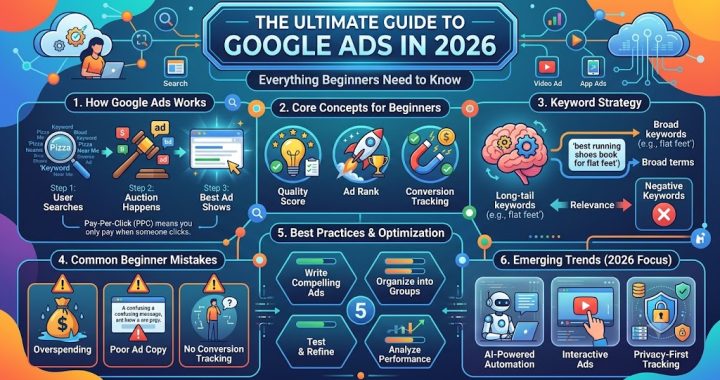
Google Ads has remained one of the most reliable digital advertising platforms because it continually adapts to technological advances, changing consumer behavior, and evolving industry standards. Success depends on adaptation. In 2026, Google Ads is smarter, more personalized, and more privacy-focused than ever.

Whether you want to improve engagement, increase conversions, or build stronger customer relationships, following these key trends will help you maximize your Google Ads results. In this guide, we’ll explore ten critical Google Ads trends you should follow in 2026.

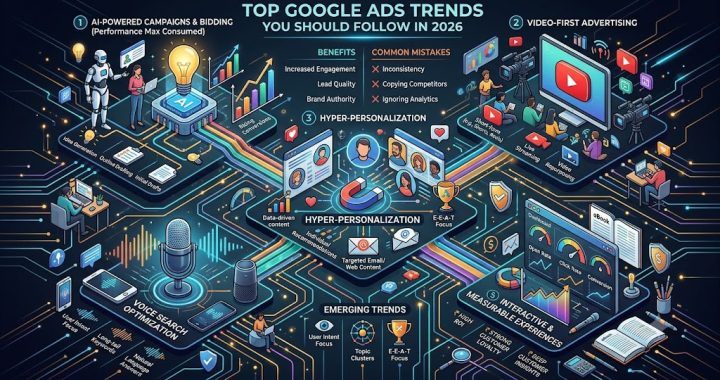
1. AI-Powered Automation and Campaign Optimization

The most significant trend in 2026 is the ubiquitous adoption of Artificial Intelligence (AI) and machine learning for campaign optimization. This is no longer optional; it is fundamental to how Google is restructuring its ad products. AI enables advertisers to deliver the right message to the right person at the optimal time, far beyond what manual efforts can achieve.

Why It Matters

Deeply relevant and personalized content increases open rates, click-through rates, and conversions. Automation ensures consistent communication throughout the customer journey, from onboarding to retention.

Key Applications

  • Predictive Optimization: AI analyzes customer behavior to anticipate future needs and recommend the most relevant content, products, or services.

  • Performance Max and Smart Bidding: Automation identifies the exact moment when individual subscribers are most likely to engage, optimizing email delivery for better results.

  • AI Content Generation: AI helps generate engaging subject lines, preview text, and ad copy, or curate personalized content recommendations.

Follow this trend by ensuring your analytics and conversion tracking are robust, allowing Google’s AI to operate effectively.


2. Dynamic and Interactive Ad Content (Performance Max)

Static ads are a relic of the past. Consumer expectations have shifted toward engaging, dynamic, and action-oriented content. The ubiquitous adoption of Performance Max campaigns has consolidated this trend. Interactive and dynamic ad content increases engagement by allowing recipients to interact with the ad without leaving their current context.

Why It Matters

Interactive ads improve user experience and drive higher engagement by making it easier for customers to complete desired actions. This can increase conversions and decrease bounce rates.

Key Elements

  • Dynamic Product Recommendations: Content updates based on real-time data, ensuring the recommendations are always relevant.

  • Live Forms and Surveys: Collect feedback or customer data directly within the ad, improving completion rates.

  • Interactive Quizzes and Polls: Engage subscribers with fun or useful interactive content.

Follow this trend by providing diverse creative assets (text, images, video) and enabling Google’s dynamic features.


3. Privacy-First and Consent-Based Marketing (First-Party Data)

With growing concerns about data privacy and regulations like GDPR, CCPA, and CPRA, privacy-first marketing is essential. Consumers are increasingly selective about sharing their data, making explicit consent and transparent practices non-negotiable.

Why It Matters

Building trust is essential for long-term customer relationships. Failing to comply with privacy regulations can lead to significant fines and damage your brand reputation. Consent-based marketing leads to a higher-quality, more engaged audience.

Best Practices

  • Implement Robust First-Party Data Strategies: Focus on collecting and utilizing data obtained directly from your customers, with explicit consent. This is your most valuable asset in 2026.

  • Transparent Opt-In: Clearly explain what data you are collecting and how you will use it.

  • Monitor Analytics and Attribution: Utilize Google’s enhanced conversions and modeling features to accurately measure performance while respecting privacy.

Follow this trend by reviewing your data collection and privacy policies, implementing a robust first-party data strategy, and leveraging Google’s privacy-focused tools.


4. OMNICHANNEL INTEGRATION AND MEASUREMENT

Marketing siloization is counterproductive. Consumers interact with brands across multiple channels before making a purchasing decision. In 2026, the most successful brands integrate all their marketing channels, ensuring a consistent and personalized experience.

Why It Matters

Provides a unified view of your customers, enabling better targeting and personalization. Improves campaign effectiveness by optimizing your entire marketing funnel. Strengthens customer relationships through seamless cross-channel communication.

Key Applications

  • Connect Email with Other Channels: Coordinate your Google Ads, social media, SMS, and website content to deliver a seamless brand experience.

  • Omnichannel Customer Journey: Map your customer journey across all channels, identifying key touchpoints and opportunities for consistent messaging.

  • Unified Data and Analytics: Centralize your customer data and use comprehensive reporting to measure performance across all channels.

Follow this trend by integrating your marketing platforms and utilizing comprehensive analytics to track customer interactions across your entire funnel.


5. FOCUS ON E-E-A-T (Expertise, Experience, Authoritativeness, and Trustworthiness)

Search Engine Optimization (SEO) remains a critical long-term strategy for content marketing. In 2026, the most effective SEO techniques focus on user experience and delivering high-quality, relevant content that demonstrates Expertise, Experience, Authoritativeness, and Trustworthiness (E-E-A-T).

Why It Matters

Improves search engine visibility, driving consistent organic traffic. Builds trust and authority, making your content a preferred choice for users. Increases user satisfaction and conversion rates.

Key Techniques

  • User Intent Focus: Understand what users are actively searching for and deliver content that answers their questions.

  • Topic Clusters: Create high-quality, relevant content that provides comprehensive answers to important questions.

  • Personalization and Visuals: Diversify your content formats, use visually engaging visual content, and create detailed audience personas to deliver highly relevant content.

Follow this trend by prioritizing content quality and user experience, implementing topic cluster strategies, and leveraging visual and video content.


6. VIDEO-FIRST MARKETING

Video is the dominant form of content. In 2026, a comprehensive video-first marketing strategy is essential for all brands. Consumers prefer video, and Google is aggressively expanding its video ad placements, particularly with Shorts and YouTube.

Why It Matters

Improves user engagement, increases website traffic, and strengthens customer relationships. Provides high-impact, memorable visual content that drives results. Reaches new audiences who prefer video over other content formats.

Key Applications

  • Short-Form Video (Shorts, Reels, TikTok): Create high-impact, relevant short-form videos to engage audiences.

  • Video Repurposing: Repurpose existing content (blog posts, articles, email newsletters) into engaging video content.

  • Comprehensive Video Strategy: Develop a structured video marketing strategy that aligns with your overall business objectives and audience needs.

Follow this trend by developing a complete video-first marketing strategy and consistently publishing engaging video content.


7. VOICE SEARCH OPTIMIZATION

Voice search is increasing engagement. More users are utilizing voice search, requiring marketers to adapt their SEO and ad strategies. In 2026, voice search optimization is essential for improving search engine visibility and reaching a wider audience.

Why It Matters

Increases website traffic by capturing a growing segment of search traffic. Strengthens customer relationships by providing answers in a more natural, convenient format. Adapt your content to be voice-search-friendly to reach a diverse audience.

Key Techniques

  • Long-Tail Keywords: Focus on finding high-intent search terms that match spoken queries.

  • User Intent Focus: Create detailed customer personas and understand the questions your ideal customers are asking.

  • Analyze and Optimize: Use dashboard gauges with Open, Click, and Conversion Rates to track performance.

Follow this trend by prioritizing content quality and user experience, adapting your SEO to spoken language, and leveraging voice-search-focused content.


8. HYPER-PERSONALIZATION AND INDIVIDUAL RECOMMENDATIONS

Generic content is counterproductive. Consumers expect personalized experiences, and in 2026, hyper-personalization is non-negotiable. Brands must deliver individualized content and product recommendations that resonate with each customer.

Why It Matters

Increases conversions by making your content more relevant and action-oriented. Strengthens customer loyalty through personalized communication. Nurture leads with tailored messages that address pain points.

Key Applications

  • AI-Powered Personalization: Leverage AI and machine learning to deliver individualized content.

  • Behavior-Triggered Messages: Create automated email sequences for nurturing leads and repeat sales.

  • Targeted Email and Web Content: Coordinate your marketing platforms to deliver individualized content.

Follow this trend by integrating your marketing platforms and leveraging AI and data analytics to deliver deeply relevant, individualized content.


9. MEASURE AND OPTIMIZE (Analytics and Conversions)

Marketing is an iterative process. In 2026, the most successful brands continuously measure performance data and use comprehensive reporting to optimize their campaigns.

Why It Matters

Provides actionable insights for improvements, identifies high-performing elements, and reduces wasted marketing spend.

Key Metrics

  • Increased Traffic: Track organic traffic and brand authority.

  • Strong Conversion Rates: Analyze metrics for continuous improvement.

  • Deep Customer Insights: Gather actionable user data.

Follow this trend by prioritizing comprehensive analytics, enabling conversion tracking, and using performance data to refine your entire marketing funnel.


10. COMMON MISTAKES TO AVOID

Avoid these common mistakes to maximize your marketing investment:

  • Relying entirely on one platform.

  • Bought email lists.

  • Ignoring audience segmentation.

  • Posting inconsistently.

  • Sending excessive promotional emails.

  • Neglecting analytics.

  • Ignore customer feedback.

Follow this trend by prioritizing content quality and user experience, maintaining a consistent publishing schedule, and continuously measuring and optimizing performance.


The Future of Digital Marketing

Content marketing is one of the most valuable long-term investments a business can make. By understanding your audience, creating valuable content, optimizing for search engines, and consistently measuring performance, you can build stronger customer relationships and achieve sustainable growth.

The ten strategies outlined in this guide provide a practical roadmap for businesses looking to improve their content marketing efforts in 2026. Remember that successful content marketing is not about publishing the most content—it’s about publishing the right content for the right audience at the right time.

Focus on delivering value, solving problems, and building trust. Over time, these efforts can lead to higher search rankings, increased traffic, more qualified leads, and stronger brand recognition.


Frequently Asked Questions

What is the most effective content marketing strategy?

Creating valuable, SEO-optimized content that addresses your audience’s needs while consistently promoting it across multiple channels is one of the most effective long-term strategies.

How often should I publish content?

Consistency is more important than frequency. Many businesses achieve good results by publishing one high-quality blog post each week alongside regular social media updates.

Does content marketing help SEO?

Yes. High-quality content optimized for relevant keywords helps search engines understand your website and improves your chances of ranking for important search queries.

Can small businesses benefit from content marketing?

Absolutely. Content marketing allows small businesses to compete with larger brands by demonstrating expertise, answering customer questions, and building trust without relying solely on paid advertising.

How long does it take to see results?

Content marketing is a long-term strategy. While some improvements may appear within a few months, significant organic traffic and consistent lead generation often require ongoing effort and regular content updates.

This guide was designed to be original, plagiarism-free, and suitable for publishing directly to your WordPress website, establishing you as a leader in digital marketing in 2026.

Google Ads vs Facebook Ads: Which Platform Delivers Better ROI in 2026

he Core Shift in 2026: Intent vs. Discovery

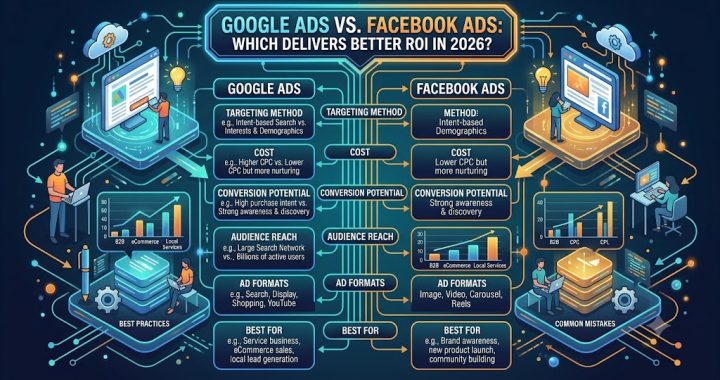
The “Google Ads vs. Meta (Facebook) Ads” debate looks very different today. With both platforms operating largely as AI-driven “black boxes” (via Google’s Performance Max and Meta’s Advantage+), your ROI isn’t determined by manual tweaking. Instead, it depends on where your target customer sits in the buying funnel and your business model.

  • Google Ads (Capturing Demand): Google reclaims the advantage for bottom-funnel, immediate actions. It targets users with clear search intent (e.g., “emergency plumber near me” or “buy leather boots”).

  • Facebook/Meta Ads (Creating Demand): Meta targets users based on demographics, interests, and visual scrolling habits (especially via Reels, which make up over 40% of ad impressions). It introduces products to people who don’t know they need them yet.


2026 Performance & Cost Benchmarks

While Meta offers a significantly cheaper cost to get a user’s attention, Google’s ultra-high intent leads to vastly superior conversion rates.

Metric Google Ads (Search) Facebook / Meta Ads Winner
Average CPC ~$2.96 – $4.22 ~$0.70 – $0.97 Meta (Cheaper clicks)
Avg. Conversion Rate (CVR) ~3.75% – 7.52% ~0.89% – 1.85% Google (Higher intent)
Average Cost Per Lead (CPL) ~$53.89 ~$27.66 Meta (Lower upfront cost)
Customer Lifetime Value (CLV) ~23% higher in Year 1 Requires more nurturing Google (Higher quality leads)

The 2026 Profitability Principle: Never pick a platform purely based on low CPC. Google needs up to 4.2x fewer clicks to generate a sale. Therefore, even with a premium cost-per-click, Google’s ultimate Cost Per Acquisition (CPA) often matches or beats Meta for direct sales.


Which Delivers Better ROI For Your Business?

Because ROI is highly dependent on your industry, vertical, and average order value (AOV), the platforms segment cleanly:

When Google Ads Wins on ROI:

  • High-Ticket B2B & SaaS: High purchase intent translates to serious buyers. SaaS companies see an average of 6.2x ROAS on Google compared to 3.4x on Meta.

  • Urgent & Local Services: Locksmiths, repair services, and medical clinics win here. Nobody scrolls Facebook looking for an emergency roof patch.

  • High AOV Products: Items over $150–$500 justify Google’s higher keyword costs because they require fewer overall touchpoints to close a high-value sale.

When Facebook/Meta Ads Wins on ROI:

  • E-commerce & Visual Fashion: Apparel, lifestyle products, and impulse buys thrive on visual storytelling. Fashion brands see a dominant 9.1x ROAS on Meta vs. 5.8x on Google.

  • Low AOV Products (<$50): Ideal for social commerce where frictionless, emotional shopping triggers fast checkouts directly inside the feed.

  • Brand New Concepts: If you’ve invented a brand-new product category, no one is searching for it on Google yet. Meta allows you to build that audience from scratch.


The Ultimate ROI Strategy: The “Cross-Platform” Funnel

In 2026, the highest return on ad spend doesn’t come from choosing one over the other—it comes from making them work together. Coordinated cross-platform funnels routinely yield a 20% to 40% higher overall ROAS than single-platform silos.

  1. Prospecting (Meta): Use Meta’s broad Advantage+ targeting and video reels to cheaply introduce your product to cold audiences ($0.70 CPC).

  2. Intent Capture (Google): As users discover your brand on social media, they will inevitably switch over to search for your brand or product category on Google. Your Google Search and Shopping ads stand ready at the bottom of the funnel to lock in the conversion.

  3. Retargeting (Meta): Use the Meta Pixel and server-side tracking to scoop up any trailing website visitors with tailored dynamic ads.

How to Create a High-Converting Google Ads Campaign Step by Step

How to Create a High-Converting Google Ads Campaign Step by Step (2026 Guide)

Meta Title: How to Create a High-Converting Google Ads Campaign | Step-by-Step Guide

Meta Description: Learn how to create a high-converting Google Ads campaign with this complete step-by-step guide. Discover keyword research, bidding strategies, ad copywriting, targeting, optimization, and conversion tracking.

Focus Keyword: Google Ads Campaign

How to Create a High-Converting Google Ads Campaign Step by Step

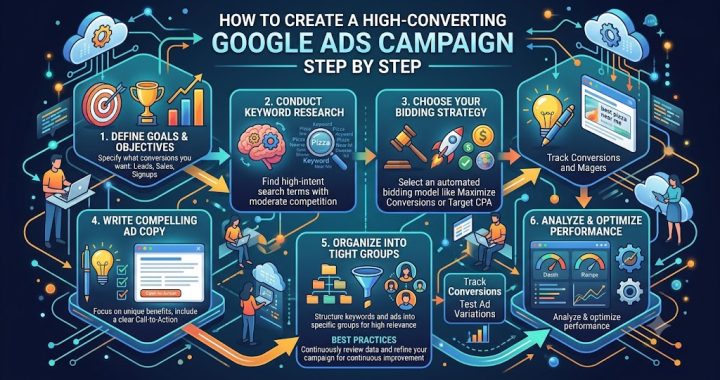
Google Ads has become one of the most effective digital advertising platforms for businesses that want to attract qualified leads, increase website traffic, and boost sales. Unlike traditional advertising, Google Ads allows you to reach people who are already searching for products or services similar to yours. This means your ads appear when potential customers have a strong intent to take action.

However, simply launching a campaign is not enough. Many businesses waste advertising budgets because they target the wrong audience, choose poor keywords, or fail to optimize their campaigns. A successful Google Ads campaign requires careful planning, compelling ad copy, strategic bidding, and continuous performance monitoring.

Whether you own a small business, an eCommerce store, or a digital marketing agency, this step-by-step guide will help you build a Google Ads campaign that delivers better conversions and a stronger return on investment (ROI).


What Makes a Google Ads Campaign Successful?

A high-converting campaign doesn’t necessarily have the biggest budget. Instead, it focuses on showing the right ad to the right audience at the right time.

Successful campaigns usually have:

  • Clearly defined goals
  • Well-researched keywords
  • Relevant audience targeting
  • High-quality ad copy
  • Optimized landing pages
  • Smart bidding strategies
  • Conversion tracking
  • Ongoing optimization

Each of these elements works together to improve campaign performance and reduce wasted spending.


Step 1: Define Your Campaign Goal

Before creating your campaign, decide what you want to achieve.

Common Google Ads objectives include:

  • Generate website traffic
  • Increase online sales
  • Collect leads
  • Receive phone calls
  • Promote local business visits
  • Increase brand awareness
  • Encourage app downloads

Your campaign settings, bidding strategy, and ad format should align with your primary business objective.


Step 2: Understand Your Target Audience

Knowing your audience helps you create more relevant ads.

Consider factors such as:

  • Age
  • Location
  • Language
  • Interests
  • Buying behavior
  • Devices used
  • Search intent

For example, a local service business should target users within its service area rather than advertising nationwide.

Audience research improves ad relevance and increases conversion opportunities.


Step 3: Conduct Keyword Research

Keywords determine when your ads appear.

Choose keywords that closely match what your potential customers are searching for.

Focus on:

  • High-intent keywords
  • Long-tail keywords
  • Local keywords
  • Commercial intent searches

Examples:

  • Best digital marketing agency
  • Google Ads management services
  • SEO company near me
  • Buy running shoes online

Avoid selecting broad keywords that attract irrelevant traffic.


Step 4: Organize Your Ad Groups

Create tightly themed ad groups instead of placing every keyword into one campaign.

Example:

Campaign:
Digital Marketing Services

Ad Groups:

  • SEO Services
  • Google Ads Services
  • Social Media Marketing
  • Email Marketing

Each ad group should contain closely related keywords and advertisements.

This improves Quality Score and makes your ads more relevant.


Step 5: Write Compelling Ad Copy

Your advertisement should quickly explain why someone should choose your business.

Include:

  • Primary keyword
  • Unique selling point
  • Customer benefit
  • Strong call-to-action

Examples of CTAs:

  • Get Your Free Quote
  • Contact Our Experts
  • Book a Free Consultation
  • Start Today
  • Learn More

Good ad copy focuses on solving customer problems rather than simply describing your business.


Step 6: Create a High-Converting Landing Page

Your landing page should match the promise made in your advertisement.

An effective landing page includes:

  • Clear headline
  • Relevant information
  • Fast loading speed
  • Mobile-friendly design
  • Trust signals
  • Customer testimonials
  • Easy navigation
  • Simple contact form
  • Strong call-to-action

Sending visitors to a generic homepage often reduces conversion rates.

Dedicated landing pages usually perform much better.


Step 7: Choose the Right Bidding Strategy

Google Ads offers several bidding options depending on your campaign goals.

Popular strategies include:

Manual CPC

Provides greater control over individual keyword bids.

Maximize Clicks

Designed to generate as many clicks as possible within your budget.

Maximize Conversions

Uses automation to increase conversions while staying within your budget.

Target CPA

Focuses on achieving conversions at your desired average cost per acquisition.

Target ROAS

Suitable for businesses focused on maximizing return on advertising spend.

Choose the strategy that best supports your marketing objectives.


Step 8: Set a Realistic Budget

Your advertising budget should reflect your business goals and competition.

Consider:

  • Daily budget
  • Monthly budget
  • Cost-per-click estimates
  • Expected conversions
  • Industry competition

Starting with a moderate budget allows you to gather performance data before increasing your investment.


Step 9: Enable Conversion Tracking

Without conversion tracking, it’s impossible to know whether your campaign is producing results.

Track actions such as:

  • Form submissions
  • Phone calls
  • Online purchases
  • Newsletter sign-ups
  • Appointment bookings
  • Downloads

Accurate tracking helps identify which keywords, ads, and landing pages generate the highest return.


Step 10: Optimize Your Campaign Regularly

Google Ads requires continuous improvement.

Review your campaign regularly by analyzing:

  • Click-through rate (CTR)
  • Conversion rate
  • Cost per click (CPC)
  • Cost per acquisition (CPA)
  • Search terms
  • Quality Score
  • Impression share

Optimization may include:

  • Adding negative keywords
  • Improving ad copy
  • Adjusting bids
  • Testing new landing pages
  • Refining audience targeting

Small improvements over time often produce significant long-term gains.


Tips to Increase Conversion Rates

To maximize campaign performance:

  • Focus on search intent.
  • Use highly relevant keywords.
  • Write clear headlines.
  • Include compelling offers.
  • Improve landing page speed.
  • Add customer testimonials.
  • Use ad extensions.
  • Test multiple ad variations.
  • Optimize for mobile devices.
  • Review campaign data consistently.

A data-driven approach helps improve both performance and profitability.


Common Google Ads Mistakes to Avoid

Many beginners waste advertising budgets by making avoidable mistakes.

Common errors include:

  • Targeting overly broad keywords
  • Ignoring negative keywords
  • Sending traffic to the homepage
  • Writing generic advertisements
  • Not testing different ad versions
  • Ignoring Quality Score
  • Failing to track conversions
  • Stopping campaigns too quickly

Avoiding these mistakes can improve campaign efficiency and reduce unnecessary spending.


Measuring Campaign Success

Monitor important performance metrics, including:

  • Click-through rate (CTR)
  • Conversion rate
  • Cost per click (CPC)
  • Cost per conversion
  • Return on ad spend (ROAS)
  • Quality Score
  • Impression share
  • Total conversions

Regular reporting helps identify opportunities for improvement and supports better decision-making.


Future of Google Ads

Google Ads continues to evolve with advancements in artificial intelligence and automation.

Important trends include:

  • AI-powered campaign optimization
  • Smart bidding
  • Performance Max campaigns
  • Better audience signals
  • Predictive analytics
  • First-party data strategies
  • Automated asset creation

Businesses that combine automation with strategic planning and creative messaging are likely to achieve stronger results.


Conclusion

Creating a high-converting Google Ads campaign requires more than choosing a few keywords and setting a budget. Success comes from understanding your audience, selecting relevant keywords, writing persuasive advertisements, optimizing landing pages, tracking conversions, and continuously improving campaign performance.

Whether you’re launching your first campaign or refining an existing one, following a structured process helps maximize your advertising investment and reduce wasted spend. Remember that Google Ads is not a one-time setup but an ongoing optimization process that rewards careful analysis and regular adjustments.

With the right strategy, Google Ads can become one of the most powerful tools for generating qualified leads, increasing sales, and growing your business in 2026 and beyond.


Frequently Asked Questions

What is the first step in creating a Google Ads campaign?

The first step is defining a clear business objective, such as generating leads, increasing sales, driving website traffic, or building brand awareness.

How much budget should I start with?

The ideal budget depends on your industry, competition, and goals. Starting with a manageable daily budget allows you to gather performance data before scaling your campaigns.

Why is keyword research important?

Keyword research ensures your ads appear for searches that are relevant to your products or services, improving both traffic quality and conversion potential.

What is Quality Score in Google Ads?

Quality Score is Google’s measure of the relevance and quality of your keywords, ads, and landing pages. A higher score can improve ad placement and reduce advertising costs.

How often should I optimize my campaign?

Review your campaign performance regularly—ideally every week or month depending on your budget and campaign size. Continuous optimization helps improve ROI and maintain strong performance over time.

The Ultimate Guide to Google Ads in 2026: Everything Beginners Need to Know

The Ultimate Guide to Google Ads in 2026: Everything Beginners Need to Know

Meta Title: The Ultimate Guide to Google Ads in 2026 | Beginner’s Guide to Google Ads

Meta Description: Learn everything about Google Ads in 2026. Discover how Google Ads works, campaign types, bidding strategies, keyword research, Quality Score, and best practices to grow your business.

Focus Keyword: Google Ads Guide

The Ultimate Guide to Google Ads in 2026: Everything Beginners Need to Know

In today’s competitive digital marketplace, simply having a website is no longer enough to attract customers. Millions of businesses compete for attention online, making it increasingly difficult to reach potential customers through organic methods alone. This is where Google Ads becomes one of the most powerful digital marketing tools available.

Google Ads enables businesses to display advertisements to people who are actively searching for products or services on Google. Instead of waiting for potential customers to discover your website, you can place your business directly in front of people who already