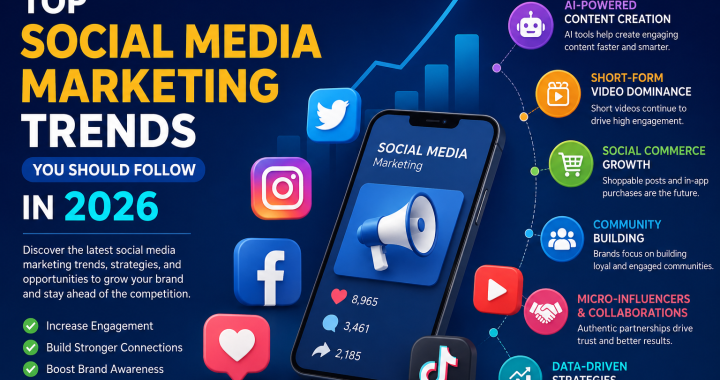
Top Social Media Marketing Trends You Should Follow in 2026

Top Social Media Marketing Trends You Should Follow in 2026

Meta Title: Top Social Media Marketing Trends You Should Follow in 2026

Meta Description: Discover the latest social media marketing trends in 2026, including AI-powered content creation, social commerce, short-form videos, creator partnerships, community building, and more.

Focus Keyword: Social Media Marketing Trends 2026

Top Social Media Marketing Trends You Should Follow in 2026

Social media marketing continues to evolve at an incredible pace. Every year, new technologies, platform updates, and changing consumer behaviors reshape how businesses connect with their audiences. In 2026, simply posting content is no longer enough. Brands must create engaging experiences, build authentic relationships, and use data-driven strategies to remain competitive.

Consumers today expect personalized content, faster responses, and genuine interactions. At the same time, artificial intelligence, automation, and new social commerce features are giving businesses more opportunities to reach the right audience at the right time. Companies that stay informed about these changes can improve engagement, increase brand awareness, and achieve stronger marketing results.

Whether you are a startup, a local business, an eCommerce brand, or a digital marketing agency, understanding the latest social media marketing trends will help you develop a strategy that delivers long-term success. This guide explores the most important trends you should follow in 2026 and explains how you can use them to grow your business.


Why Following Social Media Trends Is Important

Social media platforms frequently update their algorithms, advertising features, and content formats. Businesses that continue using outdated strategies often experience lower reach and reduced engagement.

Keeping up with trends helps you:

  • Reach more potential customers
  • Increase engagement
  • Improve brand visibility
  • Generate more leads
  • Stay competitive
  • Strengthen customer relationships
  • Maximize marketing ROI

The goal isn’t to adopt every new feature immediately but to identify the trends that best align with your business objectives and audience.


1. AI-Powered Content Creation

Artificial intelligence has become an essential tool for marketers.

AI can assist with:

  • Content ideas
  • Caption writing
  • Video scripts
  • Image generation
  • Hashtag suggestions
  • Content scheduling
  • Audience analysis
  • Performance reporting

AI improves efficiency by reducing repetitive tasks, allowing marketers to focus on creativity and strategy.

However, human oversight remains essential to ensure content is authentic, accurate, and aligned with your brand voice.


2. Short-Form Video Continues to Dominate

Short-form videos remain one of the most engaging content formats across social media.

Popular formats include:

  • Instagram Reels
  • YouTube Shorts
  • Facebook Reels
  • TikTok videos

Businesses use short videos to:

  • Demonstrate products
  • Share tutorials
  • Showcase customer stories
  • Answer frequently asked questions
  • Introduce team members
  • Share behind-the-scenes content

Videos that educate, entertain, or solve problems tend to perform especially well.


3. Social Commerce Keeps Growing

Social media is increasingly becoming a shopping destination.

Consumers can now:

  • Discover products
  • Read reviews
  • Watch demonstrations
  • Browse collections
  • Make purchases without leaving certain platforms

To take advantage of social commerce:

  • Use high-quality product images
  • Write clear product descriptions
  • Encourage customer reviews
  • Create engaging product videos
  • Offer a seamless buying experience

Businesses that simplify the purchasing process often achieve better conversion rates.


4. Community Building Over Follower Count

Businesses are shifting their focus from simply increasing followers to building engaged communities.

A loyal community provides:

  • Better engagement
  • More customer trust
  • Higher retention
  • User-generated content
  • Valuable feedback
  • Word-of-mouth promotion

Encourage conversations by responding to comments, asking questions, and creating interactive content.


5. Micro-Influencer Partnerships

Brands are increasingly collaborating with micro-influencers who have smaller but highly engaged audiences.

Benefits include:

  • Greater authenticity
  • Higher engagement rates
  • Better audience trust
  • Affordable collaborations
  • Niche expertise

For many businesses, several micro-influencer partnerships can deliver stronger results than a single large influencer campaign.


6. Personalized Content Experiences

Generic content is becoming less effective.

Businesses now create personalized experiences using audience insights such as:

  • Interests
  • Purchase behavior
  • Geographic location
  • Customer preferences
  • Previous interactions

Relevant content encourages stronger engagement and improves customer satisfaction.


7. Employee Advocacy

Employees can become valuable brand ambassadors by sharing company news, expertise, and behind-the-scenes experiences.

Employee advocacy helps:

  • Increase organic reach
  • Build trust
  • Humanize the brand
  • Expand professional networks
  • Strengthen employer branding

Authentic employee voices often resonate more strongly than traditional promotional messaging.


8. Data-Driven Decision Making

Modern social media marketing relies heavily on analytics.

Important metrics include:

  • Reach
  • Engagement rate
  • Click-through rate
  • Website traffic
  • Conversion rate
  • Audience growth
  • Video watch time
  • Return on ad spend (ROAS)

Analyzing performance helps marketers understand what content performs best and where improvements are needed.


9. Authentic Storytelling

Consumers increasingly prefer authentic brands over highly polished promotional content.

Share stories about:

  • Customer success
  • Company values
  • Team members
  • Business challenges
  • Product development
  • Community involvement

Authenticity builds stronger emotional connections and increases long-term customer loyalty.


10. Platform-Specific Content Strategies

Every social media platform has its own audience, content style, and algorithm.

For example:

  • LinkedIn rewards professional insights.
  • Instagram favors visual storytelling.
  • YouTube performs well with educational videos.
  • Pinterest emphasizes evergreen visual content.
  • Facebook supports community interaction.

Creating platform-specific content often produces better engagement than posting identical content everywhere.


How Businesses Can Prepare for These Trends

Start by:

  • Understanding your audience.
  • Investing in quality content.
  • Experimenting with short-form videos.
  • Using AI as a support tool.
  • Building genuine relationships.
  • Monitoring analytics regularly.
  • Testing new content formats.
  • Staying informed about platform updates.

Success comes from adapting thoughtfully rather than chasing every trend.


Common Social Media Marketing Mistakes

Avoid these common mistakes:

  • Posting without a strategy
  • Ignoring audience engagement
  • Relying entirely on AI-generated content
  • Buying fake followers
  • Publishing low-quality visuals
  • Ignoring analytics
  • Posting inconsistently
  • Focusing only on promotional content

Consistency, quality, and authenticity remain the foundation of effective social media marketing.


The Future of Social Media Marketing

Social media is expected to become even more interactive and personalized.

Future developments may include:

  • Advanced AI-powered personalization
  • Smarter automation
  • Expanded social commerce
  • Improved creator collaboration tools
  • Greater privacy protections
  • Enhanced augmented reality (AR) experiences
  • More interactive shopping experiences

Businesses that combine emerging technology with genuine customer relationships will be best positioned for long-term growth.


Conclusion

Social media marketing in 2026 is about much more than maintaining an online presence. Businesses must create valuable content, embrace new technologies responsibly, and focus on building authentic relationships with their audiences.

Trends such as AI-powered content creation, short-form video, social commerce, community building, micro-influencer collaborations, and personalized marketing are reshaping how brands communicate online. At the same time, authenticity, consistent engagement, and data-driven decision-making remain essential for long-term success.

Rather than trying to implement every new feature immediately, focus on the trends that align with your business goals and customer needs. By adapting strategically and continuing to provide value, you can strengthen your brand, increase engagement, and achieve sustainable growth through social media marketing.


Frequently Asked Questions

What is the biggest social media marketing trend in 2026?

Short-form video and AI-assisted content creation are among the most influential trends, helping businesses improve engagement while increasing content production efficiency.

Is social media marketing still effective for small businesses?

Yes. Social media remains one of the most cost-effective ways for small businesses to build brand awareness, connect with customers, and generate leads.

Why is community building important?

An engaged community creates stronger customer relationships, encourages repeat business, increases trust, and often generates valuable word-of-mouth referrals.

Should businesses use AI to create social media content?

AI is an excellent tool for brainstorming ideas, improving efficiency, and assisting with content creation, but human creativity and review are essential to maintain authenticity and brand consistency.

How can I stay updated with social media trends?

Follow official platform announcements, monitor industry publications, analyze your performance data, experiment with new features, and regularly review audience feedback to adapt your strategy effectively.
The Ultimate Guide to Social Media Marketing in 2026: Everything You Need to Know

The Ultimate Guide to Social Media Marketing in 2026: Everything You Need to Know

Meta Title: The Ultimate Guide to Social Media Marketing in 2026 | Complete Beginner’s Guide

Meta Description: Learn everything about social media marketing in 2026, including strategies, platforms, benefits, content creation, analytics, and best practices to grow your business online.

Focus Keyword: Social Media Marketing Guide

The Ultimate Guide to Social Media Marketing in 2026: Everything You Need to Know

Social media has transformed the way businesses communicate with customers. What once began as a platform for sharing personal updates has become one of the most influential marketing channels in the world. Today, businesses of all sizes use social media to increase brand awareness, generate leads, build communities, and drive sales.

In 2026, social media marketing is no longer just about posting images or videos. It involves creating meaningful content, understanding audience behavior, engaging with followers, running targeted advertising campaigns, and analyzing performance to improve results. Whether you are a startup, a local business, an eCommerce store, or a global brand, a well-planned social media strategy can help you achieve measurable business growth.

This comprehensive guide explains everything beginners need to know about social media marketing, including how it works, why it matters, the major platforms, content strategies, best practices, and future trends.


What Is Social Media Marketing?

Social Media Marketing (SMM) is the process of using social media platforms to promote a business, product, service, or brand. It involves creating and sharing valuable content, interacting with audiences, running paid advertisements, and tracking campaign performance to achieve marketing objectives.

Businesses use social media marketing to:

  • Build brand awareness
  • Generate website traffic
  • Increase customer engagement
  • Generate leads
  • Improve customer service
  • Promote products and services
  • Build loyal online communities
  • Increase sales

Unlike traditional advertising, social media marketing creates opportunities for two-way communication, allowing businesses to interact directly with customers.


Why Social Media Marketing Is Important in 2026

Consumers spend a significant amount of time on social media every day. They use these platforms to discover brands, research products, watch videos, read reviews, and connect with businesses.

Some of the biggest benefits include:

1. Increased Brand Visibility

Regular posting helps businesses stay visible and reach both existing and potential customers.

2. Cost-Effective Marketing

Creating organic content is relatively affordable, and paid advertising allows businesses to reach targeted audiences with flexible budgets.

3. Better Customer Relationships

Responding to comments, messages, and feedback helps businesses build trust and long-term loyalty.

4. Website Traffic

Social media posts can direct users to blog articles, product pages, landing pages, and service pages.

5. Valuable Customer Insights

Platform analytics provide information about audience demographics, interests, engagement, and campaign performance.


Popular Social Media Platforms

Each platform serves different audiences and marketing goals.

Facebook

Ideal for:

  • Local businesses
  • Community building
  • Paid advertising
  • Events
  • Customer support

Instagram

Best for:

  • Lifestyle brands
  • Fashion
  • Food
  • Travel
  • Visual storytelling
  • Short-form videos

LinkedIn

Perfect for:

  • B2B marketing
  • Professional networking
  • Industry thought leadership
  • Recruitment

YouTube

Useful for:

  • Tutorials
  • Product demonstrations
  • Educational content
  • Long-form videos

X (formerly Twitter)

Effective for:

  • News
  • Industry updates
  • Real-time conversations
  • Customer engagement

Pinterest

Popular for:

  • Home decor
  • DIY
  • Recipes
  • Fashion
  • Product inspiration

Choosing the right platforms depends on your audience, industry, and business objectives.


How Social Media Marketing Works

A successful social media marketing strategy follows a structured process:

  1. Define business goals.
  2. Identify your target audience.
  3. Choose appropriate platforms.
  4. Develop a content strategy.
  5. Publish content consistently.
  6. Engage with your audience.
  7. Monitor performance.
  8. Improve based on analytics.

Consistency and continuous optimization are key to long-term success.


Organic vs Paid Social Media Marketing

Organic Social Media

Organic marketing involves publishing content without paying for promotion.

Examples include:

  • Educational posts
  • Behind-the-scenes updates
  • Stories
  • Reels
  • Polls
  • Community discussions

Organic marketing builds trust and strengthens relationships over time.

Paid Social Media Advertising

Paid campaigns help businesses reach targeted audiences quickly.

Benefits include:

  • Precise audience targeting
  • Faster reach
  • Lead generation
  • Website traffic
  • Product promotion
  • Remarketing

Many successful businesses combine organic content with paid advertising for the best results.


Creating an Effective Social Media Strategy

A strong strategy begins with clear planning.

Set Clear Goals

Examples include:

  • Increase brand awareness
  • Drive website traffic
  • Generate leads
  • Increase online sales
  • Build community engagement
  • Improve customer support

Every post should support at least one business objective.

Know Your Audience

Understand:

  • Age
  • Interests
  • Location
  • Occupation
  • Buying behavior
  • Preferred platforms

Audience research helps create more relevant content.

Build a Content Calendar

Planning content in advance improves consistency.

Include a mix of:

  • Educational posts
  • Tips and tutorials
  • Product highlights
  • Customer testimonials
  • Industry news
  • Videos
  • Polls
  • Behind-the-scenes content

A balanced content calendar keeps your audience engaged.


Content Types That Perform Well

Different formats attract different audiences.

Popular content includes:

  • Short-form videos
  • Infographics
  • Carousel posts
  • Blog promotions
  • Live streams
  • Stories
  • User-generated content
  • Educational graphics
  • Case studies
  • FAQs

Experiment with multiple formats to discover what resonates most with your audience.


Best Practices for Social Media Marketing

To maximize results:

  • Post consistently.
  • Maintain a consistent brand voice.
  • Respond to comments and messages.
  • Use high-quality visuals.
  • Write engaging captions.
  • Include clear calls-to-action.
  • Use relevant hashtags.
  • Monitor analytics.
  • Stay updated with platform changes.
  • Focus on providing value.

Building trust is more effective than constantly promoting products.


Common Social Media Marketing Mistakes

Many businesses struggle because they:

  • Post inconsistently
  • Ignore audience engagement
  • Use poor-quality visuals
  • Publish overly promotional content
  • Target the wrong audience
  • Ignore analytics
  • Fail to optimize profiles
  • Copy competitors instead of creating original content

Avoiding these mistakes improves long-term performance.


Measuring Success

Track important metrics such as:

  • Reach
  • Impressions
  • Engagement rate
  • Follower growth
  • Website traffic
  • Click-through rate
  • Leads generated
  • Conversion rate

Analyzing these metrics helps refine your strategy and improve future campaigns.


Social Media Marketing Trends in 2026

Several trends are shaping the future of social media marketing.

Key developments include:

  • AI-assisted content creation
  • Short-form video dominance
  • Social commerce
  • Creator collaborations
  • Community-focused marketing
  • Personalized content
  • Interactive posts
  • Employee advocacy
  • Authentic storytelling
  • Data-driven decision-making

Businesses that adapt to these trends while maintaining authenticity are more likely to succeed.


Conclusion

Social media marketing has become an essential component of modern business growth. It offers businesses an opportunity to build meaningful relationships with customers, increase visibility, generate leads, and drive sales through engaging, value-driven content.

Success in 2026 requires more than simply posting regularly. Businesses must understand their audience, create high-quality content, engage consistently, monitor performance, and adapt to changing platform trends. Combining organic strategies with targeted advertising can further amplify results.

Whether you’re launching your first campaign or refining an existing strategy, focusing on authenticity, consistency, and customer value will help you build a stronger online presence and achieve sustainable growth.


Frequently Asked Questions

What is social media marketing?

Social media marketing is the use of platforms like Facebook, Instagram, LinkedIn, YouTube, Pinterest, and X to promote a business, engage audiences, and achieve marketing goals.

Which social media platform is best for businesses?

The best platform depends on your audience and industry. LinkedIn works well for B2B companies, Instagram is ideal for visual brands, Facebook supports community building, and YouTube excels for educational video content.

How often should businesses post on social media?

Posting frequency varies by platform and audience. Consistency is generally more important than posting large amounts of content.

Is paid advertising necessary?

No. Organic content can produce strong long-term results, but paid advertising can accelerate reach, lead generation, and conversions.

How can I measure social media marketing success?

Track metrics such as engagement rate, reach, website traffic, leads, conversions, and follower growth to evaluate campaign performance and identify areas for improvement.