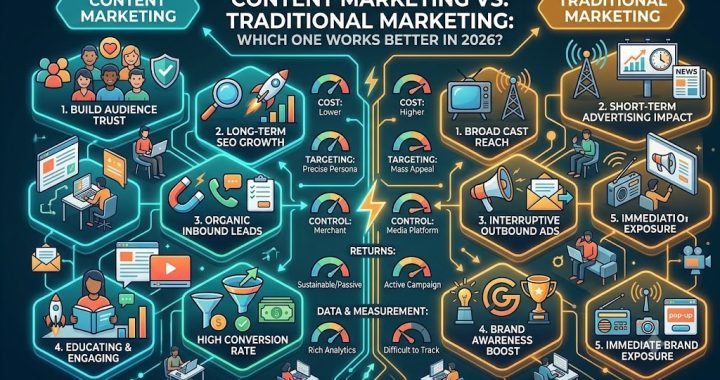
Content Marketing vs Traditional Marketing: Which One Works Better in 2026?
Meta Title: Content Marketing vs Traditional Marketing: Which Works Better in 2026?
Meta Description: Compare content marketing and traditional marketing in 2026. Learn the key differences, benefits, costs, ROI, and discover which strategy is best for growing your business.
Focus Keyword: Content Marketing vs Traditional Marketing
Content Marketing vs Traditional Marketing: Which One Works Better in 2026?
Marketing has always been essential for business growth, but the way companies connect with customers has changed dramatically over the past decade. While traditional marketing methods such as television commercials, newspaper advertisements, radio spots, and billboards continue to exist, businesses are increasingly investing in content marketing to reach modern consumers.
Today’s customers are more informed than ever before. Instead of relying solely on advertisements, they search online, read reviews, compare products, watch videos, and seek expert advice before making a purchase. This shift in consumer behavior has made content marketing one of the most effective long-term marketing strategies.
So, which approach works better in 2026—content marketing or traditional marketing? The answer depends on your goals, audience, and budget. This guide compares both methods to help you choose the right strategy for your business.
What Is Content Marketing?
Content marketing is a strategy that focuses on creating and sharing valuable, relevant, and informative content to attract and engage a specific audience.
Rather than directly promoting products, businesses educate and assist potential customers through helpful resources that answer questions and solve problems.
Common forms of content marketing include:
- Blog posts
- Videos
- Social media content
- Podcasts
- Email newsletters
- Case studies
- eBooks
- Infographics
- Webinars
- Tutorials
The goal is to build trust over time, making customers more likely to choose your business when they are ready to buy.
What Is Traditional Marketing?
Traditional marketing refers to promotional methods that have been used for decades to reach a broad audience through offline or conventional media.
Examples include:
- Television advertisements
- Radio commercials
- Newspaper ads
- Magazine advertisements
- Flyers and brochures
- Billboards
- Direct mail
- Trade shows
- Print catalogs
Traditional marketing focuses on delivering promotional messages directly to consumers, often with the aim of generating immediate awareness or sales.
Key Differences Between Content Marketing and Traditional Marketing
| Feature | Content Marketing | Traditional Marketing |
|---|---|---|
| Primary Goal | Build trust and educate | Promote products directly |
| Audience Engagement | Two-way communication | Mostly one-way communication |
| Cost | Often lower over time | Usually higher |
| Longevity | Long-lasting content | Short campaign lifespan |
| SEO Benefits | Yes | No |
| Measurable Results | Highly measurable | Limited measurement |
| Customer Trust | Builds gradually | Depends on brand recognition |
| Flexibility | Easy to update | Difficult to modify after publication |
Benefits of Content Marketing
Content marketing has become a preferred strategy because it offers long-term value.
1. Improves Search Engine Rankings
Publishing high-quality content optimized for relevant keywords helps businesses appear in search engine results and attract organic traffic.
2. Builds Customer Trust
Educational content positions your business as a reliable source of information rather than simply another advertiser.
3. Generates Qualified Leads
People who discover your content are often already interested in your products or services, making them more likely to convert.
4. Delivers Long-Term Results
A well-written blog post or video can continue attracting visitors for months or even years after publication.
5. Supports Multiple Marketing Channels
Content can be repurposed into social media posts, newsletters, videos, infographics, and presentations, increasing its overall value.
Benefits of Traditional Marketing
Although digital marketing continues to grow, traditional marketing still offers several advantages.
1. Broad Audience Reach
Television, newspapers, and radio can reach large audiences, especially in local or regional markets.
2. Strong Local Visibility
Billboards, flyers, and print advertisements are effective for promoting local businesses and events.
3. High Brand Recognition
Large companies often use television and print campaigns to reinforce their brand image and reach audiences who may not spend much time online.
4. Tangible Marketing Materials
Printed brochures, catalogs, and business cards provide physical resources that customers can keep for future reference.
Cost Comparison
One of the biggest differences between the two approaches is cost.
Content Marketing
Initial investment often includes:
- Website development
- Blog writing
- SEO
- Graphic design
- Video creation
- Email marketing
While creating quality content requires time and effort, it often continues generating traffic without ongoing advertising costs.
Traditional Marketing
Costs may include:
- Television advertisements
- Newspaper space
- Magazine ads
- Billboard rentals
- Printing materials
- Radio commercials
Many traditional campaigns require significant investment and stop producing results once the campaign ends.
Return on Investment (ROI)
Content marketing generally provides stronger long-term ROI because valuable content continues attracting visitors long after it is published.
For example:
A helpful buying guide published today may still generate website traffic and leads two years later.
Traditional advertisements usually provide results only while the campaign is active.
However, traditional marketing can deliver fast visibility for product launches, seasonal promotions, or local events.
Which Strategy Builds More Trust?
Modern consumers often trust businesses that educate rather than simply advertise.
Content marketing helps businesses demonstrate expertise by answering questions, solving problems, and providing useful resources.
Examples include:
- Product tutorials
- Buying guides
- Industry insights
- Customer success stories
- Educational videos
Traditional advertisements are effective for raising awareness but generally provide fewer opportunities to build long-term relationships.
When Should You Choose Content Marketing?
Content marketing is ideal if you want to:
- Increase website traffic
- Improve SEO
- Generate leads
- Build authority
- Create long-term customer relationships
- Support social media marketing
- Grow organically over time
It is particularly effective for service businesses, software companies, digital agencies, educational platforms, and eCommerce websites.
When Should You Choose Traditional Marketing?
Traditional marketing works well when your goal is to:
- Reach local audiences
- Promote events
- Launch new products
- Increase immediate brand awareness
- Target customers who consume traditional media
Many businesses still combine newspaper ads, billboards, and radio campaigns with digital marketing to maximize visibility.
Can You Combine Both Strategies?
Absolutely.
The most successful businesses often integrate content marketing with traditional marketing.
For example:
- Run a local newspaper advertisement.
- Direct readers to your website.
- Offer a free guide or downloadable resource.
- Collect email subscribers.
- Continue nurturing those leads through content marketing.
This combination allows businesses to benefit from immediate exposure while building long-term customer relationships.
Future of Marketing
Marketing continues to evolve with changing technology and consumer expectations.
Some growing trends include:
- AI-assisted content creation
- Personalized customer experiences
- Interactive content
- Short-form videos
- Voice search optimization
- Data-driven decision-making
- First-party data strategies
- Multi-channel marketing
Businesses that adapt to these trends while maintaining valuable, customer-focused content will remain competitive.
Final Verdict
Content marketing and traditional marketing both have important roles in modern business, but they serve different purposes.
Traditional marketing is effective for creating rapid awareness and reaching broad or local audiences through channels such as television, radio, newspapers, and billboards. However, these campaigns often require larger budgets and usually stop producing results when the campaign ends.
Content marketing, on the other hand, focuses on building trust, educating customers, and creating long-term value. High-quality blogs, videos, newsletters, and social media content can continue attracting visitors and generating leads long after they are published. It also supports search engine optimization, making it one of the most cost-effective marketing strategies available.
For most businesses in 2026, content marketing offers greater long-term return on investment. However, combining content marketing with carefully selected traditional marketing campaigns can create a balanced strategy that delivers both immediate visibility and sustainable business growth.
Frequently Asked Questions
Which is better, content marketing or traditional marketing?
For long-term growth, content marketing is generally more effective because it builds trust, improves SEO, and continues generating traffic over time. Traditional marketing remains useful for brand awareness and local promotions.
Is content marketing cheaper than traditional marketing?
In many cases, yes. Although creating quality content requires time and resources, it often delivers ongoing value without the recurring costs associated with television, print, or radio advertising.
Can small businesses use content marketing?
Yes. Content marketing is especially valuable for small businesses because it allows them to compete with larger brands by sharing expertise and building customer trust.
Does traditional marketing still work?
Yes. Traditional marketing can still be effective for local campaigns, product launches, and reaching audiences who consume offline media.
Should businesses use both strategies?
In many situations, yes. Combining traditional marketing for immediate visibility with content marketing for long-term engagement creates a well-rounded marketing strategy.