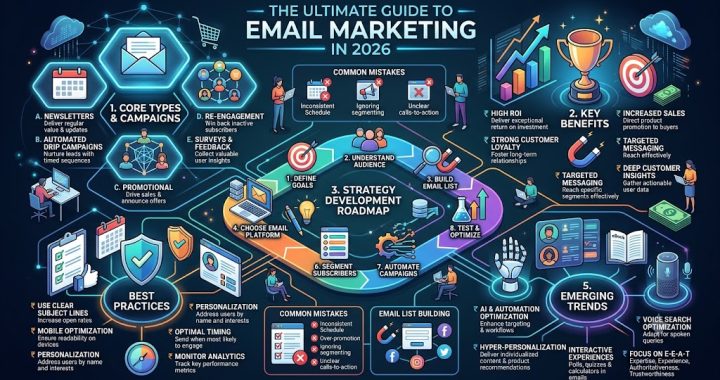
The Ultimate Guide to Email Marketing in 2026
Meta Title: The Ultimate Guide to Email Marketing in 2026 | Complete Beginner’s Guide
Meta Description: Learn everything about email marketing in 2026, including its benefits, types, strategies, best practices, and tips to grow your business with effective email campaigns.
Focus Keyword: Email Marketing Guide
The Ultimate Guide to Email Marketing in 2026
Despite the rapid growth of social media, artificial intelligence, and new digital marketing channels, email marketing continues to be one of the most reliable and cost-effective ways to connect with customers. Businesses of all sizes—from startups to global brands—use email to build relationships, generate leads, increase sales, and encourage customer loyalty.
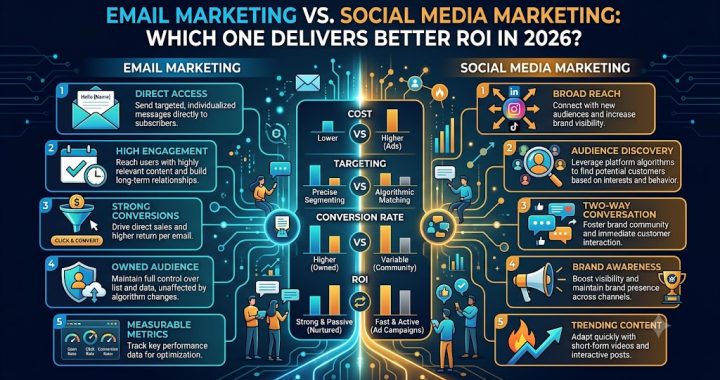
Unlike social media platforms where algorithms determine how many people see your content, email gives you a direct line of communication with your audience. When someone subscribes to your mailing list, they have already shown interest in your business, making email an excellent channel for delivering personalized and valuable content.
In 2026, successful email marketing is no longer about sending promotional messages to everyone on your list. It focuses on providing relevant information, personalizing communication, automating campaigns, and continuously optimizing performance based on data.
This complete guide explains everything you need to know about email marketing, from the basics and benefits to campaign types, strategy development, best practices, and future trends.
What Is Email Marketing?
Email marketing is a digital marketing strategy that involves sending emails to subscribers with the goal of building relationships, sharing valuable information, promoting products or services, and encouraging specific actions such as purchases or sign-ups.
Instead of broadcasting the same message to everyone, businesses can segment their audience and send personalized emails based on customer interests, behavior, or stage in the buying journey.
Email marketing is commonly used to:
- Build customer relationships
- Promote products and services
- Share company news
- Educate subscribers
- Drive website traffic
- Increase sales
- Recover abandoned carts
- Encourage repeat purchases
When planned carefully, email marketing becomes a long-term communication channel that supports both customer acquisition and retention.
Why Email Marketing Still Matters in 2026
Many businesses wonder whether email marketing is still effective with the popularity of social media and messaging apps. The answer is yes.
Email remains valuable because it allows businesses to communicate directly with subscribers who have chosen to hear from them.
Some key advantages include:
1. Direct Communication
Unlike social media platforms that rely on algorithms, emails are delivered directly to subscribers’ inboxes, giving businesses more control over their communication.
2. Cost-Effective Marketing
Compared to many advertising channels, email marketing can deliver strong results without requiring a large budget. This makes it suitable for businesses of all sizes.
3. High Personalization
Modern email marketing platforms allow businesses to personalize messages using customer names, preferences, purchase history, and browsing behavior.
4. Better Customer Relationships
Consistently sharing useful and relevant information helps build trust and keeps your brand top of mind.
5. Measurable Performance
Email campaigns provide valuable metrics such as:
- Open rates
- Click-through rates
- Conversion rates
- Bounce rates
- Unsubscribe rates
These insights help marketers continuously improve future campaigns.
Types of Email Marketing Campaigns
Different campaigns serve different business goals.
Welcome Emails
Sent immediately after someone subscribes, welcome emails introduce your brand and set expectations for future communication.
Newsletter Emails
Regular newsletters keep subscribers informed about industry news, company updates, educational content, and special announcements.
Promotional Emails
These emails highlight new products, limited-time offers, discounts, and seasonal campaigns.
Educational Emails
Businesses can share guides, tutorials, case studies, or helpful tips to establish authority and provide value beyond direct promotion.
Abandoned Cart Emails
For eCommerce businesses, automated reminders encourage customers to complete purchases they left unfinished.
Re-Engagement Emails
These campaigns aim to reconnect with inactive subscribers through personalized offers or valuable content.
Benefits of Email Marketing
Businesses that use email marketing strategically often experience significant long-term benefits.
These include:
- Higher customer engagement
- Increased website traffic
- Improved lead nurturing
- Better customer retention
- More repeat purchases
- Increased brand awareness
- Stronger customer loyalty
- Cost-effective marketing
- Higher conversion opportunities
- Valuable customer insights
Because email marketing targets people who have already expressed interest, it often delivers higher engagement than broader advertising channels.
How to Build an Effective Email Marketing Strategy
A successful strategy begins with planning rather than simply sending emails.
Step 1: Define Your Goals
Start by identifying what you want to achieve.
Examples include:
- Increase sales
- Generate leads
- Drive website traffic
- Promote new products
- Improve customer retention
- Build brand awareness
Clear objectives make it easier to measure success.
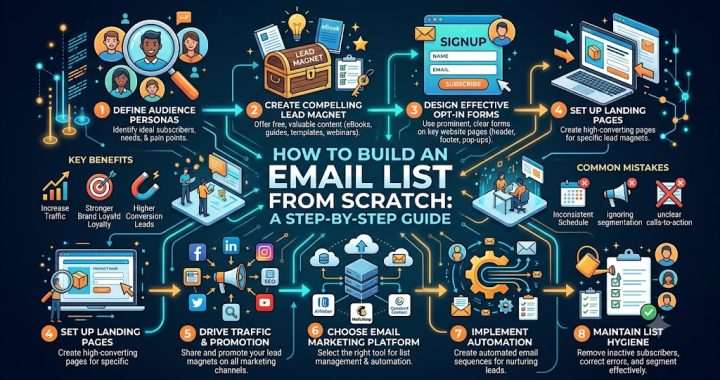
Step 2: Build a Quality Email List
Focus on growing your list organically through:
- Website signup forms
- Landing pages
- Lead magnets
- Free guides
- Webinars
- Newsletter subscriptions
Avoid purchasing email lists, as they often result in low engagement and poor deliverability.
Step 3: Segment Your Audience
Not every subscriber has the same interests.
Segment your list based on:
- Demographics
- Purchase history
- Website activity
- Interests
- Customer lifecycle stage
Segmentation improves relevance and increases engagement.
Step 4: Create Valuable Content
Every email should provide value.
Include:
- Helpful tips
- Educational resources
- Industry insights
- Exclusive offers
- Product recommendations
- Customer success stories
Focus on helping subscribers rather than constantly selling.
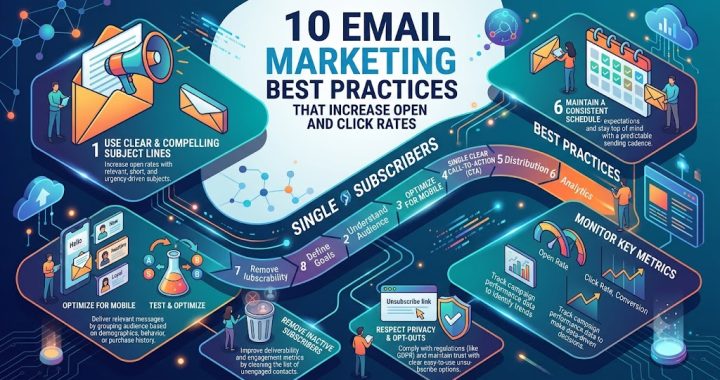
Best Practices for Email Marketing
To improve campaign performance:
- Write clear subject lines.
- Personalize your emails.
- Keep your design mobile-friendly.
- Use a single, clear call-to-action.
- Test different email versions.
- Maintain a consistent sending schedule.
- Remove inactive subscribers regularly.
- Monitor campaign performance.
- Respect subscriber privacy.
- Always provide an easy unsubscribe option.
These practices improve user experience and help maintain a healthy email list.
Common Email Marketing Mistakes
Many businesses reduce campaign effectiveness by making avoidable mistakes.
Some of the most common include:
- Sending too many emails
- Using misleading subject lines
- Ignoring mobile optimization
- Failing to segment subscribers
- Purchasing email lists
- Neglecting analytics
- Sending generic content
- Overloading emails with promotional messages
Avoiding these mistakes can improve engagement and strengthen customer relationships.
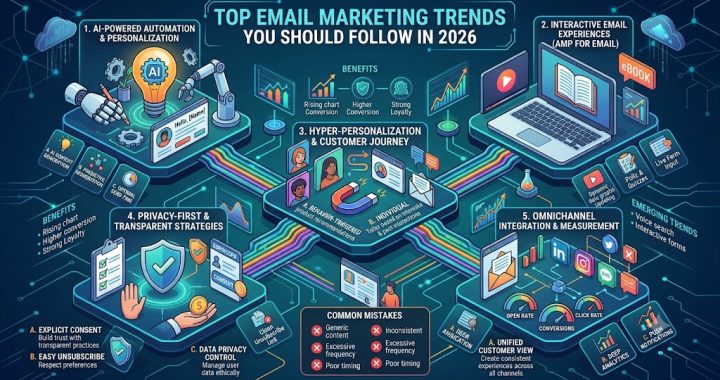
Email Marketing Trends in 2026
The email marketing landscape continues to evolve.
Important trends include:
- AI-assisted email creation
- Advanced personalization
- Predictive email automation
- Interactive email experiences
- Privacy-focused marketing
- Mobile-first email design
- Smarter audience segmentation
- Improved data analytics
Businesses that embrace these developments while maintaining valuable content will remain competitive.
Measuring Email Marketing Success
Successful campaigns are guided by data.
Monitor important metrics such as:
- Open Rate
- Click-Through Rate (CTR)
- Conversion Rate
- Bounce Rate
- Unsubscribe Rate
- Revenue per Campaign
- List Growth Rate
- Engagement Over Time
Reviewing these metrics regularly helps optimize future campaigns and improve overall marketing performance.
Conclusion
Email marketing remains one of the most powerful digital marketing channels in 2026 because it allows businesses to build direct, meaningful relationships with their audience. While technology continues to evolve, the core principle remains the same: provide valuable, relevant, and timely communication that helps subscribers solve problems and achieve their goals.
By building a quality email list, segmenting your audience, creating useful content, and continuously improving your campaigns through data analysis, you can turn email marketing into a reliable source of traffic, leads, and revenue.
Whether you’re just getting started or refining an existing strategy, consistent effort and a customer-first approach will help you maximize the long-term value of email marketing.
Frequently Asked Questions
Is email marketing still effective in 2026?
Yes. Email marketing remains one of the most effective digital marketing channels because it provides direct communication, supports personalization, and delivers measurable results.
How often should businesses send marketing emails?
The ideal frequency depends on your audience and goals. Many businesses find success with one weekly newsletter or a few targeted campaigns each month while avoiding excessive messaging.
What makes a successful marketing email?
Successful emails typically have a compelling subject line, valuable content, clear design, a strong call-to-action, and are personalized to the recipient’s interests.
Should small businesses use email marketing?
Absolutely. Email marketing is affordable, scalable, and helps small businesses build relationships with customers while promoting products, services, and valuable content.
What is the biggest benefit of email marketing?
One of the greatest advantages is that it enables businesses to communicate directly with subscribers, build long-term customer relationships, and generate consistent traffic and sales without relying solely on social media algorithms.