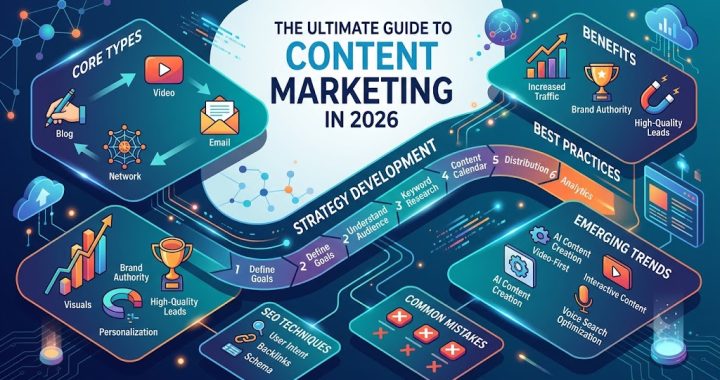
The Ultimate Guide to Content Marketing in 2026
Meta Title: The Ultimate Guide to Content Marketing in 2026 | Complete Beginner’s Guide
Meta Description: Learn everything about content marketing in 2026. Discover its benefits, types, strategies, trends, and best practices to grow your business online.
Focus Keyword: Content Marketing Guide
The Ultimate Guide to Content Marketing in 2026
In today’s digital world, customers are constantly searching for valuable information before making a purchase. They read blog posts, watch videos, compare products, and look for expert advice before deciding which brand they can trust. This shift in consumer behavior has made content marketing one of the most powerful digital marketing strategies for businesses of all sizes.
Unlike traditional advertising, which focuses on directly selling products or services, content marketing aims to educate, inform, entertain, and build relationships with potential customers. By consistently creating high-quality content that solves problems and answers questions, businesses can attract the right audience, establish authority, and generate long-term growth.
Whether you own a startup, an eCommerce store, a local business, or a large enterprise, content marketing can help you increase brand awareness, improve search engine rankings, generate qualified leads, and build customer loyalty.
This comprehensive guide explains everything you need to know about content marketing in 2026, including its importance, different content formats, benefits, strategy development, best practices, and future trends.
What Is Content Marketing?
Content marketing is a strategic marketing approach focused on creating and distributing valuable, relevant, and consistent content to attract and retain a clearly defined audience. Rather than interrupting people with advertisements, content marketing provides useful information that helps potential customers make informed decisions.
The primary goal is not to make an immediate sale but to build trust over time. When people consistently find your content helpful, they are more likely to choose your business when they are ready to purchase.
Content marketing can take many forms, including:
- Blog posts
- Articles
- Videos
- Infographics
- Podcasts
- Case studies
- Email newsletters
- eBooks
- Social media posts
- Webinars
- White papers
- Interactive tools
Each format serves a different purpose, allowing businesses to engage audiences at various stages of the customer journey.
Why Content Marketing Matters in 2026
The digital landscape continues to evolve, but one thing remains constant: people value useful information. Search engines also prioritize content that demonstrates expertise, experience, authority, and trustworthiness.
Here are some reasons why content marketing remains essential in 2026:
1. Builds Brand Awareness
Publishing informative content helps introduce your business to new audiences. Every blog post, video, or social media update creates another opportunity for potential customers to discover your brand.
2. Improves Search Engine Rankings
Search engines reward websites that regularly publish high-quality, relevant content. Optimized articles targeting user intent can increase your visibility and drive organic traffic over time.
3. Generates High-Quality Leads
People who find your content while researching a topic are often already interested in related products or services. This makes content marketing an effective way to attract qualified leads.
4. Builds Trust and Credibility
Sharing accurate, helpful information demonstrates expertise. As readers gain confidence in your knowledge, they are more likely to trust your recommendations and become loyal customers.
5. Supports Every Stage of the Customer Journey
Content can educate potential customers, answer their questions, compare solutions, and encourage purchasing decisions. It also helps retain existing customers by providing ongoing value.
Types of Content Marketing
An effective content marketing strategy uses multiple content formats to reach audiences across different platforms.
Blog Posts
Blogs remain one of the most effective ways to attract organic search traffic. Regularly publishing informative articles helps improve SEO, answer customer questions, and establish authority in your industry.
Videos
Video content continues to grow in popularity. Tutorials, demonstrations, interviews, product reviews, and educational videos often achieve higher engagement than text alone.
Social Media Content
Short-form posts, carousels, stories, and reels allow businesses to connect with audiences on platforms such as Instagram, LinkedIn, Facebook, and X. Social media is excellent for increasing brand visibility and encouraging conversations.
Email Marketing
Email newsletters help nurture relationships with subscribers by delivering valuable content directly to their inboxes. They are also an effective channel for sharing blog posts, product updates, and educational resources.
Infographics
Visual content simplifies complex topics and makes information easier to understand. Infographics are highly shareable and can generate backlinks when other websites reference them.
Podcasts
Podcasts allow businesses to connect with audiences who prefer audio content. They are particularly effective for thought leadership, interviews, and industry discussions.
eBooks and Guides
Long-form resources provide in-depth information and are often used to generate leads by offering them in exchange for an email address.
Benefits of Content Marketing
Businesses that invest in content marketing often experience long-term advantages beyond immediate sales.
Some of the most important benefits include:
- Increased website traffic
- Better search engine visibility
- Stronger brand authority
- Improved customer engagement
- Higher conversion rates
- Cost-effective lead generation
- Better customer retention
- Increased social media shares
- Long-term return on investment
- Sustainable business growth
Unlike paid advertisements, high-quality content can continue attracting visitors months or even years after publication.
How to Create a Successful Content Marketing Strategy
Creating random content is unlikely to produce consistent results. A structured strategy helps ensure every piece of content supports your business goals.
Step 1: Define Your Goals
Start by identifying what you want to achieve.
Common goals include:
- Increasing website traffic
- Generating leads
- Improving brand awareness
- Growing email subscribers
- Increasing sales
- Building customer loyalty
Your goals will influence the type of content you create and how you measure success.
Step 2: Understand Your Audience
Research your target audience carefully.
Consider factors such as:
- Age
- Location
- Interests
- Challenges
- Buying behavior
- Preferred content formats
Understanding your audience allows you to create content that addresses their specific needs and questions.
Step 3: Perform Keyword Research
Keyword researchAhelps identify the topics your audience is actively searching for online.
Focus on:
- High-intent keywords
- Long-tail keywords
- Frequently asked questions
- Industry trends
- Seasonal opportunities
Choosing the right keywords improves your chances of ranking in search engines and attracting relevant traffic.