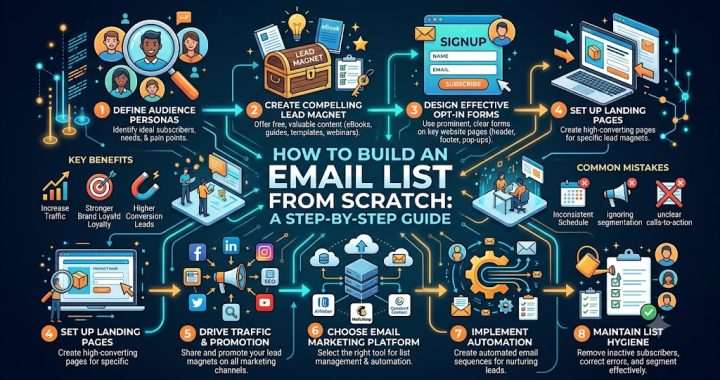
How to Build an Email List from Scratch: A Step-by-Step Guide (2026)
Meta Title: How to Build an Email List from Scratch in 2026 | Complete Guide
Meta Description: Learn how to build an email list from scratch with proven strategies. Discover the best ways to attract subscribers, grow your audience, and improve email marketing results in 2026.
Focus Keyword: Build an Email List
How to Build an Email List from Scratch: A Step-by-Step Guide
Email marketing remains one of the most effective digital marketing channels because it allows businesses to communicate directly with their audience. However, a successful email marketing campaign begins with one essential asset—a high-quality email list. Without subscribers, even the most well-designed email campaigns won’t generate meaningful results.
Building an email list from scratch may seem challenging, especially for new businesses or websites, but with the right strategy, it is completely achievable. The key is to focus on attracting people who are genuinely interested in your content, products, or services rather than trying to collect as many email addresses as possible.
In this guide, you’ll learn step-by-step how to build an engaged email list that supports long-term business growth while following ethical and effective email marketing practices.
Why an Email List Is Important
Unlike followers on social media, your email list is an audience you can communicate with directly. Social media algorithms change frequently, limiting how many people see your posts, but email allows you to send personalized messages straight to subscribers who have chosen to hear from you.
A strong email list can help you:
- Increase website traffic
- Generate qualified leads
- Promote products and services
- Build customer loyalty
- Increase repeat purchases
- Share valuable content
- Strengthen your brand
- Improve customer retention
Rather than chasing new visitors every day, email marketing helps you build lasting relationships with people who already trust your business.
Step 1: Understand Your Target Audience
Before collecting email addresses, identify who you want to attract.
Consider questions such as:
- Who are your ideal customers?
- What challenges do they face?
- What information are they searching for?
- Which type of content interests them?
- What problems can your business solve?
Understanding your audience allows you to create offers and content that encourage people to subscribe.
Step 2: Create a Valuable Lead Magnet
People rarely share their email address without receiving something valuable in return.
A lead magnet is a free resource offered in exchange for a visitor’s email address.
Popular lead magnets include:
- eBooks
- Checklists
- Templates
- Free guides
- Industry reports
- Mini courses
- Webinars
- Resource libraries
- Discount coupons
- Free consultations
Your lead magnet should solve a specific problem and provide immediate value.
For example, a digital marketing agency might offer a free SEO checklist or a beginner’s guide to social media marketing.
Step 3: Design Effective Signup Forms
Your signup form should be simple, attractive, and easy to complete.
Ask only for essential information, such as:
- First name
- Email address
Long forms often reduce conversion rates.
Place signup forms in visible locations, including:
- Homepage
- Blog sidebar
- Website footer
- Landing pages
- Contact page
- Exit-intent popups
- Blog articles
Make sure the call-to-action clearly explains what subscribers will receive.
Step 4: Create High-Quality Content
Content marketing plays a major role in email list growth.
When visitors consistently find helpful content on your website, they are more likely to subscribe for future updates.
Create content such as:
- Blog posts
- Tutorials
- Buying guides
- Case studies
- Videos
- Infographics
- Industry news
- Frequently asked questions
Focus on solving real problems rather than simply promoting your products.
Step 5: Build Dedicated Landing Pages
A landing page focuses on one objective—encouraging visitors to subscribe.
An effective landing page includes:
- A compelling headline
- Clear explanation of the offer
- Benefits of subscribing
- Social proof (if available)
- Simple signup form
- Strong call-to-action
Removing unnecessary distractions can improve conversion rates.
Step 6: Promote Your Email Signup Across Multiple Channels
Don’t rely only on your website to grow your email list.
Promote your signup page through:
- YouTube
- X (formerly Twitter)
- Blog articles
- Email signatures
- Online communities
You can also encourage subscribers during webinars, events, or presentations by directing them to your landing page.
Step 7: Use Popups Responsibly
Popups can be effective when used thoughtfully.
Examples include:
- Exit-intent popups
- Scroll-triggered forms
- Time-based popups
- Slide-in forms
Avoid showing popups immediately after someone lands on your website. Give visitors enough time to explore your content before requesting their email address.
A positive user experience should always remain your priority.
Step 8: Deliver Valuable Emails
Building an email list is only the beginning.
Once someone subscribes, continue providing value through:
- Educational articles
- Helpful tips
- Industry updates
- Exclusive offers
- Product announcements
- Customer success stories
Consistently delivering useful content encourages subscribers to stay engaged and reduces unsubscribe rates.
Step 9: Maintain a Healthy Email List
A smaller list of engaged subscribers is more valuable than a large list of inactive contacts.
Regularly:
- Remove invalid email addresses
- Clean inactive subscribers
- Update subscriber preferences
- Monitor engagement levels
- Respect unsubscribe requests
Maintaining list quality improves email deliverability and campaign performance.
Step 10: Measure Your Results
Successful email marketing depends on continuous improvement.
Monitor key metrics such as:
- Signup conversion rate
- Email open rate
- Click-through rate
- Bounce rate
- Unsubscribe rate
- List growth rate
- Website traffic from email
- Conversion rate
Analyzing these metrics helps identify what’s working and where adjustments are needed.
Common Mistakes to Avoid
Many businesses struggle to grow their email list because they make avoidable mistakes.
Avoid these common errors:
- Buying email lists
- Asking for too much information
- Offering weak lead magnets
- Hiding signup forms
- Sending excessive promotional emails
- Ignoring mobile optimization
- Neglecting email list maintenance
- Failing to personalize communication
Building trust should always be your highest priority.
Best Practices for Long-Term Growth
To grow your email list successfully:
- Offer genuine value.
- Create high-quality content.
- Make signup forms easy to find.
- Use compelling calls-to-action.
- Segment your subscribers.
- Personalize your emails.
- Test different signup forms.
- Continuously improve your strategy.
Email list growth is a gradual process that rewards consistency and patience.
Conclusion
Building an email list from scratch takes time, but it is one of the most valuable investments you can make for your business. Unlike rented audiences on social media platforms, your email subscribers have chosen to receive your communication, making them more likely to engage with your content and become loyal customers.
By understanding your audience, creating valuable lead magnets, optimizing signup forms, publishing helpful content, promoting your offers across multiple channels, and maintaining a healthy email list, you can build a strong foundation for successful email marketing.
Remember that quality is more important than quantity. A smaller list of engaged subscribers will almost always outperform a larger list of uninterested contacts. Focus on delivering consistent value, and your email list will continue to grow alongside your business.
Frequently Asked Questions
How long does it take to build an email list?
The timeline varies depending on your website traffic, content quality, and promotional efforts. Consistent value and regular optimization typically produce steady growth over time.
Is it okay to buy an email list?
No. Purchased lists often contain uninterested recipients, resulting in poor engagement, higher spam complaints, and lower deliverability. Building an organic list is a better long-term strategy.
What is the best lead magnet?
The best lead magnet is one that solves a specific problem for your target audience. Examples include checklists, templates, eBooks, webinars, and free tools.
How often should I email subscribers?
The ideal frequency depends on your audience and content. Many businesses send one weekly newsletter or a few targeted emails each month while maintaining consistent value.
Why is email list segmentation important?
Segmentation allows you to send more relevant messages based on subscriber interests and behavior, leading to higher open rates, better engagement, and improved conversions.