Top Email Marketing Trends You Should Follow in 2026

Top Email Marketing Trends You Should Follow in 2026

Meta Title: Top Email Marketing Trends to Follow in 2026 | Complete GuideMeta Description: Discover the top email marketing trends in 2026, including AI-powered automation, hyper-personalization, interactive emails, privacy-first strategies, and more to grow your business.Focus Keyword: Email Marketing Trends 2026

Email marketing has remained one of the most reliable digital marketing channels because it allows businesses to communicate directly with customers and prospects. However, success depends on continuous adaptation to technological advances, changing consumer behavior, and evolving industry standards. In 2026, email marketing is smarter, more personalized, and more privacy-focused than ever.

Whether you want to improve engagement, increase conversions, or build stronger customer relationships, following these key trends will help you maximize your email marketing results. In this guide, we’ll explore ten critical email marketing trends you should follow in 2026.

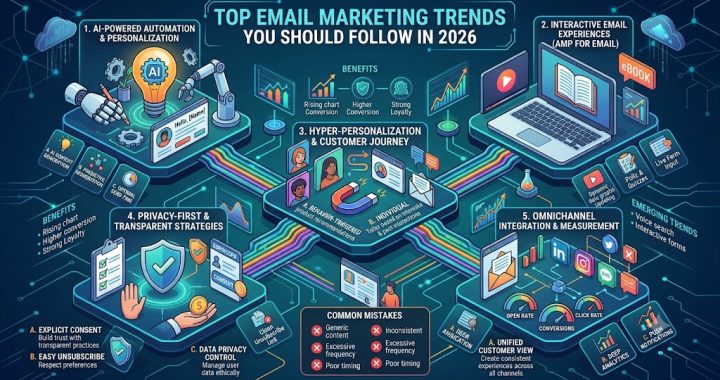
1. AI-Powered Personalization and Automation

Artificial Intelligence (AI) has completely transformed email marketing by making deep personalization and advanced automation possible. AI enables marketers to deliver the right message to the right person at the optimal time, far beyond what manual efforts can achieve.

Why It Matters

Deeply relevant and personalized content increases open rates, click-through rates, and conversions. Automation ensures consistent communication throughout the customer journey, from onboarding to retention.

Key Applications

  • Predictive Personalization: AI analyzes customer behavior to anticipate future needs and recommend the most relevant content, products, or services.

  • Optimal Send Time: AI identifies the exact moment when individual subscribers are most likely to engage, optimizing email delivery for better results.

  • Content Generation and Curation: AI helps generate engaging subject lines, preview text, and email copy, or curate personalized content recommendations.

  • Smart Segmentation: AI automatically segments your audience based on complex data points, ensuring highly targeted campaigns.

  • Automated Testing: AI facilitates efficient A/B and multivariate testing, quickly identifying the best-performing elements.

To follow this trend, focus on integrating AI tools that complement your existing email platform, starting with segmentation, predictive modeling, and send time optimization.

2. Interactive and Dynamic Email Content

Interactive and dynamic email content is increasing engagement by allowing recipients to interact with the email without leaving their inbox. AMP for Email and interactive elements make emails more useful, engaging, and action-oriented.

Why It Matters

Interactive emails improve user experience and drive higher engagement by making it easier for customers to complete desired actions. This can increase conversions and decrease bounce rates.

Key Elements

  • Live Forms and Surveys: Collect feedback or customer data directly within the email, improving completion rates.

  • Interactive Quizzes and Polls: Engage subscribers with fun or useful interactive content.

  • Product Carousels and Sliders: Allow users to browse multiple products or images within the email.

  • Accordions and Expandable Content: Provide detailed information without cluttering the initial email view.

  • Dynamic Product Recommendations: Update content based on real-time data, ensuring the recommendations are always relevant.

  • “Add to Cart” and Booking: Facilitate direct purchasing or scheduling within the email, reducing friction.

Following this trend requires an email service provider (ESP) that supports AMP for Email and dynamic content, alongside thoughtful design and implementation.

3. Privacy-First and Consent-Based Marketing

With growing concerns about data privacy and regulations like GDPR, CCPA, and CPRA, privacy-first marketing is essential. Consumers are increasingly selective about sharing their data, making explicit consent and transparent practices non-negotiable.

Why It Matters

Building trust is essential for long-term customer relationships. Failing to comply with privacy regulations can lead to significant fines and damage your brand reputation. Consent-based marketing leads to a higher-quality, more engaged audience.

4. Email Marketing vs Social Media Marketing: Which One Delivers Better ROI

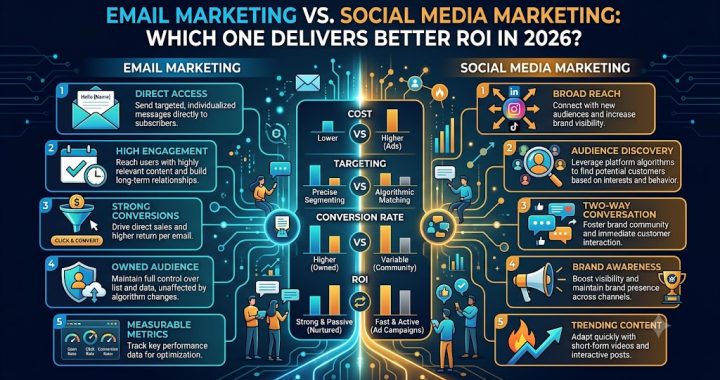
Email Marketing vs Social Media Marketing: Which One Delivers Better ROI in 2026?

Meta Title: Email Marketing vs Social Media Marketing: Which One Delivers Better ROI?

Meta Description: Compare email marketing and social media marketing to discover which delivers better ROI. Learn the key differences, benefits, costs, and how to choose the right strategy for your business in 2026.

Focus Keyword: Email Marketing vs Social Media Marketing

Email Marketing vs Social Media Marketing: Which One Delivers Better ROI in 2026?

Businesses today have more marketing channels available than ever before, but two of the most effective are email marketing and social media marketing. Both help brands connect with customers, increase awareness, generate leads, and drive sales. However, when marketing budgets are limited, one question often arises: Which channel delivers the better return on investment (ROI)?

The answer isn’t as simple as choosing one over the other. Each channel has unique strengths, serves different purposes, and performs differently depending on your business goals, audience, and marketing strategy.

Email marketing gives businesses direct access to subscribers who have already shown interest in their brand, while social media marketing helps reach new audiences and encourages conversations through engaging content.

In this guide, we’ll compare email marketing and social media marketing across key factors such as cost, audience reach, engagement, conversions, and long-term value to help you decide where to focus your efforts.


What Is Email Marketing?

Email marketing is a digital marketing strategy that involves sending targeted emails to subscribers who have voluntarily joined your mailing list.

Businesses use email marketing to:

  • Share newsletters
  • Promote products and services
  • Announce new launches
  • Deliver educational content
  • Recover abandoned carts
  • Build customer loyalty
  • Generate repeat sales

Because subscribers have already given permission to receive emails, communication is more personal and targeted.


What Is Social Media Marketing?

Social media marketing involves promoting a business through platforms such as:

  • Facebook
  • Instagram
  • LinkedIn
  • X (formerly Twitter)
  • Pinterest
  • YouTube
  • TikTok

Businesses use these platforms to:

  • Increase brand awareness
  • Build communities
  • Share content
  • Engage with customers
  • Promote products
  • Run advertising campaigns
  • Drive website traffic

Unlike email marketing, social media also helps businesses reach people who may not yet know about their brand.


Understanding ROI in Digital Marketing

Return on Investment (ROI) measures how much value your marketing efforts generate compared to the money and time invested.

A successful marketing channel should help you:

  • Generate qualified leads
  • Increase conversions
  • Build customer relationships
  • Improve customer retention
  • Strengthen brand awareness
  • Support long-term business growth

Both email and social media can contribute to these goals, but they do so in different ways.


Email Marketing vs Social Media Marketing: Key Differences

Feature Email Marketing Social Media Marketing
Audience Ownership You own your subscriber list Platform owns the audience
Reach Direct inbox delivery Controlled by platform algorithms
Personalization Highly personalized Limited personalization
Customer Relationship Strong long-term engagement Broad public interaction
Organic Visibility High with engaged subscribers Can decline due to algorithm changes
Cost Low ongoing cost Organic is free; ads may require larger budgets
Conversion Potential Generally higher Strong for awareness and engagement
Analytics Detailed campaign metrics Platform-specific analytics

Benefits of Email Marketing

Email marketing offers several advantages for businesses seeking long-term customer relationships.

1. Direct Communication

Your message is delivered directly to subscribers without depending on social media algorithms.

2. Higher Personalization

Emails can be customized based on customer behavior, interests, purchases, and preferences.

3. Better Lead Nurturing

Businesses can guide potential customers through the buying journey with automated email sequences.

4. Greater Customer Retention

Regular newsletters and personalized offers help maintain long-term relationships.

5. Strong Conversion Potential

Subscribers are often more likely to make purchases because they have already expressed interest in your business.


Benefits of Social Media Marketing

Social media excels at expanding brand visibility and creating engagement.

1. Massive Audience Reach

Billions of people actively use social media platforms every day.

2. Brand Awareness

Businesses can introduce their products and services to entirely new audiences.

3. Community Building

Social media encourages conversations, comments, and user-generated content that strengthen customer relationships.

4. Visual Storytelling

Photos, videos, live streams, and short-form content help businesses showcase their personality and expertise.

5. Fast Content Distribution

Content can spread quickly through shares, comments, and recommendations.


Cost Comparison

Both strategies can be affordable, but their costs differ.

Email Marketing Costs

Typical expenses include:

  • Email marketing software
  • List management
  • Content creation
  • Automation tools
  • Design

Once your list is established, ongoing costs are often relatively low.

Social Media Marketing Costs

Expenses may include:

  • Content creation
  • Graphic design
  • Video production
  • Community management
  • Paid advertising
  • Influencer partnerships

Organic social media is free to use, but many businesses invest in advertising to expand their reach.


Which Channel Generates Better Engagement?

Engagement depends on your objectives.

Email marketing typically encourages deeper engagement because subscribers have already shown interest in your business.

Social media encourages:

  • Likes
  • Comments
  • Shares
  • Conversations
  • Community interaction

Both forms of engagement are valuable, but they support different stages of the customer journey.


Which Delivers Better Conversions?

Email marketing often performs better when the goal is generating sales, encouraging repeat purchases, or nurturing existing leads.

Social media is particularly effective for:

  • Brand discovery
  • Product awareness
  • Community engagement
  • Driving visitors to your website

Many businesses use social media to attract visitors and email marketing to convert them into customers.


When Should You Prioritize Email Marketing?

Email marketing is ideal if your goals include:

  • Building customer loyalty
  • Increasing repeat purchases
  • Promoting products
  • Sharing educational content
  • Nurturing leads
  • Recovering abandoned shopping carts
  • Driving consistent website traffic

Businesses with established audiences often benefit significantly from email campaigns.


When Should You Focus on Social Media?

Social media marketing works well for businesses that want to:

  • Build brand awareness
  • Reach new audiences
  • Increase community engagement
  • Share visual content
  • Launch products
  • Promote events
  • Strengthen brand identity

It is especially valuable during the awareness stage of the customer journey.


Why Combining Both Strategies Works Best

Rather than choosing one channel exclusively, successful businesses often integrate email marketing with social media marketing.

For example:

  1. Publish valuable content on social media.
  2. Encourage followers to join your email list.
  3. Deliver exclusive resources through email.
  4. Continue nurturing subscribers with personalized campaigns.
  5. Use email to drive traffic back to new social media content.

This approach combines the broad reach of social media with the long-term relationship-building power of email marketing.


Common Mistakes to Avoid

Avoid these common marketing mistakes:

  • Relying entirely on one platform
  • Buying email lists
  • Ignoring audience segmentation
  • Posting inconsistently on social media
  • Sending excessive promotional emails
  • Neglecting analytics
  • Ignoring customer feedback

Successful marketing requires continuous learning and optimization.


Future of Email and Social Media Marketing

Both marketing channels continue evolving with advances in artificial intelligence, automation, personalization, and data analytics.

Future trends include:

  • AI-powered content creation
  • Hyper-personalized campaigns
  • Interactive emails
  • Short-form video content
  • Social commerce
  • Predictive marketing
  • Smarter automation
  • Privacy-focused customer communication

Businesses that combine these innovations with valuable, customer-focused content will remain competitive.


Final Verdict

Email marketing and social media marketing are not competitors—they are complementary tools that serve different purposes within a successful digital marketing strategy.

Email marketing generally delivers stronger ROI for customer retention, lead nurturing, and conversions because it provides direct access to an audience that has already expressed interest in your business. Its personalization capabilities, automation features, and measurable performance make it an essential channel for long-term growth.

Social media marketing excels at increasing brand awareness, expanding your reach, encouraging engagement, and introducing your business to potential customers. It helps create conversations and build communities that strengthen your online presence.

The highest-performing businesses don’t choose one over the other. Instead, they use social media to attract and engage audiences while using email marketing to nurture relationships and drive conversions. By combining both channels strategically, you can maximize your marketing investment and achieve sustainable business growth.


Frequently Asked Questions

Which has a better ROI: email marketing or social media marketing?

Email marketing often delivers a higher ROI for conversions and customer retention, while social media is more effective for brand awareness and audience growth.

Is email marketing still relevant in 2026?

Yes. Email marketing remains one of the most effective ways to communicate directly with customers and build long-term relationships.

Can small businesses use both strategies?

Absolutely. Small businesses can use social media to reach new audiences and email marketing to maintain relationships with subscribers and customers.

Which channel is better for generating leads?

Both can generate leads. Social media helps attract potential customers, while email marketing nurtures those leads into paying customers.

Should I invest in email marketing or social media first?

If you’re building brand awareness, start with social media. As your audience grows, focus on building an email list to strengthen customer relationships and improve long-term marketing performance.

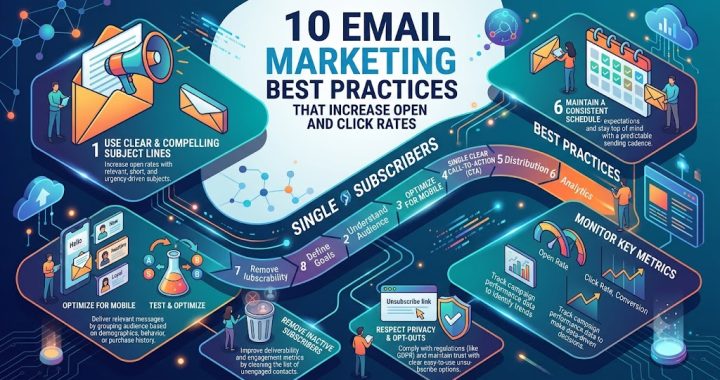
10 Email Marketing Best Practices That Increase Open and Click Rates

10 Email Marketing Best Practices That Increase Open and Click Rates

Meta Title: 10 Email Marketing Best Practices That Increase Open and Click Rates

Meta Description: Discover 10 proven email marketing best practices to improve open rates, boost click-through rates, increase engagement, and maximize your email campaign performance in 2026.

Focus Keyword: Email Marketing Best Practices

10 Email Marketing Best Practices That Increase Open and Click Rates

Email marketing remains one of the highest-performing digital marketing channels because it allows businesses to communicate directly with customers and prospects. However, sending emails alone is not enough. Every day, inboxes are filled with newsletters, promotions, and updates competing for attention. If your emails are ignored or deleted, even the best offer will fail to produce results.

Successful email marketing depends on creating campaigns that encourage people to open your emails, read your content, and take action. This requires thoughtful planning, personalization, strong copywriting, and continuous optimization.

Whether you are promoting products, sharing educational content, or nurturing leads, following proven best practices can significantly improve your campaign performance. In this guide, you’ll learn ten effective email marketing practices that help increase both open rates and click-through rates while building stronger relationships with your audience.


Why Open and Click Rates Matter

Open rate measures the percentage of recipients who open your email, while click-through rate (CTR) measures how many people click a link within your email.

These metrics help you understand whether your campaigns are attracting attention and encouraging engagement.

Higher open and click rates can lead to:

  • Increased website traffic
  • More qualified leads
  • Better customer engagement
  • Higher sales opportunities
  • Improved return on investment (ROI)
  • Stronger customer relationships

Improving these metrics requires more than attractive designs—it requires delivering relevant content at the right time to the right audience.


1. Write Compelling Subject Lines

Your subject line is often the deciding factor in whether someone opens your email.

An effective subject line should be:

  • Clear
  • Relevant
  • Concise
  • Honest
  • Attention-grabbing

Examples include:

  • “5 Simple Ways to Improve Your Website SEO”
  • “Your Free Marketing Checklist Is Ready”
  • “Exclusive Tips to Grow Your Online Business”

Avoid misleading subject lines or excessive use of capital letters and symbols, as these can reduce trust and affect deliverability.


2. Personalize Every Email

Personalization goes beyond simply including the recipient’s name.

Use subscriber data to deliver content based on:

  • Interests
  • Purchase history
  • Website activity
  • Location
  • Previous interactions

Relevant emails create a better experience and encourage higher engagement.

For example, an online store can recommend products similar to a customer’s previous purchases instead of sending the same promotion to everyone.


3. Segment Your Email List

Not every subscriber has the same needs.

Segment your audience into smaller groups based on factors such as:

  • New subscribers
  • Existing customers
  • Frequent buyers
  • Industry
  • Geographic location
  • Engagement level

Segmented campaigns typically perform better because recipients receive information that matches their interests.


4. Focus on Valuable Content

Subscribers remain engaged when your emails consistently provide value.

Useful content may include:

  • Educational articles
  • Industry updates
  • Product tutorials
  • Helpful tips
  • Exclusive resources
  • Customer success stories
  • Special offers

Aim to educate, inform, or solve problems rather than sending constant sales messages.

A healthy balance between promotional and educational content builds long-term trust.


5. Optimize for Mobile Devices

Many people read emails on smartphones or tablets.

Ensure your emails are:

  • Mobile responsive
  • Easy to read
  • Fast loading
  • Simple to navigate

Use:

  • Short paragraphs
  • Readable fonts
  • Responsive images
  • Large call-to-action buttons

A poor mobile experience can reduce engagement and increase unsubscribe rates.


6. Include a Clear Call-to-Action (CTA)

Every email should encourage readers to take one primary action.

Examples include:

  • Read a blog post
  • Download a guide
  • Register for a webinar
  • Shop a product
  • Contact your business
  • Schedule a consultation

Use clear action-oriented language such as:

  • Learn More
  • Download Now
  • Get Started
  • Explore the Guide
  • View the Offer

Avoid overwhelming subscribers with multiple competing calls-to-action.


7. Send Emails at the Right Time

Timing can influence campaign performance.

Although the ideal sending time varies by audience, testing different schedules helps identify when subscribers are most likely to engage.

Consider factors such as:

  • Time zones
  • Work schedules
  • Industry
  • Customer behavior

Regular testing allows you to optimize future campaigns based on real engagement data.


8. Test and Improve Your Campaigns

A/B testing helps determine which email variations perform better.

Test elements such as:

  • Subject lines
  • Preview text
  • Images
  • Headlines
  • Call-to-action buttons
  • Email layout
  • Sending time

Changing one variable at a time provides clearer insights into what influences subscriber behavior.

Continuous testing leads to steady improvements over time.


9. Keep Your Email List Healthy

Maintaining a clean email list improves deliverability and engagement.

Regularly:

  • Remove invalid addresses
  • Delete inactive subscribers
  • Monitor bounce rates
  • Update subscriber preferences
  • Honor unsubscribe requests promptly

A smaller, engaged audience is more valuable than a large list of inactive contacts.


10. Analyze Campaign Performance

Successful email marketing relies on ongoing measurement.

Track important metrics including:

  • Open rate
  • Click-through rate
  • Conversion rate
  • Bounce rate
  • Unsubscribe rate
  • Email sharing
  • Revenue generated
  • List growth rate

Reviewing these metrics helps identify successful campaigns and opportunities for improvement.


Additional Tips for Better Email Performance

Beyond the core best practices, consider these recommendations:

  • Use a recognizable sender name.
  • Keep your branding consistent.
  • Write conversational copy.
  • Avoid excessive promotional language.
  • Include alt text for images.
  • Maintain a logical email structure.
  • Proofread before sending.
  • Deliver on the expectations set during signup.

Small improvements across multiple areas often lead to significant performance gains.


Common Email Marketing Mistakes

Many businesses unintentionally reduce campaign effectiveness by making avoidable mistakes.

Common mistakes include:

  • Sending emails too frequently
  • Ignoring audience segmentation
  • Using misleading subject lines
  • Overloading emails with images
  • Forgetting mobile optimization
  • Including too many links
  • Neglecting analytics
  • Purchasing email lists

Avoiding these errors improves user experience and helps build long-term subscriber trust.


Future of Email Marketing

Email marketing continues to evolve with advances in technology and customer expectations.

Emerging trends include:

  • AI-assisted personalization
  • Predictive automation
  • Interactive email content
  • Privacy-focused marketing
  • Smarter segmentation
  • Behavior-based campaigns
  • Dynamic email content

Businesses that adapt to these trends while maintaining high-quality communication will remain competitive in the years ahead.


Conclusion

Improving email open rates and click-through rates requires more than attractive designs or promotional offers. Successful email marketing focuses on understanding your audience, delivering valuable content, personalizing communication, and continuously optimizing campaigns based on performance data.

The ten best practices outlined in this guide provide a strong foundation for creating more engaging email campaigns. By writing compelling subject lines, segmenting your audience, optimizing for mobile devices, testing different approaches, and maintaining a healthy email list, you can build stronger relationships with subscribers while increasing traffic, leads, and conversions.

Remember that email marketing is an ongoing process. Small improvements made consistently over time often produce the greatest long-term results.


Frequently Asked Questions

What is a good email open rate?

A good open rate varies by industry, but consistently improving your own campaign performance is more important than focusing on a universal benchmark.

Why are my email open rates low?

Common reasons include weak subject lines, poor audience targeting, inconsistent sending schedules, outdated email lists, or content that doesn’t match subscriber expectations.

How can I increase my email click-through rate?

Provide valuable content, use clear calls-to-action, personalize your emails, optimize for mobile devices, and segment your audience for better relevance.

Should I send promotional emails every week?

Not necessarily. Balance promotional content with educational and informative emails to keep subscribers engaged without overwhelming them.

Why is segmentation important in email marketing?

Segmentation allows you to send more relevant content to different groups of subscribers, leading to higher engagement, improved click rates, and better conversion opportunities.

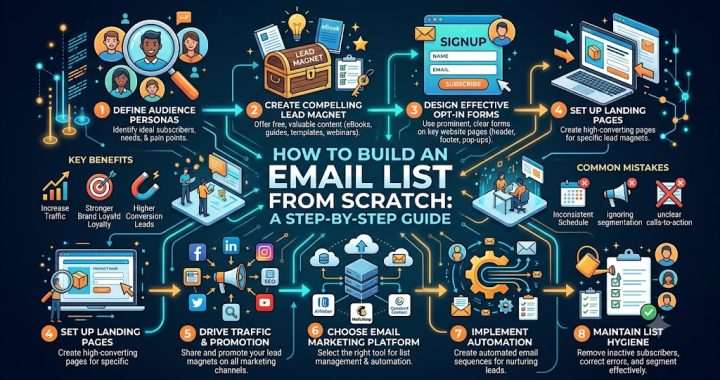
How to Build an Email List from Scratch: A Step-by-Step Guide

How to Build an Email List from Scratch: A Step-by-Step Guide (2026)

Meta Title: How to Build an Email List from Scratch in 2026 | Complete Guide

Meta Description: Learn how to build an email list from scratch with proven strategies. Discover the best ways to attract subscribers, grow your audience, and improve email marketing results in 2026.

Focus Keyword: Build an Email List

How to Build an Email List from Scratch: A Step-by-Step Guide

Email marketing remains one of the most effective digital marketing channels because it allows businesses to communicate directly with their audience. However, a successful email marketing campaign begins with one essential asset—a high-quality email list. Without subscribers, even the most well-designed email campaigns won’t generate meaningful results.

Building an email list from scratch may seem challenging, especially for new businesses or websites, but with the right strategy, it is completely achievable. The key is to focus on attracting people who are genuinely interested in your content, products, or services rather than trying to collect as many email addresses as possible.

In this guide, you’ll learn step-by-step how to build an engaged email list that supports long-term business growth while following ethical and effective email marketing practices.


Why an Email List Is Important

Unlike followers on social media, your email list is an audience you can communicate with directly. Social media algorithms change frequently, limiting how many people see your posts, but email allows you to send personalized messages straight to subscribers who have chosen to hear from you.

A strong email list can help you:

  • Increase website traffic
  • Generate qualified leads
  • Promote products and services
  • Build customer loyalty
  • Increase repeat purchases
  • Share valuable content
  • Strengthen your brand
  • Improve customer retention

Rather than chasing new visitors every day, email marketing helps you build lasting relationships with people who already trust your business.


Step 1: Understand Your Target Audience

Before collecting email addresses, identify who you want to attract.

Consider questions such as:

  • Who are your ideal customers?
  • What challenges do they face?
  • What information are they searching for?
  • Which type of content interests them?
  • What problems can your business solve?

Understanding your audience allows you to create offers and content that encourage people to subscribe.


Step 2: Create a Valuable Lead Magnet

People rarely share their email address without receiving something valuable in return.

A lead magnet is a free resource offered in exchange for a visitor’s email address.

Popular lead magnets include:

  • eBooks
  • Checklists
  • Templates
  • Free guides
  • Industry reports
  • Mini courses
  • Webinars
  • Resource libraries
  • Discount coupons
  • Free consultations

Your lead magnet should solve a specific problem and provide immediate value.

For example, a digital marketing agency might offer a free SEO checklist or a beginner’s guide to social media marketing.


Step 3: Design Effective Signup Forms

Your signup form should be simple, attractive, and easy to complete.

Ask only for essential information, such as:

  • First name
  • Email address

Long forms often reduce conversion rates.

Place signup forms in visible locations, including:

  • Homepage
  • Blog sidebar
  • Website footer
  • Landing pages
  • Contact page
  • Exit-intent popups
  • Blog articles

Make sure the call-to-action clearly explains what subscribers will receive.


Step 4: Create High-Quality Content

Content marketing plays a major role in email list growth.

When visitors consistently find helpful content on your website, they are more likely to subscribe for future updates.

Create content such as:

  • Blog posts
  • Tutorials
  • Buying guides
  • Case studies
  • Videos
  • Infographics
  • Industry news
  • Frequently asked questions

Focus on solving real problems rather than simply promoting your products.


Step 5: Build Dedicated Landing Pages

A landing page focuses on one objective—encouraging visitors to subscribe.

An effective landing page includes:

  • A compelling headline
  • Clear explanation of the offer
  • Benefits of subscribing
  • Social proof (if available)
  • Simple signup form
  • Strong call-to-action

Removing unnecessary distractions can improve conversion rates.


Step 6: Promote Your Email Signup Across Multiple Channels

Don’t rely only on your website to grow your email list.

Promote your signup page through:

  • Facebook
  • Instagram
  • LinkedIn
  • YouTube
  • Pinterest
  • X (formerly Twitter)
  • Blog articles
  • Email signatures
  • Online communities

You can also encourage subscribers during webinars, events, or presentations by directing them to your landing page.


Step 7: Use Popups Responsibly

Popups can be effective when used thoughtfully.

Examples include:

  • Exit-intent popups
  • Scroll-triggered forms
  • Time-based popups
  • Slide-in forms

Avoid showing popups immediately after someone lands on your website. Give visitors enough time to explore your content before requesting their email address.

A positive user experience should always remain your priority.


Step 8: Deliver Valuable Emails

Building an email list is only the beginning.

Once someone subscribes, continue providing value through:

  • Educational articles
  • Helpful tips
  • Industry updates
  • Exclusive offers
  • Product announcements
  • Customer success stories

Consistently delivering useful content encourages subscribers to stay engaged and reduces unsubscribe rates.


Step 9: Maintain a Healthy Email List

A smaller list of engaged subscribers is more valuable than a large list of inactive contacts.

Regularly:

  • Remove invalid email addresses
  • Clean inactive subscribers
  • Update subscriber preferences
  • Monitor engagement levels
  • Respect unsubscribe requests

Maintaining list quality improves email deliverability and campaign performance.


Step 10: Measure Your Results

Successful email marketing depends on continuous improvement.

Monitor key metrics such as:

  • Signup conversion rate
  • Email open rate
  • Click-through rate
  • Bounce rate
  • Unsubscribe rate
  • List growth rate
  • Website traffic from email
  • Conversion rate

Analyzing these metrics helps identify what’s working and where adjustments are needed.


Common Mistakes to Avoid

Many businesses struggle to grow their email list because they make avoidable mistakes.

Avoid these common errors:

  • Buying email lists
  • Asking for too much information
  • Offering weak lead magnets
  • Hiding signup forms
  • Sending excessive promotional emails
  • Ignoring mobile optimization
  • Neglecting email list maintenance
  • Failing to personalize communication

Building trust should always be your highest priority.


Best Practices for Long-Term Growth

To grow your email list successfully:

  • Offer genuine value.
  • Create high-quality content.
  • Make signup forms easy to find.
  • Use compelling calls-to-action.
  • Segment your subscribers.
  • Personalize your emails.
  • Test different signup forms.
  • Continuously improve your strategy.

Email list growth is a gradual process that rewards consistency and patience.


Conclusion

Building an email list from scratch takes time, but it is one of the most valuable investments you can make for your business. Unlike rented audiences on social media platforms, your email subscribers have chosen to receive your communication, making them more likely to engage with your content and become loyal customers.

By understanding your audience, creating valuable lead magnets, optimizing signup forms, publishing helpful content, promoting your offers across multiple channels, and maintaining a healthy email list, you can build a strong foundation for successful email marketing.

Remember that quality is more important than quantity. A smaller list of engaged subscribers will almost always outperform a larger list of uninterested contacts. Focus on delivering consistent value, and your email list will continue to grow alongside your business.


Frequently Asked Questions

How long does it take to build an email list?

The timeline varies depending on your website traffic, content quality, and promotional efforts. Consistent value and regular optimization typically produce steady growth over time.

Is it okay to buy an email list?

No. Purchased lists often contain uninterested recipients, resulting in poor engagement, higher spam complaints, and lower deliverability. Building an organic list is a better long-term strategy.

What is the best lead magnet?

The best lead magnet is one that solves a specific problem for your target audience. Examples include checklists, templates, eBooks, webinars, and free tools.

How often should I email subscribers?

The ideal frequency depends on your audience and content. Many businesses send one weekly newsletter or a few targeted emails each month while maintaining consistent value.

Why is email list segmentation important?

Segmentation allows you to send more relevant messages based on subscriber interests and behavior, leading to higher open rates, better engagement, and improved conversions.

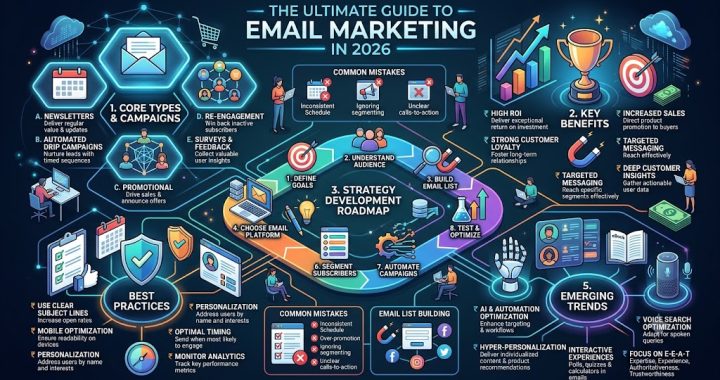
The Ultimate Guide to Email Marketing in 2026

The Ultimate Guide to Email Marketing in 2026

Meta Title: The Ultimate Guide to Email Marketing in 2026 | Complete Beginner’s Guide

Meta Description: Learn everything about email marketing in 2026, including its benefits, types, strategies, best practices, and tips to grow your business with effective email campaigns.

Focus Keyword: Email Marketing Guide

The Ultimate Guide to Email Marketing in 2026

Despite the rapid growth of social media, artificial intelligence, and new digital marketing channels, email marketing continues to be one of the most reliable and cost-effective ways to connect with customers. Businesses of all sizes—from startups to global brands—use email to build relationships, generate leads, increase sales, and encourage customer loyalty.

Unlike social media platforms where algorithms determine how many people see your content, email gives you a direct line of communication with your audience. When someone subscribes to your mailing list, they have already shown interest in your business, making email an excellent channel for delivering personalized and valuable content.

In 2026, successful email marketing is no longer about sending promotional messages to everyone on your list. It focuses on providing relevant information, personalizing communication, automating campaigns, and continuously optimizing performance based on data.

This complete guide explains everything you need to know about email marketing, from the basics and benefits to campaign types, strategy development, best practices, and future trends.


What Is Email Marketing?

Email marketing is a digital marketing strategy that involves sending emails to subscribers with the goal of building relationships, sharing valuable information, promoting products or services, and encouraging specific actions such as purchases or sign-ups.

Instead of broadcasting the same message to everyone, businesses can segment their audience and send personalized emails based on customer interests, behavior, or stage in the buying journey.

Email marketing is commonly used to:

  • Build customer relationships
  • Promote products and services
  • Share company news
  • Educate subscribers
  • Drive website traffic
  • Increase sales
  • Recover abandoned carts
  • Encourage repeat purchases

When planned carefully, email marketing becomes a long-term communication channel that supports both customer acquisition and retention.


Why Email Marketing Still Matters in 2026

Many businesses wonder whether email marketing is still effective with the popularity of social media and messaging apps. The answer is yes.

Email remains valuable because it allows businesses to communicate directly with subscribers who have chosen to hear from them.

Some key advantages include:

1. Direct Communication

Unlike social media platforms that rely on algorithms, emails are delivered directly to subscribers’ inboxes, giving businesses more control over their communication.

2. Cost-Effective Marketing

Compared to many advertising channels, email marketing can deliver strong results without requiring a large budget. This makes it suitable for businesses of all sizes.

3. High Personalization

Modern email marketing platforms allow businesses to personalize messages using customer names, preferences, purchase history, and browsing behavior.

4. Better Customer Relationships

Consistently sharing useful and relevant information helps build trust and keeps your brand top of mind.

5. Measurable Performance

Email campaigns provide valuable metrics such as:

  • Open rates
  • Click-through rates
  • Conversion rates
  • Bounce rates
  • Unsubscribe rates

These insights help marketers continuously improve future campaigns.


Types of Email Marketing Campaigns

Different campaigns serve different business goals.

Welcome Emails

Sent immediately after someone subscribes, welcome emails introduce your brand and set expectations for future communication.

Newsletter Emails

Regular newsletters keep subscribers informed about industry news, company updates, educational content, and special announcements.

Promotional Emails

These emails highlight new products, limited-time offers, discounts, and seasonal campaigns.

Educational Emails

Businesses can share guides, tutorials, case studies, or helpful tips to establish authority and provide value beyond direct promotion.

Abandoned Cart Emails

For eCommerce businesses, automated reminders encourage customers to complete purchases they left unfinished.

Re-Engagement Emails

These campaigns aim to reconnect with inactive subscribers through personalized offers or valuable content.


Benefits of Email Marketing

Businesses that use email marketing strategically often experience significant long-term benefits.

These include:

  • Higher customer engagement
  • Increased website traffic
  • Improved lead nurturing
  • Better customer retention
  • More repeat purchases
  • Increased brand awareness
  • Stronger customer loyalty
  • Cost-effective marketing
  • Higher conversion opportunities
  • Valuable customer insights

Because email marketing targets people who have already expressed interest, it often delivers higher engagement than broader advertising channels.


How to Build an Effective Email Marketing Strategy

A successful strategy begins with planning rather than simply sending emails.

Step 1: Define Your Goals

Start by identifying what you want to achieve.

Examples include:

  • Increase sales
  • Generate leads
  • Drive website traffic
  • Promote new products
  • Improve customer retention
  • Build brand awareness

Clear objectives make it easier to measure success.

Step 2: Build a Quality Email List

Focus on growing your list organically through:

  • Website signup forms
  • Landing pages
  • Lead magnets
  • Free guides
  • Webinars
  • Newsletter subscriptions

Avoid purchasing email lists, as they often result in low engagement and poor deliverability.

Step 3: Segment Your Audience

Not every subscriber has the same interests.

Segment your list based on:

  • Demographics
  • Purchase history
  • Website activity
  • Interests
  • Customer lifecycle stage

Segmentation improves relevance and increases engagement.

Step 4: Create Valuable Content

Every email should provide value.

Include:

  • Helpful tips
  • Educational resources
  • Industry insights
  • Exclusive offers
  • Product recommendations
  • Customer success stories

Focus on helping subscribers rather than constantly selling.


Best Practices for Email Marketing

To improve campaign performance:

  • Write clear subject lines.
  • Personalize your emails.
  • Keep your design mobile-friendly.
  • Use a single, clear call-to-action.
  • Test different email versions.
  • Maintain a consistent sending schedule.
  • Remove inactive subscribers regularly.
  • Monitor campaign performance.
  • Respect subscriber privacy.
  • Always provide an easy unsubscribe option.

These practices improve user experience and help maintain a healthy email list.


Common Email Marketing Mistakes

Many businesses reduce campaign effectiveness by making avoidable mistakes.

Some of the most common include:

  • Sending too many emails
  • Using misleading subject lines
  • Ignoring mobile optimization
  • Failing to segment subscribers
  • Purchasing email lists
  • Neglecting analytics
  • Sending generic content
  • Overloading emails with promotional messages

Avoiding these mistakes can improve engagement and strengthen customer relationships.


Email Marketing Trends in 2026

The email marketing landscape continues to evolve.

Important trends include:

  • AI-assisted email creation
  • Advanced personalization
  • Predictive email automation
  • Interactive email experiences
  • Privacy-focused marketing
  • Mobile-first email design
  • Smarter audience segmentation
  • Improved data analytics

Businesses that embrace these developments while maintaining valuable content will remain competitive.


Measuring Email Marketing Success

Successful campaigns are guided by data.

Monitor important metrics such as:

  • Open Rate
  • Click-Through Rate (CTR)
  • Conversion Rate
  • Bounce Rate
  • Unsubscribe Rate
  • Revenue per Campaign
  • List Growth Rate
  • Engagement Over Time

Reviewing these metrics regularly helps optimize future campaigns and improve overall marketing performance.


Conclusion

Email marketing remains one of the most powerful digital marketing channels in 2026 because it allows businesses to build direct, meaningful relationships with their audience. While technology continues to evolve, the core principle remains the same: provide valuable, relevant, and timely communication that helps subscribers solve problems and achieve their goals.

By building a quality email list, segmenting your audience, creating useful content, and continuously improving your campaigns through data analysis, you can turn email marketing into a reliable source of traffic, leads, and revenue.

Whether you’re just getting started or refining an existing strategy, consistent effort and a customer-first approach will help you maximize the long-term value of email marketing.


Frequently Asked Questions

Is email marketing still effective in 2026?

Yes. Email marketing remains one of the most effective digital marketing channels because it provides direct communication, supports personalization, and delivers measurable results.

How often should businesses send marketing emails?

The ideal frequency depends on your audience and goals. Many businesses find success with one weekly newsletter or a few targeted campaigns each month while avoiding excessive messaging.

What makes a successful marketing email?

Successful emails typically have a compelling subject line, valuable content, clear design, a strong call-to-action, and are personalized to the recipient’s interests.

Should small businesses use email marketing?

Absolutely. Email marketing is affordable, scalable, and helps small businesses build relationships with customers while promoting products, services, and valuable content.

What is the biggest benefit of email marketing?

One of the greatest advantages is that it enables businesses to communicate directly with subscribers, build long-term customer relationships, and generate consistent traffic and sales without relying solely on social media algorithms.
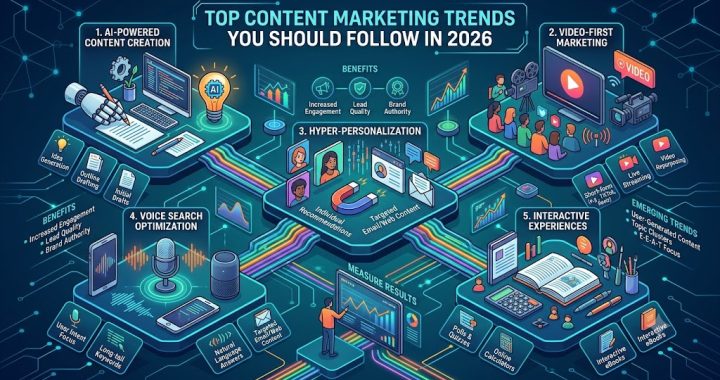
Top Content Marketing Trends You Should Follow in 2026

Top Content Marketing Trends You Should Follow in 2026

Meta Title: Top Content Marketing Trends You Should Follow in 2026

Meta Description: Explore the top content marketing trends in 2026, including AI-powered content, video marketing, personalization, voice search, and SEO strategies to grow your business.

Focus Keyword: Content Marketing Trends 2026

Top Content Marketing Trends You Should Follow in 2026

Content marketing continues to evolve as technology, search engines, and consumer behavior change. Businesses that adapt to new trends are more likely to attract customers, improve search visibility, and build stronger relationships with their audience. In 2026, creating valuable content is still the foundation of a successful marketing strategy, but how that content is planned, created, and distributed is changing rapidly.

Artificial intelligence, interactive experiences, personalized content, and video-first strategies are shaping the future of digital marketing. At the same time, search engines continue rewarding websites that publish trustworthy, experience-based, and user-focused content. Businesses that combine innovation with quality will have the best opportunity to stand out in an increasingly competitive online environment.

This guide explores the most important content marketing trends you should follow in 2026 and explains how each trend can help your business grow.


Why Content Marketing Trends Matter

Marketing trends reflect changing customer expectations and technological developments. Businesses that ignore these changes may find it harder to reach their audience, while those that adapt can improve engagement, increase website traffic, and strengthen their brand authority.

Keeping up with trends allows you to:

  • Reach new audiences
  • Improve customer engagement
  • Increase organic search traffic
  • Build stronger brand credibility
  • Stay competitive
  • Improve conversion rates
  • Maximize your marketing investment

Rather than chasing every new idea, focus on trends that align with your business goals and your audience’s needs.


1. AI-Assisted Content Creation

Artificial intelligence has become one of the most influential tools in content marketing. AI can help marketers brainstorm ideas, organize outlines, improve readability, optimize headlines, and analyze content performance.

AI is especially useful for repetitive tasks such as:

  • Topic research
  • Keyword clustering
  • Content briefs
  • Grammar checking
  • Image generation
  • Social media captions
  • Email subject lines

However, AI should support human creativity—not replace it. Businesses that combine AI efficiency with original insights and expert knowledge are more likely to produce content that resonates with readers.


2. Video-First Content Marketing

Video remains one of the most engaging content formats. Short-form videos, tutorials, webinars, product demonstrations, and educational content continue to attract audiences across multiple platforms.

Businesses are increasingly using videos to:

  • Explain products
  • Share customer success stories
  • Demonstrate services
  • Educate potential customers
  • Increase social media engagement

Repurposing blog articles into videos is an effective way to expand your reach while maximizing the value of existing content.


3. Personalization at Scale

Today’s audiences expect content that feels relevant to their interests and needs.

Personalization includes:

  • Customized email campaigns
  • Product recommendations
  • Location-specific content
  • Dynamic website experiences
  • Personalized landing pages

By understanding customer behavior and preferences, businesses can deliver more meaningful experiences that improve engagement and conversions.


4. Voice Search Optimization

As voice-enabled devices become more common, people increasingly search using natural, conversational language.

To optimize for voice search:

  • Answer common questions clearly.
  • Use long-tail keywords.
  • Write in a conversational tone.
  • Include FAQ sections.
  • Focus on local search when relevant.

Content that directly answers user questions has a better chance of appearing in voice search results.


5. Building Topical Authority

Instead of publishing isolated articles, successful businesses are creating comprehensive content around a specific subject.

This approach involves:

  • Publishing pillar pages
  • Creating related supporting articles
  • Linking relevant content together
  • Covering topics in depth

Building topical authority helps search engines understand your expertise and can improve rankings across an entire topic area.


6. Interactive Content

Interactive content encourages users to participate rather than simply consume information.

Examples include:

  • Quizzes
  • Polls
  • Surveys
  • Calculators
  • Interactive infographics
  • Assessments
  • Product recommendation tools

Interactive experiences often increase engagement and encourage visitors to spend more time on your website.


7. User-Generated Content

Customers trust recommendations from other customers.

User-generated content includes:

  • Reviews
  • Testimonials
  • Photos
  • Videos
  • Social media mentions
  • Case studies

Encouraging customers to share their experiences builds authenticity and strengthens your brand’s reputation.


8. E-E-A-T and Trust-Based Content

Search engines continue placing greater emphasis on content that demonstrates:

  • Experience
  • Expertise
  • Authoritativeness
  • Trustworthiness

Businesses can strengthen trust by:

  • Publishing accurate information
  • Citing reliable sources when appropriate
  • Updating content regularly
  • Demonstrating real-world experience
  • Being transparent about products and services

Trust remains one of the most valuable assets in digital marketing.


9. Content Repurposing

Creating quality content requires time and resources.

Instead of producing entirely new material for every platform, marketers are repurposing existing content into multiple formats.

For example:

A single blog article can become:

  • A YouTube video
  • An Instagram carousel
  • Several social media posts
  • An email newsletter
  • A podcast discussion
  • An infographic

Repurposing improves efficiency while reaching audiences across different channels.


10. Data-Driven Content Decisions

Successful marketers rely on analytics rather than assumptions.

Important metrics include:

  • Organic traffic
  • Keyword rankings
  • Conversion rate
  • Bounce rate
  • Time on page
  • Social engagement
  • Email performance
  • Lead generation

Analyzing performance helps businesses identify which content delivers the greatest value and where improvements are needed.


How Businesses Can Prepare for These Trends

Adapting to new trends doesn’t require changing everything overnight.

Start by:

  • Creating high-quality, audience-focused content.
  • Investing in SEO.
  • Experimenting with video.
  • Using AI responsibly.
  • Building topic clusters.
  • Updating existing content.
  • Measuring performance consistently.
  • Listening to customer feedback.

Small improvements made consistently often produce stronger long-term results than dramatic changes.


Common Mistakes to Avoid

While following trends is important, avoid these common mistakes:

  • Prioritizing trends over audience needs
  • Publishing AI-generated content without editing
  • Ignoring SEO fundamentals
  • Chasing every new platform
  • Producing content without a clear strategy
  • Neglecting content updates

Successful content marketing balances innovation with consistency and quality.


The Future of Content Marketing

Looking beyond 2026, content marketing is expected to become even more personalized, interactive, and data-driven. Businesses will continue integrating artificial intelligence into their workflows while focusing on authentic storytelling and meaningful customer relationships.

Search engines are also expected to place greater importance on user experience, content quality, and demonstrated expertise. Organizations that invest in helpful, trustworthy content rather than short-term promotional tactics will be better positioned for long-term success.

Regardless of future technological changes, one principle will remain constant: creating valuable content that genuinely helps people will always be at the heart of effective content marketing.


Conclusion

Content marketing in 2026 is about more than simply publishing blog posts. Businesses must understand changing customer expectations, embrace new technologies responsibly, and create content that delivers genuine value.

From AI-assisted content creation and video marketing to personalization, topical authority, voice search optimization, and trust-based publishing, today’s trends provide exciting opportunities for businesses willing to adapt.

Rather than trying to implement every trend immediately, focus on the ones that best support your audience and business objectives. Consistency, quality, and continuous improvement remain the foundations of successful content marketing.

By staying informed and adapting thoughtfully, your business can strengthen its online presence, attract more qualified visitors, and build lasting relationships with customers.


Frequently Asked Questions

What is the biggest content marketing trend in 2026?

AI-assisted content creation combined with human expertise is one of the most significant trends, helping businesses improve productivity while maintaining high-quality content.

Is SEO still important for content marketing?

Yes. Search engine optimization remains essential for helping valuable content reach users through organic search results.

Why is video becoming more important?

Video content is highly engaging and works well across websites, social media platforms, and email campaigns, making it an effective way to reach diverse audiences.

How often should businesses update their content?

Reviewing and updating important articles every few months—or whenever information changes—helps maintain accuracy, improve user experience, and support search visibility.

Should businesses follow every content marketing trend?

No. Focus on trends that align with your audience, resources, and business goals. Implementing a few strategies effectively is usually more beneficial than trying to adopt every new trend at once.

How to Create a Winning Content Marketing Strategy from Scratch

How to Create a Winning Content Marketing Strategy from Scratch in 2026

Meta Title: How to Create a Winning Content Marketing Strategy from Scratch

Meta Description: Learn how to create a successful content marketing strategy from scratch. Follow this step-by-step guide to attract your audience, improve SEO, and grow your business in 2026.

Focus Keyword: Content Marketing Strategy

How to Create a Winning Content Marketing Strategy from Scratch in 2026

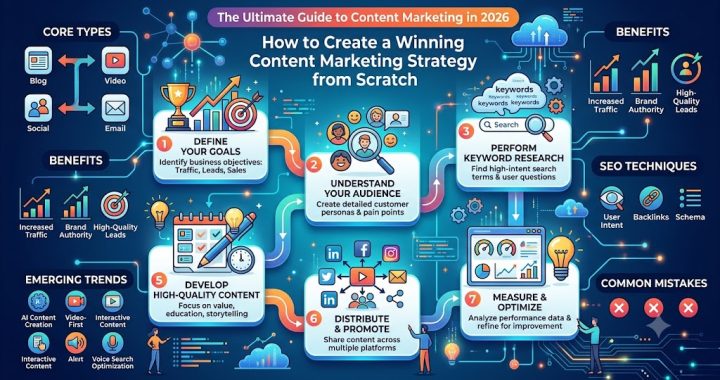
Content marketing is no longer just a trend—it has become one of the most effective ways to build brand awareness, attract qualified leads, and drive long-term business growth. However, publishing random blog posts or social media updates without a clear plan rarely delivers consistent results.

A successful content marketing strategy acts as a roadmap. It helps you understand your audience, define your goals, create valuable content, and measure your success. Whether you’re launching a new business, running an eCommerce store, or managing a digital marketing agency, a well-structured strategy ensures that every piece of content supports your business objectives.

This guide explains how to create a winning content marketing strategy from scratch using proven techniques that remain effective in 2026.


What Is a Content Marketing Strategy?

A content marketing strategy is a structured plan for creating, publishing, distributing, and managing content that attracts and engages your target audience while supporting your business goals.

Rather than creating content without direction, a strategy helps you answer important questions such as:

  • Who is your audience?
  • What problems do they need help solving?
  • What type of content should you create?
  • Where should you publish it?
  • How will you measure success?

A clear strategy improves consistency and helps you produce content that delivers measurable results.


Why Your Business Needs a Content Marketing Strategy

Without a strategy, businesses often waste time creating content that doesn’t attract visitors or generate leads.

A well-planned strategy helps you:

  • Increase organic website traffic
  • Improve search engine rankings
  • Build brand authority
  • Generate qualified leads
  • Strengthen customer relationships
  • Increase conversions
  • Support long-term business growth

It also ensures your marketing efforts remain focused and aligned with your overall business objectives.


Step 1: Define Clear Business Goals

Every successful content strategy begins with clear objectives.

Ask yourself what you want to achieve through content marketing.

Common goals include:

  • Increase website traffic
  • Generate more leads
  • Improve brand awareness
  • Grow email subscribers
  • Increase online sales
  • Build customer loyalty
  • Improve customer education

Make your goals specific and measurable. For example, instead of aiming to “get more traffic,” set a target such as increasing organic traffic by 30% over the next six months.


Step 2: Understand Your Target Audience

Creating content without understanding your audience is one of the biggest reasons content marketing campaigns fail.

Research your ideal customers by identifying:

  • Age
  • Gender
  • Location
  • Interests
  • Challenges
  • Purchasing behavior
  • Preferred communication channels

Developing buyer personas helps you create content that addresses real problems and provides practical solutions.

The better you understand your audience, the more relevant your content will become.


Step 3: Conduct Keyword Research

Keyword research helps you discover what your audience is actively searching for online.

Focus on finding keywords with:

  • Good search volume
  • Moderate competition
  • Clear search intent
  • Long-tail opportunities

For example, instead of targeting a broad keyword like “marketing,” you might target “content marketing strategy for small businesses” or “how to build a content marketing plan.”

Optimizing your content around relevant keywords improves your chances of ranking in search engines and attracting qualified visitors.


Step 4: Audit Your Existing Content

If your website already contains blog posts or landing pages, evaluate their performance before creating new content.

Review factors such as:

  • Organic traffic
  • Keyword rankings
  • Page views
  • Bounce rate
  • Conversion rate
  • Outdated information

Updating high-performing articles is often more effective than creating entirely new content.

A content audit also helps identify gaps that your future content can address.


Step 5: Plan Your Content

Planning content in advance keeps your marketing consistent and organized.

Develop a content calendar that includes:

  • Blog topics
  • Publication dates
  • Target keywords
  • Content formats
  • Distribution channels
  • Responsible team members

Mix different content formats to appeal to a wider audience.

Examples include:

  • Blog posts
  • Videos
  • Case studies
  • Infographics
  • Podcasts
  • Email newsletters
  • Social media posts

Consistency is more important than publishing large amounts of content at once.


Step 6: Create High-Quality Content

High-quality content is the foundation of every successful content marketing strategy.

Your content should:

  • Solve a specific problem
  • Answer common questions
  • Be easy to read
  • Include practical examples
  • Use descriptive headings
  • Provide accurate information
  • Encourage readers to take action

Focus on creating original content that demonstrates expertise rather than simply repeating information found elsewhere online.


Step 7: Optimize for Search Engines

Search Engine Optimization (SEO) helps your content reach people who are actively searching for relevant information.

Optimize each article by:

  • Including your focus keyword naturally
  • Writing compelling meta titles
  • Creating informative meta descriptions
  • Using H2 and H3 headings
  • Adding internal links
  • Optimizing images with alt text
  • Improving page loading speed
  • Ensuring mobile responsiveness

Remember that your content should always be written for people first and search engines second.


Step 8: Promote Your Content

Publishing content is only the beginning.

Promote your articles through multiple channels such as:

  • Facebook
  • Instagram
  • LinkedIn
  • Pinterest
  • X (formerly Twitter)
  • Email newsletters
  • YouTube
  • Industry forums

Repurposing one blog post into videos, infographics, and social media posts allows you to reach different audiences without creating entirely new content.


Step 9: Measure Performance

Tracking your results helps you understand what works and where improvements are needed.

Monitor key metrics including:

  • Organic traffic
  • Keyword rankings
  • Average session duration
  • Bounce rate
  • Social shares
  • Conversion rate
  • Lead generation
  • Email subscribers

Review your analytics regularly and use the insights to refine your content strategy over time.


Step 10: Update and Improve Your Content

Content marketing is an ongoing process.

Review your published articles regularly to:

  • Add new information
  • Update statistics
  • Replace outdated examples
  • Improve readability
  • Expand important sections
  • Fix broken links

Fresh, accurate content provides a better user experience and can improve search engine performance.


Common Mistakes to Avoid

Many businesses struggle with content marketing because they make avoidable mistakes.

Some of the most common include:

  • Publishing without a strategy
  • Ignoring audience research
  • Creating promotional content only
  • Skipping keyword research
  • Neglecting SEO
  • Publishing inconsistently
  • Failing to track results
  • Not updating existing content

Avoiding these mistakes will help you build a stronger and more effective content marketing program.


Best Practices for Long-Term Success

To maximize your results:

  • Focus on quality over quantity.
  • Create content that solves real problems.
  • Maintain a consistent publishing schedule.
  • Use multiple content formats.
  • Build topical authority around your niche.
  • Encourage audience engagement.
  • Continuously improve older content.
  • Stay updated with industry trends.

Successful content marketing is built through consistency, patience, and continuous improvement.


Conclusion

Creating a winning content marketing strategy from scratch may seem challenging at first, but following a structured process makes it far more manageable. By defining clear goals, understanding your audience, conducting keyword research, planning valuable content, optimizing for SEO, and measuring performance, you can build a strategy that supports long-term business growth.

Remember that content marketing is not about producing the most content—it’s about creating the most useful content for your audience. Every article, video, email, or social media post should provide genuine value and help readers solve a problem.

With consistency, regular optimization, and a commitment to quality, your content marketing strategy can become one of your most valuable business assets.


Frequently Asked Questions

What is a content marketing strategy?

A content marketing strategy is a plan for creating, publishing, and promoting valuable content that attracts a target audience and supports business goals.

Why is content marketing important?

Content marketing helps businesses increase brand awareness, improve SEO, generate leads, build trust, and strengthen customer relationships over time.

How often should I publish content?

Consistency matters more than frequency. Many businesses achieve strong results by publishing one high-quality blog post each week and promoting it across multiple channels.

Does every business need a content marketing strategy?

Yes. Whether you’re a local business, an online store, or a service provider, a clear content strategy helps you connect with potential customers more effectively.

How long does it take to see results?

Content marketing is a long-term investment. Depending on your niche and competition, noticeable improvements in traffic and rankings often begin within a few months, with stronger results developing through consistent effort.

Content Marketing vs Traditional Marketing: Which One Works Better

Content Marketing vs Traditional Marketing: Which One Works Better in 2026?

Meta Title: Content Marketing vs Traditional Marketing: Which Works Better in 2026?

Meta Description: Compare content marketing and traditional marketing in 2026. Learn the key differences, benefits, costs, ROI, and discover which strategy is best for growing your business.

Focus Keyword: Content Marketing vs Traditional Marketing

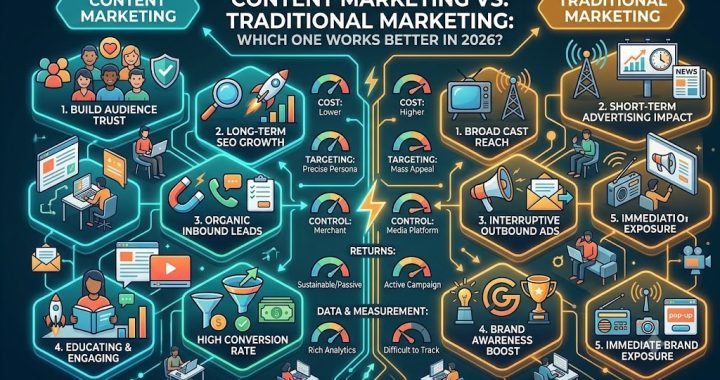
Content Marketing vs Traditional Marketing: Which One Works Better in 2026?

Marketing has always been essential for business growth, but the way companies connect with customers has changed dramatically over the past decade. While traditional marketing methods such as television commercials, newspaper advertisements, radio spots, and billboards continue to exist, businesses are increasingly investing in content marketing to reach modern consumers.

Today’s customers are more informed than ever before. Instead of relying solely on advertisements, they search online, read reviews, compare products, watch videos, and seek expert advice before making a purchase. This shift in consumer behavior has made content marketing one of the most effective long-term marketing strategies.

So, which approach works better in 2026—content marketing or traditional marketing? The answer depends on your goals, audience, and budget. This guide compares both methods to help you choose the right strategy for your business.


What Is Content Marketing?

Content marketing is a strategy that focuses on creating and sharing valuable, relevant, and informative content to attract and engage a specific audience.

Rather than directly promoting products, businesses educate and assist potential customers through helpful resources that answer questions and solve problems.

Common forms of content marketing include:

  • Blog posts
  • Videos
  • Social media content
  • Podcasts
  • Email newsletters
  • Case studies
  • eBooks
  • Infographics
  • Webinars
  • Tutorials

The goal is to build trust over time, making customers more likely to choose your business when they are ready to buy.


What Is Traditional Marketing?

Traditional marketing refers to promotional methods that have been used for decades to reach a broad audience through offline or conventional media.

Examples include:

  • Television advertisements
  • Radio commercials
  • Newspaper ads
  • Magazine advertisements
  • Flyers and brochures
  • Billboards
  • Direct mail
  • Trade shows
  • Print catalogs

Traditional marketing focuses on delivering promotional messages directly to consumers, often with the aim of generating immediate awareness or sales.


Key Differences Between Content Marketing and Traditional Marketing

Feature Content Marketing Traditional Marketing
Primary Goal Build trust and educate Promote products directly
Audience Engagement Two-way communication Mostly one-way communication
Cost Often lower over time Usually higher
Longevity Long-lasting content Short campaign lifespan
SEO Benefits Yes No
Measurable Results Highly measurable Limited measurement
Customer Trust Builds gradually Depends on brand recognition
Flexibility Easy to update Difficult to modify after publication

Benefits of Content Marketing

Content marketing has become a preferred strategy because it offers long-term value.

1. Improves Search Engine Rankings

Publishing high-quality content optimized for relevant keywords helps businesses appear in search engine results and attract organic traffic.

2. Builds Customer Trust

Educational content positions your business as a reliable source of information rather than simply another advertiser.

3. Generates Qualified Leads

People who discover your content are often already interested in your products or services, making them more likely to convert.

4. Delivers Long-Term Results

A well-written blog post or video can continue attracting visitors for months or even years after publication.

5. Supports Multiple Marketing Channels

Content can be repurposed into social media posts, newsletters, videos, infographics, and presentations, increasing its overall value.


Benefits of Traditional Marketing

Although digital marketing continues to grow, traditional marketing still offers several advantages.

1. Broad Audience Reach

Television, newspapers, and radio can reach large audiences, especially in local or regional markets.

2. Strong Local Visibility

Billboards, flyers, and print advertisements are effective for promoting local businesses and events.

3. High Brand Recognition

Large companies often use television and print campaigns to reinforce their brand image and reach audiences who may not spend much time online.

4. Tangible Marketing Materials

Printed brochures, catalogs, and business cards provide physical resources that customers can keep for future reference.


Cost Comparison

One of the biggest differences between the two approaches is cost.

Content Marketing

Initial investment often includes:

  • Website development
  • Blog writing
  • SEO
  • Graphic design
  • Video creation
  • Email marketing

While creating quality content requires time and effort, it often continues generating traffic without ongoing advertising costs.

Traditional Marketing

Costs may include:

  • Television advertisements
  • Newspaper space
  • Magazine ads
  • Billboard rentals
  • Printing materials
  • Radio commercials

Many traditional campaigns require significant investment and stop producing results once the campaign ends.


Return on Investment (ROI)

Content marketing generally provides stronger long-term ROI because valuable content continues attracting visitors long after it is published.

For example:

A helpful buying guide published today may still generate website traffic and leads two years later.

Traditional advertisements usually provide results only while the campaign is active.

However, traditional marketing can deliver fast visibility for product launches, seasonal promotions, or local events.


Which Strategy Builds More Trust?

Modern consumers often trust businesses that educate rather than simply advertise.

Content marketing helps businesses demonstrate expertise by answering questions, solving problems, and providing useful resources.

Examples include:

  • Product tutorials
  • Buying guides
  • Industry insights
  • Customer success stories
  • Educational videos

Traditional advertisements are effective for raising awareness but generally provide fewer opportunities to build long-term relationships.


When Should You Choose Content Marketing?

Content marketing is ideal if you want to:

  • Increase website traffic
  • Improve SEO
  • Generate leads
  • Build authority
  • Create long-term customer relationships
  • Support social media marketing
  • Grow organically over time

It is particularly effective for service businesses, software companies, digital agencies, educational platforms, and eCommerce websites.


When Should You Choose Traditional Marketing?

Traditional marketing works well when your goal is to:

  • Reach local audiences
  • Promote events
  • Launch new products
  • Increase immediate brand awareness
  • Target customers who consume traditional media

Many businesses still combine newspaper ads, billboards, and radio campaigns with digital marketing to maximize visibility.


Can You Combine Both Strategies?

Absolutely.

The most successful businesses often integrate content marketing with traditional marketing.

For example:

  • Run a local newspaper advertisement.
  • Direct readers to your website.
  • Offer a free guide or downloadable resource.
  • Collect email subscribers.
  • Continue nurturing those leads through content marketing.

This combination allows businesses to benefit from immediate exposure while building long-term customer relationships.


Future of Marketing

Marketing continues to evolve with changing technology and consumer expectations.

Some growing trends include:

  • AI-assisted content creation
  • Personalized customer experiences
  • Interactive content
  • Short-form videos
  • Voice search optimization
  • Data-driven decision-making
  • First-party data strategies
  • Multi-channel marketing

Businesses that adapt to these trends while maintaining valuable, customer-focused content will remain competitive.


Final Verdict

Content marketing and traditional marketing both have important roles in modern business, but they serve different purposes.

Traditional marketing is effective for creating rapid awareness and reaching broad or local audiences through channels such as television, radio, newspapers, and billboards. However, these campaigns often require larger budgets and usually stop producing results when the campaign ends.

Content marketing, on the other hand, focuses on building trust, educating customers, and creating long-term value. High-quality blogs, videos, newsletters, and social media content can continue attracting visitors and generating leads long after they are published. It also supports search engine optimization, making it one of the most cost-effective marketing strategies available.

For most businesses in 2026, content marketing offers greater long-term return on investment. However, combining content marketing with carefully selected traditional marketing campaigns can create a balanced strategy that delivers both immediate visibility and sustainable business growth.


Frequently Asked Questions

Which is better, content marketing or traditional marketing?

For long-term growth, content marketing is generally more effective because it builds trust, improves SEO, and continues generating traffic over time. Traditional marketing remains useful for brand awareness and local promotions.

Is content marketing cheaper than traditional marketing?

In many cases, yes. Although creating quality content requires time and resources, it often delivers ongoing value without the recurring costs associated with television, print, or radio advertising.

Can small businesses use content marketing?

Yes. Content marketing is especially valuable for small businesses because it allows them to compete with larger brands by sharing expertise and building customer trust.

Does traditional marketing still work?

Yes. Traditional marketing can still be effective for local campaigns, product launches, and reaching audiences who consume offline media.

Should businesses use both strategies?

In many situations, yes. Combining traditional marketing for immediate visibility with content marketing for long-term engagement creates a well-rounded marketing strategy.

10 Proven Content Marketing Strategies to Grow Your Business

10 Proven Content Marketing Strategies to Grow Your Business in 2026

Meta Title: 10 Proven Content Marketing Strategies to Grow Your Business in 2026

Meta Description: Discover 10 proven content marketing strategies that help businesses increase website traffic, generate quality leads, improve SEO, and grow their brand in 2026.

Focus Keyword: Content Marketing Strategies

10 Proven Content Marketing Strategies to Grow Your Business in 2026

Content marketing has become one of the most effective ways for businesses to attract customers, build trust, and generate long-term growth. Unlike traditional advertising, which focuses on direct promotion, content marketing delivers valuable information that helps potential customers solve problems and make informed decisions.

In 2026, businesses that consistently publish high-quality content are more likely to rank higher in search engines, engage audiences on social media, and convert visitors into loyal customers. However, simply creating content is no longer enough. Success depends on having a well-planned strategy that aligns with your business goals and audience needs.

Whether you’re a startup, small business, or established company, these ten proven content marketing strategies can help you strengthen your online presence and achieve sustainable growth.


Why Content Marketing Matters

Consumers today research products and services before making purchasing decisions. They read blogs, watch videos, compare reviews, and search for expert advice. Businesses that provide useful and trustworthy content throughout this journey are more likely to earn customer confidence.

An effective content marketing strategy can help you:

  • Increase website traffic
  • Improve search engine rankings
  • Generate qualified leads
  • Build brand authority
  • Strengthen customer relationships
  • Increase conversions
  • Support long-term business growth

The key is to create content that provides value rather than focusing only on selling.


1. Understand Your Target Audience

Every successful content marketing campaign begins with understanding who you’re trying to reach.

Research your audience by identifying:

  • Age group
  • Location
  • Interests
  • Pain points
  • Goals
  • Preferred content formats
  • Online behavior

Creating detailed customer personas helps you develop content that answers real questions and solves genuine problems.

When your content feels relevant, readers are more likely to engage with your brand.


2. Focus on High-Quality, Valuable Content

Publishing many articles is less effective than publishing useful articles.

Every piece of content should educate, inform, entertain, or solve a specific problem.

Examples include:

  • Step-by-step guides
  • Tutorials
  • Industry insights
  • Product comparisons
  • Case studies
  • Frequently asked questions
  • Expert interviews

High-quality content encourages visitors to stay longer on your website, share your articles, and return for future information.


3. Build an SEO-Driven Content Strategy

Search Engine Optimization (SEO) remains one of the most important content marketing techniques.

Without SEO, even excellent content may struggle to reach your target audience.

Best practices include:

  • Conduct keyword research
  • Use descriptive headings
  • Optimize meta titles and descriptions
  • Add internal links
  • Improve page loading speed
  • Optimize images
  • Write for user intent rather than keyword stuffing

SEO helps your content generate consistent organic traffic for months or even years after publication.


4. Publish Content Consistently

Consistency builds trust with both your audience and search engines.

Rather than publishing many articles one week and none the next, create a realistic publishing schedule.

For example:

  • One blog post every week
  • Three social media posts each week
  • One newsletter every month
  • Two videos each month

A content calendar helps organize topics, deadlines, and promotional activities while ensuring a steady flow of fresh content.


5. Diversify Your Content Formats

Not everyone prefers reading long blog posts.

Some people learn better through videos, while others enjoy podcasts or visual infographics.

Expand your content by creating:

  • Blog articles
  • Short-form videos
  • Infographics
  • Podcasts
  • Webinars
  • Checklists
  • eBooks
  • Email newsletters
  • Social media carousels

Repurposing a single blog post into multiple formats increases your reach without requiring entirely new ideas.


6. Promote Your Content Across Multiple Channels

Creating content is only half the process. You also need to ensure people discover it.

Share your content through:

  • Facebook
  • Instagram
  • LinkedIn
  • X (formerly Twitter)
  • Pinterest
  • YouTube
  • Email newsletters
  • Industry communities
  • Online forums

Cross-platform promotion increases visibility and drives more traffic back to your website.


7. Use Storytelling to Build Trust

People connect with stories more than advertisements.

Instead of only discussing product features, explain how your products or services solve real problems.

Share:

  • Customer success stories
  • Personal experiences
  • Case studies
  • Behind-the-scenes content
  • Company milestones

Storytelling creates emotional connections that strengthen brand loyalty and encourage customer engagement.


8. Measure Content Performance

Without measuring results, it’s difficult to know which strategies are working.

Monitor important metrics such as:

  • Organic traffic
  • Page views
  • Bounce rate
  • Average session duration
  • Keyword rankings
  • Social shares
  • Conversion rate
  • Lead generation
  • Email sign-ups

Analyzing performance helps you improve future content and focus on topics that generate the best results.


9. Leverage AI to Improve Productivity

Artificial Intelligence has become an important tool for content marketers.

AI can help with:

  • Brainstorming content ideas
  • Creating outlines
  • Keyword research
  • Grammar checking
  • Content optimization
  • Image generation
  • Social media captions
  • Content scheduling

While AI speeds up workflows, always review and personalize AI-generated content to maintain originality, accuracy, and authenticity.


10. Keep Updating Existing Content

Publishing new content is important, but updating older articles can be just as valuable.

Refresh your content by:

  • Adding new statistics
  • Updating screenshots
  • Improving readability
  • Including recent examples
  • Fixing outdated links
  • Expanding important sections

Updated content often performs better in search results and continues attracting visitors over time.


Common Content Marketing Mistakes to Avoid

Avoid these common mistakes:

  • Publishing inconsistent content
  • Ignoring SEO
  • Writing only promotional articles
  • Not understanding your audience
  • Neglecting mobile optimization
  • Failing to measure results
  • Copying competitors instead of creating original content

Producing useful, trustworthy, and original content should always remain your priority.


Future of Content Marketing

Content marketing continues to evolve as technology and consumer behavior change.

Emerging trends include:

  • AI-assisted content creation
  • Interactive experiences
  • Personalized content recommendations
  • Voice search optimization
  • Video-first marketing
  • User-generated content
  • Topic clusters and pillar pages
  • Greater focus on expertise, experience, authority, and trustworthiness (E-E-A-T)

Businesses that adapt to these trends while maintaining high-quality content will remain competitive.


Conclusion

Content marketing is one of the most valuable long-term investments a business can make. By understanding your audience, creating valuable content, optimizing for search engines, and consistently measuring performance, you can build stronger customer relationships and achieve sustainable growth.

The ten strategies outlined in this guide provide a practical roadmap for businesses looking to improve their content marketing efforts in 2026. Remember that successful content marketing is not about publishing the most content—it’s about publishing the right content for the right audience at the right time.

Focus on delivering value, solving problems, and building trust. Over time, these efforts can lead to higher search rankings, increased traffic, more qualified leads, and stronger brand recognition.


Frequently Asked Questions

What is the most effective content marketing strategy?

Creating valuable, SEO-optimized content that addresses your audience’s needs while consistently promoting it across multiple channels is one of the most effective long-term strategies.

How often should I publish content?

Consistency is more important than frequency. Many businesses achieve good results by publishing one high-quality blog post each week alongside regular social media updates.

Does content marketing help SEO?

Yes. High-quality content optimized for relevant keywords helps search engines understand your website and improves your chances of ranking for important search queries.

Can small businesses benefit from content marketing?

Absolutely. Content marketing allows small businesses to compete with larger brands by demonstrating expertise, answering customer questions, and building trust without relying solely on paid advertising.

How long does it take to see results?

Content marketing is a long-term strategy. While some improvements may appear within a few months, significant organic traffic and consistent lead generation often require ongoing effort and regular content updates.

The Ultimate Guide to Content Marketing in 2026

The Ultimate Guide to Content Marketing in 2026

Meta Title: The Ultimate Guide to Content Marketing in 2026 | Complete Beginner’s Guide

Meta Description: Learn everything about content marketing in 2026. Discover its benefits, types, strategies, trends, and best practices to grow your business online.

Focus Keyword: Content Marketing Guide

The Ultimate Guide to Content Marketing in 2026

In today’s digital world, customers are constantly searching for valuable information before making a purchase. They read blog posts, watch videos, compare products, and look for expert advice before deciding which brand they can trust. This shift in consumer behavior has made content marketing one of the most powerful digital marketing strategies for businesses of all sizes.

Unlike traditional advertising, which focuses on directly selling products or services, content marketing aims to educate, inform, entertain, and build relationships with potential customers. By consistently creating high-quality content that solves problems and answers questions, businesses can attract the right audience, establish authority, and generate long-term growth.

Whether you own a startup, an eCommerce store, a local business, or a large enterprise, content marketing can help you increase brand awareness, improve search engine rankings, generate qualified leads, and build customer loyalty.

This comprehensive guide explains everything you need to know about content marketing in 2026, including its importance, different content formats, benefits, strategy development, best practices, and future trends.


What Is Content Marketing?

Content marketing is a strategic marketing approach focused on creating and distributing valuable, relevant, and consistent content to attract and retain a clearly defined audience. Rather than interrupting people with advertisements, content marketing provides useful information that helps potential customers make informed decisions.

The primary goal is not to make an immediate sale but to build trust over time. When people consistently find your content helpful, they are more likely to choose your business when they are ready to purchase.

Content marketing can take many forms, including:

  • Blog posts
  • Articles
  • Videos
  • Infographics
  • Podcasts
  • Case studies
  • Email newsletters
  • eBooks
  • Social media posts
  • Webinars
  • White papers
  • Interactive tools

Each format serves a different purpose, allowing businesses to engage audiences at various stages of the customer journey.


Why Content Marketing Matters in 2026

The digital landscape continues to evolve, but one thing remains constant: people value useful information. Search engines also prioritize content that demonstrates expertise, experience, authority, and trustworthiness.

Here are some reasons why content marketing remains essential in 2026:

1. Builds Brand Awareness

Publishing informative content helps introduce your business to new audiences. Every blog post, video, or social media update creates another opportunity for potential customers to discover your brand.

2. Improves Search Engine Rankings

Search engines reward websites that regularly publish high-quality, relevant content. Optimized articles targeting user intent can increase your visibility and drive organic traffic over time.

3. Generates High-Quality Leads

People who find your content while researching a topic are often already interested in related products or services. This makes content marketing an effective way to attract qualified leads.

4. Builds Trust and Credibility

Sharing accurate, helpful information demonstrates expertise. As readers gain confidence in your knowledge, they are more likely to trust your recommendations and become loyal customers.

5. Supports Every Stage of the Customer Journey

Content can educate potential customers, answer their questions, compare solutions, and encourage purchasing decisions. It also helps retain existing customers by providing ongoing value.


Types of Content Marketing

An effective content marketing strategy uses multiple content formats to reach audiences across different platforms.

Blog Posts

Blogs remain one of the most effective ways to attract organic search traffic. Regularly publishing informative articles helps improve SEO, answer customer questions, and establish authority in your industry.

Videos

Video content continues to grow in popularity. Tutorials, demonstrations, interviews, product reviews, and educational videos often achieve higher engagement than text alone.

Social Media Content

Short-form posts, carousels, stories, and reels allow businesses to connect with audiences on platforms such as Instagram, LinkedIn, Facebook, and X. Social media is excellent for increasing brand visibility and encouraging conversations.

Email Marketing

Email newsletters help nurture relationships with subscribers by delivering valuable content directly to their inboxes. They are also an effective channel for sharing blog posts, product updates, and educational resources.

Infographics

Visual content simplifies complex topics and makes information easier to understand. Infographics are highly shareable and can generate backlinks when other websites reference them.

Podcasts

Podcasts allow businesses to connect with audiences who prefer audio content. They are particularly effective for thought leadership, interviews, and industry discussions.

eBooks and Guides

Long-form resources provide in-depth information and are often used to generate leads by offering them in exchange for an email address.


Benefits of Content Marketing

Businesses that invest in content marketing often experience long-term advantages beyond immediate sales.

Some of the most important benefits include:

  • Increased website traffic
  • Better search engine visibility
  • Stronger brand authority
  • Improved customer engagement
  • Higher conversion rates
  • Cost-effective lead generation
  • Better customer retention
  • Increased social media shares
  • Long-term return on investment
  • Sustainable business growth

Unlike paid advertisements, high-quality content can continue attracting visitors months or even years after publication.


How to Create a Successful Content Marketing Strategy

Creating random content is unlikely to produce consistent results. A structured strategy helps ensure every piece of content supports your business goals.

Step 1: Define Your Goals

Start by identifying what you want to achieve.

Common goals include:

  • Increasing website traffic
  • Generating leads
  • Improving brand awareness
  • Growing email subscribers
  • Increasing sales
  • Building customer loyalty

Your goals will influence the type of content you create and how you measure success.

Step 2: Understand Your Audience

Research your target audience carefully.

Consider factors such as:

  • Age
  • Location
  • Interests
  • Challenges
  • Buying behavior
  • Preferred content formats

Understanding your audience allows you to create content that addresses their specific needs and questions.

Step 3: Perform Keyword Research

Keyword researchAhelps identify the topics your audience is actively searching for online.

Focus on:

  • High-intent keywords
  • Long-tail keywords
  • Frequently asked questions
  • Industry trends
  • Seasonal opportunities

Choosing the right keywords improves your chances of ranking in search engines and attracting relevant traffic.