What Is Search Engine Optimization (SEO)
Search Engine Optimization (SEO) is the process of improving a website so that it appears higher in search engine results when people search for relevant topics, products, or services. The main goal of SEO is to attract more organic (unpaid) traffic from search engines such as Google, Bing, and Yahoo.
SEO involves optimizing different aspects of a website, including high-quality content, relevant keywords, page speed, mobile responsiveness, website structure, and backlinks from trusted websites. These improvements help search engines understand what a webpage is about and determine whether it provides valuable information to users.
An effective SEO strategy focuses on both search engines and human visitors. Instead of relying on paid advertisements, SEO helps businesses earn long-term visibility by creating useful, informative, and user-friendly content. Websites that follow SEO best practices are more likely to rank well, gain credibility, and attract qualified visitors who are genuinely interested in their products or services.
HOW DOES SEARCH ENGINE OPTIMIZATION WORKS
Search Engine Optimization (SEO) works by helping search engines understand, evaluate, and rank your website for relevant search queries. When someone searches for information on Google or another search engine, sophisticated algorithms analyze millions of web pages to determine which results are the most useful and relevant. SEO improves your website so it has a better chance of appearing higher in these search results.
The SEO process begins with crawling, where search engine bots discover and scan webpages by following links. Next comes indexing, during which the search engine stores and organizes the information it has collected in its database. Finally, when a user enters a search query, the search engine ranks the indexed pages based on factors such as relevance, content quality, user experience, website authority, and technical performance.
Crawling, Indexing, and Ranking in Search Engine Optimization (SEO)
Crawling
Crawling is the first stage of the search engine optimization process. It is the method search engines use to discover new and updated web pages across the internet. Search engines rely on automated software programs known as web crawlers, spiders, or bots, such as Googlebot, to visit websites and collect information. These bots begin with a list of known web pages and follow links from one page to another, continuously exploring the web for fresh content. During the crawling process, the bot examines a page's HTML code, text, images, videos, and links to understand what the page contains. It also checks the website's robots.txt file to determine whether the page is allowed to be crawled. Websites with a clear navigation structure, strong internal linking, an XML sitemap, and fast loading speeds are generally crawled more efficiently. If a page cannot be crawled due to technical issues, broken links, or restrictions, it may never appear in search engine results.
Indexing
Once a webpage has been successfully crawled, the next stage is indexing. Indexing is the process by which search engines analyze and store the information collected from a webpage in a massive database known as the search index. During this stage, search engines evaluate the page's content, headings, keywords, images, metadata, internal links, structured data, and overall quality to determine what the page is about. If the content is unique, valuable, and follows search engine guidelines, the page is added to the index, making it eligible to appear in search results. However, pages with duplicate content, thin information, technical errors, or a noindex directive may not be indexed. A well-optimized website with high-quality content, proper site structure, descriptive titles, and relevant internal links has a greater chance of being indexed quickly and accurately.
Ranking
Ranking is the final and most important stage of the SEO process. After webpages have been indexed, search engines determine where they should appear in search results whenever a user performs a search. Search engine algorithms evaluate hundreds of ranking factors to identify the pages that best match the user's search intent. These factors include content relevance, keyword optimization, website authority, backlinks, page speed, mobile-friendliness, user experience, security (HTTPS), content freshness, and overall website quality. Pages that provide accurate, helpful, and trustworthy information while offering an excellent user experience are more likely to achieve higher rankings. Since search engine algorithms are constantly evolving, maintaining strong rankings requires regularly updating content, improving website performance, earning high-quality backlinks, and consistently following SEO best practices. A higher ranking increases a website's visibility, attracts more organic traffic, and improves the likelihood of reaching potential customers or readers.

TYPES OF SEARCH ENGINE OPTIMIZATION
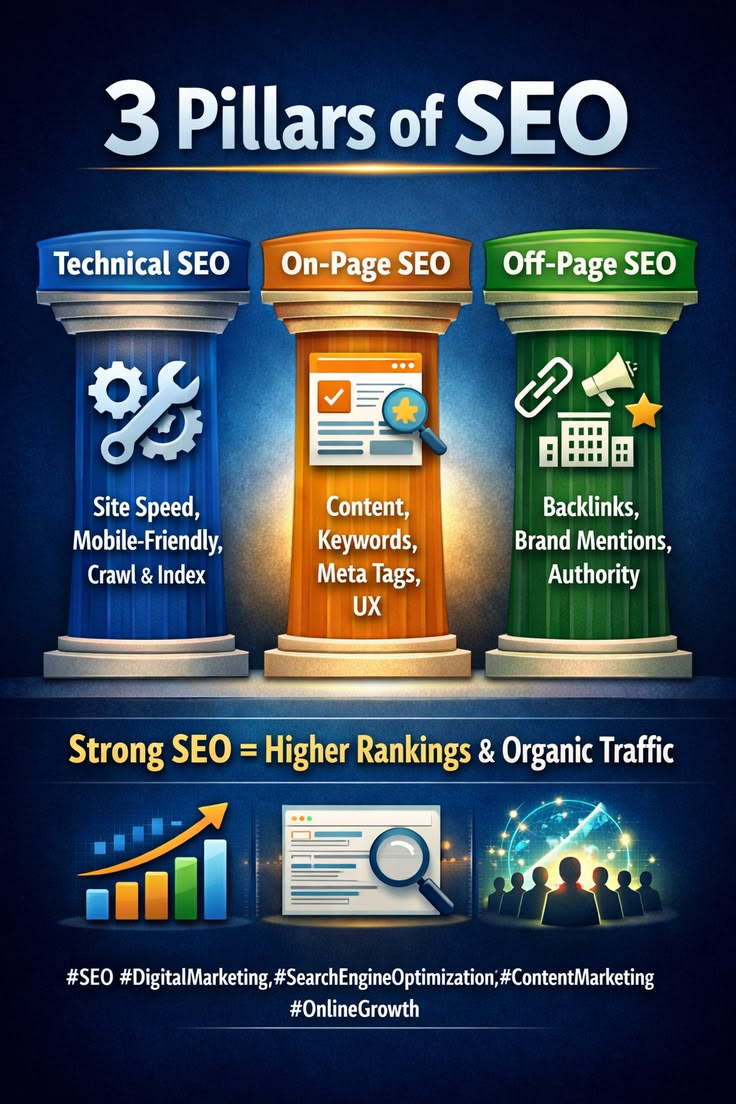
Types of Search Engine Optimization (SEO)
On-Page SEO
On-Page SEO refers to all the optimization techniques performed directly on a website to improve its visibility in search engine results. It focuses on creating high-quality, relevant, and user-friendly content while ensuring that every webpage is properly optimized for both users and search engines. On-Page SEO includes optimizing page titles, meta descriptions, headings, URLs, images, internal links, and keywords. It also involves improving content readability, using descriptive alt text for images, and providing valuable information that matches user search intent. By following On-Page SEO best practices, websites become easier for search engines to understand and more useful for visitors, increasing the chances of achieving higher rankings and attracting organic traffic.
Off-Page SEO
Off-Page SEO includes all the activities performed outside a website to improve its authority, credibility, and search engine rankings. The primary goal of Off-Page SEO is to build trust and demonstrate that a website is valuable and reliable. One of the most important aspects of Off-Page SEO is acquiring high-quality backlinks from reputable and relevant websites, as these links act as endorsements for your content. Other Off-Page SEO techniques include social media marketing, brand mentions, influencer collaborations, guest blogging, online directory submissions, and digital public relations. Although these activities take place outside the website, they significantly influence how search engines evaluate a site's reputation and authority, helping it rank higher in search results.
Technical SEO
Technical SEO focuses on optimizing the technical aspects of a website to help search engines crawl, index, and rank its pages more efficiently. Unlike On-Page SEO, which emphasizes content, Technical SEO ensures that a website is technically sound and provides a smooth experience for both users and search engine bots. It involves improving website speed, mobile responsiveness, site security through HTTPS, XML sitemaps, structured data, canonical tags, URL structure, and fixing crawl errors or broken links. Technical SEO also ensures that websites meet Core Web Vitals standards, making pages faster, more stable, and easier to navigate. A technically optimized website allows search engines to access and understand content more effectively, which contributes to better search performance and long-term SEO success.
FREQUENTLY ASKED QUESTION ( FAQ )
SEO is a long-term strategy, and results usually take 3 to 6 months to become noticeable. The timeline depends on factors such as website age, competition, content quality, keyword difficulty, and the effectiveness of your SEO strategy. Consistent optimization and regular content updates can lead to sustainable growth over time.
Yes. Beginners can perform many essential SEO tasks, such as keyword research, writing high-quality content, optimizing titles and headings, and improving internal links. However, advanced technical SEO tasks—such as implementing structured data, improving Core Web Vitals, or resolving crawl issues—may require additional expertise.
Search engines prioritize websites that provide a positive user experience. Fast-loading pages, mobile-friendly design, easy navigation, clear content structure, and secure browsing encourage visitors to stay longer and interact with your website. A better user experience can contribute to improved search rankings and higher organic traffic.